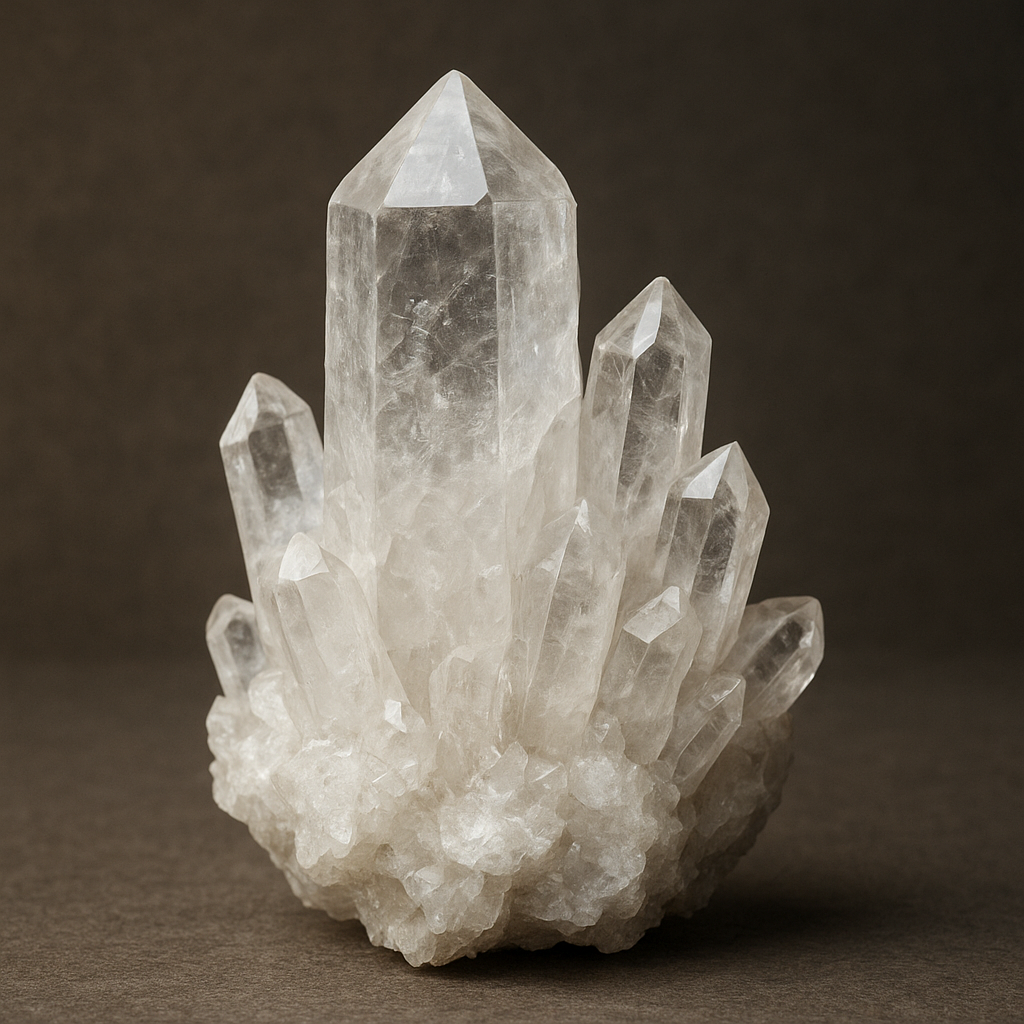

Hiddenite is a captivating, green variety of the mineral spodumene, cherished both by gem collectors and by mineralogists who study its unusual chemistry and formation. Although it is far less famous than emerald or jade, hiddenite combines an intense green color with a fascinating geological story, economic relevance, and a touch of mystery surrounding its discovery and early use. The stone owes its beauty to trace elements that color an otherwise pale crystal, and its rarity has made fine specimens highly sought after across the globe.
Discovery, History and Scientific Classification
The story of hiddenite begins in the late 19th century in Alexander County, North Carolina, USA. In 1879, local residents discovered striking green crystals in the area around Stony Point. These early finds attracted the attention of mineralogists, and in 1880–1881 the renowned American mineralogist William Earl **Hidden** investigated the occurrence. In honor of his role, the new gemstone was eventually named hiddenite. The nearby town that developed around the mines later adopted the same name, cementing the stone’s legacy in regional history.
Hiddenite is a green, chromium‑ or vanadium‑bearing variety of **spodumene**, a lithium aluminum inosilicate with the ideal chemical formula LiAlSi₂O₆. Spodumene is a member of the pyroxene group, a large family of chain silicate minerals. While common spodumene is typically colorless, gray or pale green, the presence of certain trace elements and color centers produces vivid colors, giving rise to gem varieties such as kunzite (lilac‑pink), triphane (yellow) and hiddenite (green).
From a crystallographic perspective, hiddenite is monoclinic, forming elongated prismatic crystals with distinct cleavage. Well‑formed crystals can show vertical striations and a glassy to vitreous luster. Under polarized light, thin sections reveal the internal structure typical of pyroxenes, but the rich body color distinguishes hiddenite among its relatives. Pleochroism, the phenomenon in which a crystal shows different colors when viewed from different directions, is often very strong: hiddenite may appear yellow‑green along one axis and deep emerald‑green along another.
Historically, the classification of hiddenite was the subject of debate. Early mineralogists argued over whether it should be considered a distinct species or merely a variety of spodumene. Modern mineralogy treats hiddenite as a color variety, defined by its chromium‑ or vanadium‑induced green coloration and by the geological environment in which it forms. This status is similar to how kunzite is regarded: not as a separate mineral, but as a specific colored version of spodumene.
The late 19th and early 20th centuries saw a surge of interest in hiddenite as a gem material. Jewelry houses experimented with it as a fresh alternative to emerald, especially for the American and European markets. However, limited supply, gemological complexity and competition from better‑known green stones kept hiddenite relatively niche. Nonetheless, it became a classic collectible among connoisseurs of American and pegmatite‑derived gemstones.
Geological Origin, Occurrences and Mining Regions
Hiddenite forms primarily in lithium‑rich **pegmatites**, which are extremely coarse‑grained igneous rocks derived from the final stages of magma crystallization. Pegmatites often act as geological “concentrators,” hosting a remarkable diversity of rare elements such as lithium, beryllium, tantalum and niobium. Under specific chemical and physical conditions, these environments allow spodumene to crystallize in large, well‑formed crystals, some of which acquire the vivid green color that qualifies them as hiddenite.
The green color in hiddenite is typically attributed to chromium (Cr³⁺), vanadium (V³⁺) or a combination of both substituting for aluminum in the crystal structure. The presence of these transition metals in the fluid or melt, as well as the oxidation state and temperature during crystal growth, strongly influences the resulting hue. Chromium tends to drive the color toward a deep, saturated green, while vanadium may produce slightly more yellowish tones. Minor structural defects and radiation‑induced color centers can further modulate the stone’s appearance.
The classic and historically most important source of hiddenite is the Hiddenite district in Alexander County, North Carolina. The pegmatites in this region intruded ancient metamorphic rocks and underwent a complex geological history of deformation and fluid interaction. Mining in the late 19th and early 20th centuries produced remarkable crystal specimens, some transparent enough to yield faceted gems of considerable size and quality. Over time, accessible deposits were extensively worked, and truly fine North Carolina hiddenite became increasingly rare.
Beyond North Carolina, hiddenite or hiddenite‑like green spodumene has been discovered in several other parts of the world. Not all of these occurrences yield gem‑quality material, but they provide important insights into the mineral’s formation:
- Brazil – Pegmatites in Minas Gerais, a region already famed for tourmaline, beryl and quartz, have produced green spodumene that is sometimes marketed as hiddenite. In some cases, color is influenced by trace iron rather than chromium or vanadium, leading to classification debates.
- Afghanistan and Pakistan – The high‑altitude pegmatites of the Hindu Kush and Karakoram host a suite of lithium minerals, including spodumene. Occasional green crystals from these localities reach the market; gem laboratories examine their trace‑element chemistry to determine whether they fit a stricter definition of hiddenite.
- Madagascar – Known for its prolific gem pegmatites, Madagascar has produced greenish spodumene crystals, some suitable for cabochons and faceting. Material may show pleochroism similar to classic hiddenite, but often differs slightly in tone or saturation.
- Other localities – Smaller or less consistent occurrences have been reported from countries such as Myanmar, Namibia and Nigeria. These deposits are typically of local or occasional commercial importance rather than global significance.
A continuing theme in hiddenite geology is the challenge of distinguishing “true” hiddenite from generic green spodumene. Some gemologists reserve the name for chromium‑bearing, North Carolina‑type material exhibiting specific color and spectroscopic features. Others adopt a broader, market‑driven usage, applying the term to any naturally green spodumene, regardless of origin, as long as the color is not artificially induced.
Mining of hiddenite is usually small‑scale or artisanal. Because gem‑quality pockets can be extremely localized within a pegmatite body, operations often rely on careful, selective extraction rather than large open‑pit mining. Miners track zoning within the pegmatite, searching for areas where lithium minerals and accessory chromiferous minerals occur together. Modern techniques, including portable spectrometers and detailed mapping, may help identify promising zones, but the discovery of a truly exceptional hiddenite crystal still retains an element of chance.
Collecting regulations and land access also play a role. In places like North Carolina, some local mines and quarries now operate as fee‑dig locations, welcoming hobbyists and tourists. These sites offer the excitement of unearthing a green spodumene crystal firsthand, even if most finds are more valuable as specimens than as facetable gem material.
Physical, Optical and Gemological Properties
From a physical standpoint, hiddenite shares the same basic properties as other spodumene varieties. It has a Mohs hardness of about 6.5 to 7, making it reasonably resistant to scratching, though not as durable as corundum (sapphire) or diamond. The specific gravity ranges from roughly 3.1 to 3.2, consistent with its lithium‑bearing silicate composition. One of the most important practical features of hiddenite is its perfect prismatic cleavage, which runs parallel to the length of the crystal. This cleavage can cause stones to split or chip if subjected to sharp blows, complicating the work of gem cutters and affecting jewelry design.
Optically, hiddenite is transparent to translucent, with a vitreous luster on freshly polished surfaces. It is biaxial and often strongly pleochroic; under a dichroscope or when rotated in polarized light, one can see distinct color changes from yellow‑green to blue‑green or deep emerald‑green, depending on trace‑element content and crystal orientation. Refractive indices generally fall in the range of about 1.660 to 1.680, and the birefringence, while modest, is sufficient to produce noticeable doubling of facet edges when examined closely.
Under ultraviolet light, some hiddenite may show weak fluorescence, but this is not as diagnostic as in stones like kunzite, which often glows vivid pink or violet under UV. Spectroscopic examination reveals absorption lines and bands characteristic of chromium and vanadium, helping gemologists confirm the chromophore responsible for the color. Inclusions, which might include tiny fluid pockets, other minerals or growth features, provide additional clues about the formation environment and can sometimes help distinguish natural hiddenite from treated or synthetic materials.
Thermal and light sensitivity are notable considerations. Certain hiddenite stones can fade if exposed to intense heat or prolonged, strong sunlight, particularly if their color is partly due to unstable color centers in the crystal lattice. For this reason, jewelers often recommend that hiddenite jewelry be stored away from direct sunlight and never subjected to high‑temperature jewelry repairs, such as retipping prongs with a torch, without removing the stone first.
Gem cutters must account for the mineral’s perfect cleavage when designing cuts. They orient the stone carefully, aligning facets to minimize the likelihood of splitting during polishing and in future wear. Common cuts for hiddenite include elongated rectangles, ovals and cushion shapes, which harmonize with the typical crystal habit. While brilliant‑style cuts are possible for high‑clarity material, many stones are cut into step cuts that better accommodate the pleochroism and natural crystal shapes.
Compared with other green gemstones, hiddenite occupies a unique position. It is lighter than jade, softer and more cleavage‑affected than emerald, and generally rarer in fine quality than peridot. Its pleochroism and internal flashes of color distinguish it visually when examined closely. These features, combined with its relative scarcity, help explain why hiddenite is prized more among collectors and gem enthusiasts than in mainstream commercial jewelry lines.
Jewelry, Market Value and Treatment Practices
Hiddenite’s use in jewelry has always been somewhat specialized. Designers who choose this stone are often attracted by its unusual origin story, distinctive optical properties and the chance to offer clients something outside the usual set of green gems. Rings, pendant centers, earrings and brooches are all common applications, with settings carefully engineered to protect the stone from impact and to emphasize its color.
Because of its cleavage and moderate hardness, hiddenite is better suited to jewelry that does not face hard knocks. Pendants and earrings are safer options than daily‑wear rings or bracelets, especially for larger, more valuable stones. When used in rings, protective settings such as bezels or halos can help shield edges and corners. Custom jewelers may recommend hiddenite to clients willing to treat the piece as occasional or evening wear rather than everyday adornment.
The gemstone market distinguishes between several quality factors in hiddenite:
- Color – The most prized hiddenite displays a vivid, medium to medium‑dark green, often described as “emerald‑like” but with its own character. Too pale or too yellowish stones generally carry lower value, while stones that are excessively dark may appear inky or dull.
- Clarity – Transparent stones with minimal visible inclusions command premium prices. However, moderate inclusions are tolerated if color is strong, especially in larger sizes.
- Cut – Skillful cutting can maximize color and minimize the risk of cleavage‑related damage. Proportions and symmetry affect brilliance and overall appeal.
- Carat weight – Large, fine‑color hiddenite gems are exceedingly rare; their scarcity pushes values up markedly as size increases.
- Origin – For some collectors, documented North Carolina origin or other historic localities adds desirability and a premium, though gemological properties remain paramount.
The combination of limited high‑quality supply and specialist demand leads to a market where top hiddenite can achieve substantial prices on a per‑carat basis. However, the stone remains under the radar of mass consumers, which keeps overall volumes low. Auction catalogues sometimes feature remarkable hiddenite pieces, and these sales help set benchmark values for exceptional specimens.
Treatments and enhancements present a critical issue in modern gemology. Spodumene, including hiddenite, is known to be sensitive to irradiation and heat. In some cases, pale spodumene has been artificially irradiated to produce or intensify green coloration, sometimes followed by gentle heating to stabilize or refine the hue. Such stones may appear visually attractive but can differ in spectral response and stability compared with naturally colored hiddenite.
Reputable dealers disclose any known treatments, and major gemological laboratories can often detect irradiation through characteristic absorption features, luminescence responses and other advanced tests. For buyers and collectors, documentation from a trusted laboratory significantly increases confidence, especially for larger, investment‑level stones claimed to be untreated hiddenite.
Another area of concern is the potential confusion between hiddenite and other green gems, such as tourmaline, beryl or diopside, as well as synthetic materials like glass or lab‑grown spinel. Fortunately, the combination of refractive index, pleochroism pattern, specific gravity and spectroscopic data allows trained gemologists to separate hiddenite from look‑alikes reliably. Simple tools like a refractometer and dichroscope already provide strong indications, while more advanced analytical methods confirm details of trace‑element chemistry.
Cultural, Metaphysical and Collector Significance
Beyond its scientific and economic roles, hiddenite occupies a small but intriguing niche in cultural and metaphysical traditions. In the realm of crystal healing and esoteric practice, it is frequently associated with emotional balance, heart‑centered awareness and the integration of intellectual insight with compassion. Practitioners sometimes link hiddenite with the heart chakra, asserting that its green hue symbolizes growth, renewal and a deeper appreciation of relationships.
While such metaphysical claims lack empirical scientific support, they contribute to hiddenite’s allure for many individuals. Some people use polished tumbled pieces or cabochons in meditation routines, believing the stone encourages self‑acceptance, generosity and gratitude. Others carry small crystals as talismans or place them in living spaces to foster a sense of calm and harmony. The scarcity and beauty of hiddenite can enhance its perceived potency within these belief systems, as rare stones often acquire heightened symbolic value.
In regional folklore, particularly in parts of North Carolina, hiddenite has become part of local identity. The town of Hiddenite hosts events and festivals celebrating its gem mining history, and the stone is featured in educational outreach programs, museum exhibits and tourism campaigns. For local communities, hiddenite represents not only geological heritage but also a tangible connection between the land, economic development and cultural continuity.
Collectors of fine minerals and gems regard hiddenite as a classic pegmatite species, often displayed alongside kunzite, tourmaline, beryl and quartz in thematic collections. Well‑formed, uncut crystals with sharp terminations and rich green color are especially treasured. These specimens display the full range of physical phenomena: crystal habit, cleavage planes, internal zoning and the interplay of light as the stone is rotated. High‑end collectors may seek hiddenite from specific historical mines, emphasizing provenance as much as aesthetic quality.
Museums with comprehensive gem and mineral collections typically include hiddenite as part of their exhibitions on lithium minerals, American gem deposits or pegmatite mineralogy. Labels describe both the crystal chemistry and the fascinating human story: how a relatively obscure region became world‑famous among mineralogists thanks to a handful of green crystals, and how those discoveries influenced subsequent exploration for lithium‑bearing pegmatites worldwide.
Educationally, hiddenite serves as a compelling example when teaching about the relationship between trace elements and color in minerals. In classroom demonstrations, instructors sometimes contrast colorless spodumene with green hiddenite and pink kunzite, using them to illustrate how small chemical substitutions alter the way a crystal interacts with visible light. Such examples help students grasp abstract concepts like electronic transitions and crystal field theory in a concrete, visually memorable way.
As global interest in **lithium** grows due to its role in rechargeable batteries and the energy transition, spodumene as an industrial mineral has gained renewed attention. Although hiddenite itself contributes only modestly to lithium supply, its connection to lithium‑rich pegmatites symbolically links decorative gemstone usage with broader technological and environmental narratives. Hiddenite thus sits at the intersection of beauty, science and industry: a reminder that even the most delicate, finely cut gemstone is rooted in deep geological processes that shape the modern world.