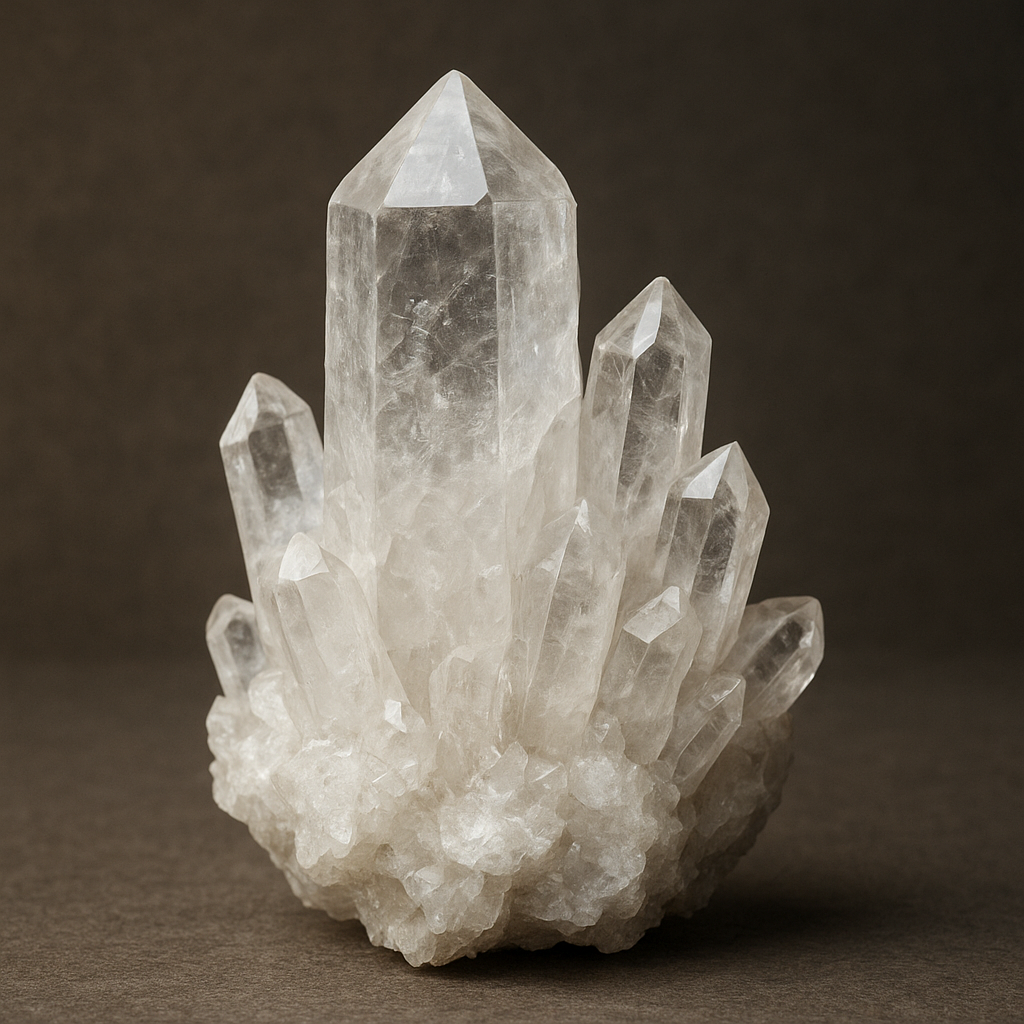

Among the many colored gemstones that have fascinated people for centuries, heliodor holds a special place. Its clear, sunlit yellow tones bridge the gap between the fiery brilliance of golden topaz and the cool geometry of aquamarine, yet heliodor remains less known than either. For collectors, designers and historians of minerals, this subtle profile is an advantage: the stone offers a rich story, distinctive beauty and solid durability, without the overexposure of the most commercial gems. Understanding heliodor means exploring geology, color, trade and symbolism all at once.
Origin, Composition and Optical Character
Heliodor is the yellow to yellow‑green variety of the mineral beryl, a beryllium aluminum cyclosilicate with the chemical formula Be₃Al₂(Si₆O₁₈). Beryl forms hexagonal rings of silica and oxygen, producing large, prismatic crystals. When trace elements substitute into this framework, they create different varieties: emerald (colored by chromium or vanadium), aquamarine (iron), morganite (manganese), goshenite (colorless) and heliodor, whose coloration arises primarily from iron in distinct oxidation states and structural positions.
The name heliodor comes from Greek roots meaning “gift of the sun,” an apt reference to its warm, radiant hue. Fine stones evoke a clear morning light or the glow of ripened wheat; paler examples can resemble white wine, while some crystals show a deeper golden tone approaching honey. Because heliodor is a member of the beryl family, it shares the group’s excellent physical properties: a hardness of about 7.5 to 8 on the Mohs scale, a relatively low specific gravity near 2.7 and the ability to form well‑shaped, sharply edged crystals that respond beautifully to skilled cutting.
In terms of optics, heliodor is typically transparent to translucent and shows vitreous luster on polished surfaces. Its refractive indices are moderately high, usually around 1.57–1.60, with uniaxial double refraction that can be observed through gemological instruments. Pleochroism—change of color when viewed from different crystallographic directions—is present but often subtle, shifting from more intense golden yellow along one axis to a lighter yellow or yellow‑green along another. This characteristic can guide the cutter in orienting the stone so that the richest color faces upward in the finished gem.
Despite its sunny color, heliodor’s clarity profile often compares favorably with emerald. Many crystals are relatively free of fractures and obvious inclusions, allowing lapidaries to fashion larger stones with high transparency. Internal features can include fluid inclusions, tiny tubes along growth directions, and slender crystals of associated minerals, which sometimes create attractive internal landscapes under magnification. These inclusions help gemologists differentiate natural heliodor from synthetic or heavily treated stones.
Geological Occurrence and Global Localities
Like other beryls, heliodor forms in environments rich in beryllium and compatible elements, conditions that are geochemically unusual. The most typical host rocks are granitic pegmatites—coarse‑grained igneous rocks that crystallize slowly from water‑rich magmas. Pegmatites provide enough space and time for well‑developed crystals to grow, including large, sharply terminated prisms of beryl that may later be cut as gemstones.
In some cases, heliodor also occurs in granites, gneisses and even in metamorphic schists, where fluids mobilize beryllium and iron during regional metamorphism. Weathered pegmatite zones and alluvial deposits derived from them may yield crystals that have survived erosion and transport, sometimes ending up in river gravels where artisanal miners can recover them by hand.
Historically and commercially, a few regions stand out for producing notable heliodor.
Heliodor from Brazil
Brazil is a leading source of many beryl varieties, and heliodor is no exception. In states such as Minas Gerais and Rio Grande do Norte, pegmatite fields have yielded crystals in a full range of yellow shades. Brazilian material is often transparent, with relatively few fractures, and may occur in sizeable crystals suitable for cutting stones weighing tens of carats or more. These deposits are commonly associated with tourmaline, quartz, feldspar and mica, forming classic pegmatite assemblages well known to mineral collectors.
Brazilian heliodor sometimes coexists with aquamarine in the same pegmatites, suggesting subtle differences in growth conditions—particularly oxidation state and temperature—can shift the dominant color from blue‑green to yellow. This relationship has long interested researchers who study color centers and the thermodynamic behavior of trace iron in beryl.
Ukrainian and Russian Deposits
The name heliodor became widely recognized in the early 20th century after significant discoveries in what is now Ukraine. Pegmatites in the Volyn region produced superb yellow beryls, some with a rich golden hue and good clarity. At the time, these stones were distinguished from aquamarine, and the term heliodor gained acceptance among European dealers and jewelers. Much of this material entered royal collections and the emerging market for colored gemstones across the continent.
Russia has also contributed to heliodor’s story, with occurrences in Siberian pegmatites and other granitic terrains. Though less prominent in modern trade than Russian emeralds or alexandrite, these deposits remain of academic interest. They shed light on regional tectonic evolution and the role of late‑stage fluids in concentrating rare elements, including beryllium, in specific geological settings.
African Sources: Namibia, Madagascar and Beyond
Africa hosts several important heliodor‑bearing regions. Namibia, for instance, has produced notable yellow beryls from pegmatites hosted in Proterozoic granites. Some Namibian crystals show subtle greenish overtones and dramatic terminations, making them prized as mineral specimens even when not cut as gems. The combination of heliodor with black tourmaline, cleavelandite feldspar and smoky quartz can create striking, sculpture‑like groups attractive to museum curators and private collectors alike.
Madagascar, another gem‑rich island, yields heliodor in several pegmatite districts that also produce aquamarine, morganite and rare phosphate minerals. The country’s complex geological history, involving multiple orogenic events and extensive crustal reworking, has created ideal conditions for pegmatite formation. From a scientific standpoint, comparing Madagascan heliodor with material from Brazil or Ukraine helps clarify how regional variations in fluid chemistry, pressure and temperature influence trace element incorporation into beryl.
Other Noteworthy Occurrences
Smaller or more localized heliodor deposits occur in Pakistan, Afghanistan, the United States and parts of Europe. In these areas, yellow beryl is often a by‑product of mining for feldspar, mica or industrial minerals. While they may not support large‑scale gemstone production, these occurrences provide valuable data for mapping beryllium distribution and understanding crustal processes in diverse tectonic environments.
Because heliodor is relatively resistant to chemical weathering, crystals can accumulate in secondary deposits such as stream beds. Prospectors may pan for them alongside other heavy minerals, though in practice, systematic geological surveying and mapping of pegmatite fields remains the most efficient way to discover new sources capable of supplying the jewelry trade.
Use in Jewelry and Gemstone Craft
In jewelry, heliodor occupies a distinct niche. Its color is less intense than many yellow sapphires yet often purer and less orange than citrine or some topazes. The combination of agreeable hue, respectable hardness and generally good clarity makes it attractive to designers who favor understated elegance over strong, saturated tones. Especially in contemporary pieces that emphasize geometry and openness, the cool, glass‑like character of beryl’s structure works well with minimalist metalwork.
Heliodor is commonly cut into faceted shapes that maximize brilliance and light return: ovals, cushions, emerald cuts and pears dominate the market. Because beryl can be brittle along certain directions, cutters must take care when planning facets, especially near thin corners. Round brilliants, though possible, are less frequent simply because the crystal habit of beryl often lends itself more naturally to elongated or step‑cut designs.
Cabbing—shaping stones into smooth, domed cabochons—is another approach used for heliodor that contains attractive internal features or slight cloudiness. Under diffuse light, a polished cabochon reveals the stone’s inherent glow and soft internal reflections. In rare cases, aligned needle‑like inclusions can produce a star or cat’s‑eye effect, though such phenomena are far more common in other minerals. When they do appear in heliodor, they are considered curiosities and may command attention from specialized collectors.
From a practical standpoint, heliodor’s hardness between 7.5 and 8 enables it to withstand everyday wear better than many colored stones. It is suitable for rings, pendants, earrings and bracelets, provided the settings protect exposed edges from direct impact. As with all beryls, toughness is moderate rather than exceptional, so bezel settings or designs that guard sharp corners are sensible for pieces intended for frequent use.
Metals that pair harmoniously with heliodor include yellow and rose gold, which reinforce its warm tones, as well as white gold and platinum, which contrast and highlight the stone’s clarity. Silver can also be effective, particularly in artisanal or bohemian designs. Jewelers sometimes combine heliodor with contrasting gems such as deep blue sapphire, amethyst, garnet or black spinel to enhance color interplay. In more subtle compositions, it serves as a central focal point flanked by colorless diamonds or white topaz for added sparkle.
Size plays a key role in design decisions. Smaller heliodors under one carat can function effectively as accent stones or pave‑style elements, creating a field of soft yellow light across a surface. Medium‑sized stones between one and five carats are common in rings and pendants, where they offer a satisfying presence without becoming unwieldy. Exceptional crystals allow the cutting of large gems over ten carats, which are particularly suited to statement jewelry or exhibition pieces that celebrate the stone’s natural dimensions.
Color, Treatments and Market Perception
Color is the defining attribute of heliodor, and subtle variations have significant effects on value and desirability. The ideal tone is often described as a pure, medium golden yellow—neither too pale nor so deep as to appear brownish. Stones with a slight greenish modifier can be attractive, though excessive green may lead dealers to categorize the gem differently or view it as less desirable heliodor material. Conversely, very pale, nearly colorless stones may enter the market as general yellow beryl without the prestige associated with the heliodor name.
Unlike emerald, which is almost always treated with oils or resins to reduce the visibility of fractures, heliodor is frequently clean enough to be sold with minimal enhancement. However, heat treatment and irradiation are known techniques used to modify color in beryl. In some cases, pale or greenish stones can be transformed into more saturated golden hues through controlled thermal processes. While these modifications do not necessarily compromise durability, full disclosure is essential in ethical gemstone trade.
The gem market’s perception of heliodor is nuanced. It is recognized among professionals and enthusiasts as a legitimate and appealing gem variety, yet it has not benefited from the large‑scale promotional campaigns that elevated other stones to mainstream fame. This relative anonymity keeps prices for many heliodors moderate compared with similarly sized sapphires or even high‑quality citrines. For designers willing to explore lesser‑known materials, this creates opportunities to feature large, impressive gems without the cost associated with more famous names.
Connoisseurs often appreciate heliodor for its combination of brightness, clarity and structural elegance. The hexagonal symmetry of the underlying crystal can be echoed in step‑cut facets, creating an architectural feeling in finished pieces. Certain cuts emphasize the stone’s depth of color when viewed face‑up, while others aim for maximum scintillation. Because beryl has a refractive index somewhat lower than corundum or diamond, a skilled cutter must balance pavilion angles and crown height to draw out lively reflections rather than a glassy, static look.
In the secondary market, well‑documented heliodors from classic localities—especially with accompanying mineralogical labels or certificates—appeal strongly to collectors. Specimens that show sharp crystal form, good termination, and partial association with matrix minerals like feldspar or mica can command significant premiums in mineral shows and auctions. These pieces straddle the boundary between gemstone and natural sculpture, embodying geological history in a tangible, visually striking form.
Historical, Cultural and Symbolic Aspects
Compared with emerald or ruby, heliodor is a relative newcomer to cultural consciousness, at least under that specific name. Yet yellow beryls have almost certainly been used for adornment and talismans for centuries in regions where beryl occurs naturally. Ancient lapidaries did not always distinguish between different beryl colors in a systematic way; many texts grouped green, blue and pale yellow stones under broader labels that modern mineralogy has subdivided with greater precision.
The early 20th century, with its surge in systematic mineral classification and gemological institutes, provided the context in which heliodor gained a defined identity. European dealers, especially in Germany and neighboring countries, embraced the term to market the attractive yellow beryls arriving from Eastern European deposits. The name’s association with sunlight resonated with contemporary trends in jewelry design, which often emphasized brightness, clarity and clean lines following the decline of overly ornate Victorian styles.
Symbolically, yellow and golden stones have long been linked to ideas of vitality, intellect and abundance. In some traditions, they correspond to solar deities or principles of illumination—both literal, in the sense of light, and metaphorical, in the sense of insight. While much of this symbolism attached itself historically to citrine, topaz and yellow sapphire, heliodor naturally inherits some of the same associations. Artists and designers may choose it deliberately to convey warmth, optimism or clarity of purpose in a piece of wearable art.
In contemporary metaphysical and crystal‑healing circles, heliodor is often described as a stone that supports personal confidence, creativity and focused mental energy. Practitioners may place it over the solar plexus area in meditation or incorporate it into grids intended to encourage determination and leadership qualities. Such uses are not grounded in empirical science, but they form part of the broader cultural life of the stone and influence the way certain buyers perceive and value it.
Because heliodor’s appearance evokes sunlight, it has also been adopted as a motif in seasonal and thematic jewelry collections. Designers create pieces that reference summer fields, early morning skies or rays of light streaming through architectural spaces, using heliodor as a visual anchor. In this way, the stone functions not just as a decorative element but as a narrative tool, helping to tell stories about time, weather and human emotion.
Scientific and Technological Relevance
Beyond its aesthetic and cultural roles, heliodor is interesting to scientists who study mineral physics, geochemistry and crystallography. As a member of the beryl group, it serves as a natural laboratory for understanding how trace elements and radiation influence color centers within a robust silicate framework. Iron, present as Fe²⁺ and Fe³⁺, can occupy different sites in the crystal lattice, and the interplay between these positions under varying temperature and pressure conditions partly determines the resulting hue.
Laboratory experiments on colored beryls, including heliodor, often involve controlled heating and irradiation to observe how absorption spectra shift. These studies have two main benefits. First, they deepen fundamental knowledge about electron behavior and color mechanisms in solids. Second, they help gemologists develop diagnostic criteria for detecting treated stones and distinguishing natural hues from those produced artificially. Spectroscopic signatures, such as specific bands in the visible and near‑infrared regions, provide fingerprints that can reveal a stone’s history.
Another scientific aspect concerns the inclusions trapped within heliodor crystals. Fluid inclusions—tiny pockets of trapped liquid and gas—offer snapshots of the temperature, pressure and chemical composition of the fluids from which the crystal grew. By analyzing these inclusions, geochemists can reconstruct the evolution of pegmatitic fluids, shedding light on processes such as rare‑element concentration, metal transport and crystal nucleation. This information, in turn, helps guide exploration strategies for beryllium‑rich environments and related mineral resources.
From the standpoint of industrial technology, pure beryl minerals have been investigated as potential materials in various applications due to their stability, hardness and specific optical properties. While emerald and heliodor are too valuable as gems to be used on a large scale in such roles, their behavior informs research on synthetic analogs or related compounds. The way natural beryl channels accommodate water molecules and alkali ions, for instance, has implications for understanding ion transport and storage in crystalline frameworks.
Heliodor also contributes to public science education. Museum exhibits featuring large heliodor crystals or polished gems illustrate concepts such as crystal symmetry, color generation in minerals and the geological timescales needed to create gem‑quality deposits. Visitors can see, often in a single specimen, the combination of geometric regularity and aesthetic appeal that makes crystallography an accessible gateway into earth science for many people.
Collecting, Care and Ethical Considerations
For gem and mineral collectors, heliodor offers several attractions: visually pleasing color, relative scarcity compared with mass‑market stones, and a direct link to well‑studied geological environments. In building a collection, individuals may focus on variety of localities, range of hues, or outstanding crystal form. Some prioritize pieces that show clear provenance and historical documentation, such as older specimens from classic pegmatites that may no longer be actively mined.
When acquiring heliodor, due diligence is advisable. Buyers should inquire about any treatments the stone may have undergone, particularly heat or irradiation, and request written disclosure when possible. Recognized gemological laboratories can provide reports that confirm identity and document certain properties, though not all treatments are always detectable. Working with reputable dealers who adhere to transparent practices remains a key safeguard.
Caring for heliodor is relatively straightforward. Its hardness allows it to resist scratching by many common materials, but exposure to sharp blows or sudden temperature changes can still cause damage. Cleaning with warm, soapy water and a soft brush is usually sufficient; ultrasonic and steam cleaners may be risky if the stone contains internal fractures or inclusions under tension. As with most colored gemstones, avoiding prolonged exposure to intense heat and harsh chemicals preserves both color and structural integrity.
Ethical and environmental issues in gemstone mining have gained increasing attention, and heliodor is no exception. While its supply chain is smaller and less industrialized than that of some major gemstones, the same principles apply. Responsible sourcing includes respect for local communities, fair compensation for miners, and efforts to minimize ecological disruption in sensitive pegmatite‑rich areas. Some jewelers and retailers highlight stones from operations that follow explicit sustainability guidelines, giving consumers choices aligned with their values.
In this context, heliodor can serve as a case study in how a relatively niche gemstone navigates global markets. Its modest profile allows for closer relationships between miners, cutters and designers, sometimes enabling traceability that is harder to achieve with high‑volume stones. At the same time, the limited scale of production means that shifts in demand or regulation can have outsized effects on specific localities, underlining the need for thoughtful, long‑term stewardship of both resources and communities.
As knowledge of lesser‑known beryl varieties spreads among jewelry enthusiasts, students of mineralogy and curious travelers visiting mining regions, heliodor’s reputation continues to evolve. Its combination of structural elegance, solar color, geological significance and cultural associations provides a rich field of interest that extends well beyond its initial appeal as a pretty yellow stone. For anyone engaged with the broader world of minerals and gems, heliodor stands as a precise, enduring example of how the earth’s deep processes can crystallize into something that speaks simultaneously to science, craft and human imagination.