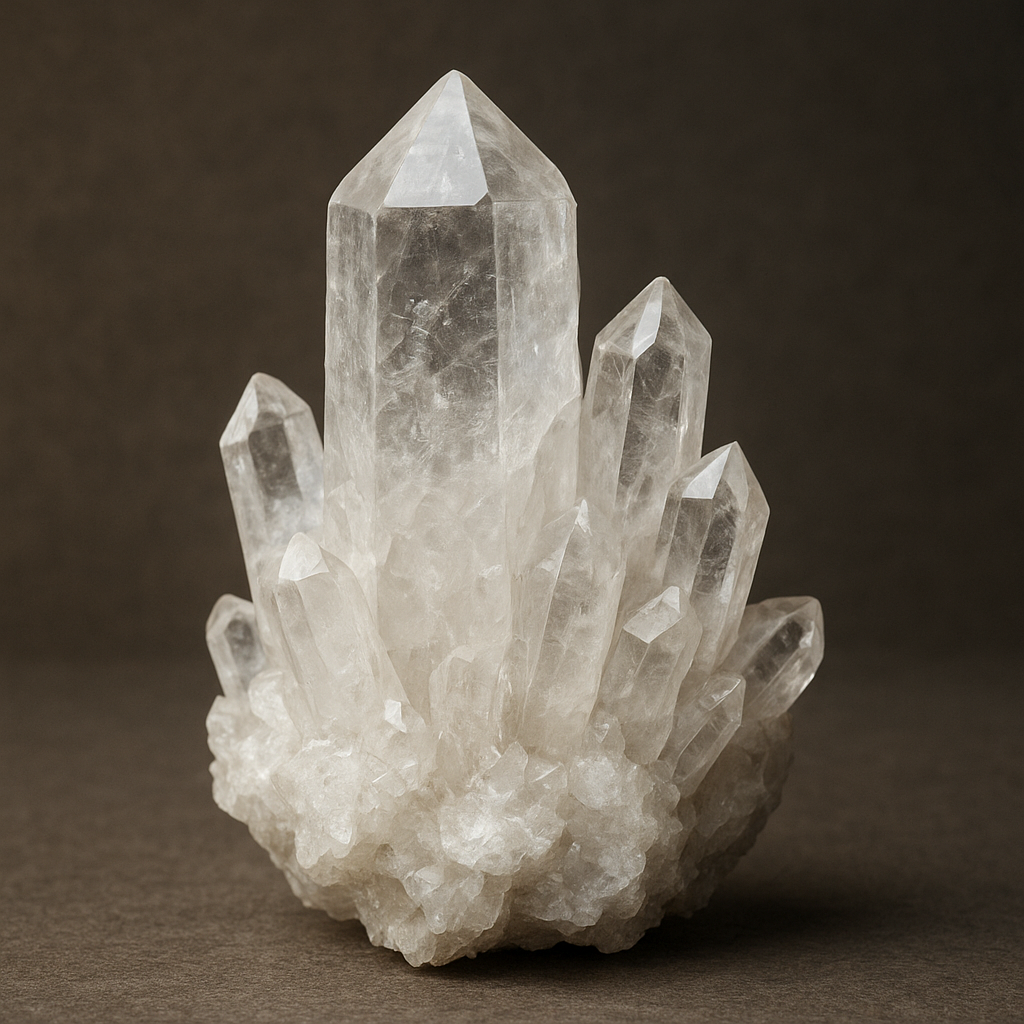

Hauyne is a captivating member of the sodalite mineral group, known for its intense blue color, intriguing chemistry rich in sulfur, and close association with volcanic rocks. Although often overshadowed by more famous gemstones such as sapphire or lapis lazuli, this mineral has a unique story that spans geology, petrology, gemology, and even cultural history. From the depths of silica-undersaturated magmas to the benches of European gemstone cutters, hauyne reveals how subtle variations in Earth’s chemistry can create rare and beautiful crystals.
Chemical and crystallographic characteristics of hauyne
Hauyne (also spelled haüynite or hauynite in older literature) belongs to the broader sodalite group of feldspathoid minerals. Its approximate chemical formula is Na3Ca(Si3Al3)O12(SO4)(Cl,S), though the proportions of sodium, calcium, sulfur, chlorine, and other components can vary considerably. In simple terms, it is a sodium-calcium aluminosilicate with sulfate and chloride anions incorporated into a three-dimensional framework. This unusual combination of a feldspathoid lattice with sulfate groups is one of the key reasons hauyne is considered scientifically important.
Crystallographically, hauyne crystallizes in the cubic system and shares the same general structural framework as sodalite and nosean. This framework consists of interconnected SiO4 and AlO4 tetrahedra forming a cage-like network. Within these cages reside extra-framework cations (such as Na and Ca) and anions (sulfate, chloride, carbonates), which strongly influence the mineral’s physical properties and color. The cubic symmetry often leads to isometric crystal habits, including dodecahedra or more complex forms, though euhedral crystals are not always easily visible to the naked eye, especially in fine-grained volcanic rocks.
One of the most striking physical properties of hauyne is its color. It is most commonly an intense, royal or ultramarine blue, but it can also occur in pale blue, greenish-blue, bluish-violet, grey, white, or even colorless forms, depending on composition, inclusion content, and oxidation state of minor elements. The deep blue hue arises from complex electronic transitions involving sulfur species and possibly trace elements such as iron. Gem-quality material can rival the beauty of traditional blue gemstones, which makes hauyne a sought-after curiosity among collectors.
Hauyne has a hardness of about 5.5 to 6 on the Mohs scale, which is somewhat softer than quartz but comparable to many decorative stones. Its luster is typically vitreous to slightly greasy. The mineral has no clear cleavage, although parting or conchoidal fracture can be observed. Its refractive index is relatively low, usually around 1.50 to 1.51, consistent with other feldspathoids. Specific gravity is commonly about 2.4 to 2.5, making it lighter than many silicate minerals. Under ultraviolet light, hauyne may show weak fluorescence, though this depends strongly on locality and impurity content.
From a chemical perspective, hauyne is notable for its high sulfur content in the form of sulfate. This makes it an important indicator of the sulfur budget in certain magmatic systems. Geochemists study hauyne and related feldspathoids to better understand how sulfur is stored and released in volcanic environments. When volcanic gases are emitted during eruptions, the sulfur released may partly have been bound in minerals like hauyne. Consequently, the presence and composition of hauyne crystals can provide clues about pre-eruptive volatile contents and redox conditions.
The mineral’s stability field is restricted to silica-undersaturated conditions. In magmas that crystallize ordinary feldspar and quartz, hauyne is not stable. Instead, it forms in magmatic systems where there is insufficient silica to build abundant quartz; excess alkalis and volatiles allow feldspathoids to crystallize. This geochemical constraint tightly links hauyne to specific rock types, giving it high diagnostic value in igneous petrology.
Geological occurrence and major localities
Hauyne is typically found in alkaline and silica-undersaturated igneous rocks such as phonolites, tephrites, foidites, and nepheline syenites. These rock types are associated with intraplate volcanic regions, rift zones, and some continental hotspot settings. Because hauyne forms in such distinctive magmatic environments, its presence is often used by geologists as a marker of highly alkaline, sulfur-rich magmas.
One of the most celebrated regions for hauyne is the Eifel volcanic field in western Germany. In the Eifel area, hauyne occurs as vivid blue crystals embedded in volcanic rocks and as loose, gemmy grains weathered from their host. These deposits have provided some of the finest facetable material known. The volcanic complexes of the Laacher See and surrounding maars have long attracted mineral collectors, and hauyne from this region appears in many prestigious mineralogical collections worldwide.
Another classic locality is the Vesuvius area and the nearby volcanic districts of southern Italy, such as the Somma-Vesuvius complex and the Alban Hills. These Italian volcanics are famous for a wide range of rare minerals formed in gas-rich cavities and skarn-like reaction zones within the eruptive products. Hauyne can occur alongside sodalite, nosean, leucite, nepheline, garnet, and a variety of unusual sulfates and halides. The intense historical study of Vesuvius-related minerals helped shape early European mineralogy, and hauyne was part of that intellectual tradition.
Hauyne has also been documented in the volcanic provinces of the Massif Central in France, where alkaline lavas host feldspathoids, rare-earth-bearing phases, and sulfide minerals. In these settings, hauyne tends to crystallize as blue to grey grains in phonolitic rocks, sometimes with zoning patterns that record changes in magma composition over time.
Outside Europe, hauyne is found in several important alkaline volcanic and plutonic provinces. In the Middle East, the Harrat ash Shaam basaltic province and other Arabian rift regions may host sodalite-group minerals including hauyne. In East Africa, the East African Rift System has generated nepheline syenites and related rocks where feldspathoids appear. There, hauyne may be associated with other sodium-rich phases and can be accompanied by rare accessory minerals such as perovskite or titanite, depending on local geochemistry.
In Canada, the Monteregian Hills of Quebec, a classic alkaline intrusive complex associated with the early stages of the Atlantic opening, occasionally yield sodalite-group minerals, and hauyne can be present in some foid syenites or contact zones. Similarly, in Russia and Central Asia, some nepheline syenite massifs and volcanic provinces host hauyne and allied minerals, although they are often less accessible to collectors.
An especially interesting geological setting for hauyne is its occurrence in xenoliths—rock fragments from the crust or mantle that are brought up by ascending magmas. In some cases, hauyne-bearing xenoliths provide geological snapshots of deep magmatic processes, such as the assimilation of carbonate-bearing rocks, interactions between mantle-derived magmas and crustal material, or the role of sulfur-rich fluids in modifying magma chemistry. These xenoliths can show hauyne intimately intergrown with minerals like clinopyroxene, nepheline, or even spinel, highlighting the complexity of alkaline magmatic systems.
Though relatively rare, hauyne has also been identified in certain metamorphic or metasomatic contexts, particularly where alkali-rich fluids have interacted with carbonate or silicate rocks. In these environments, feldspathoids may crystallize as the original minerals are replaced, and hauyne can form small, blue grains or aggregates. However, such occurrences are significantly less common than the primary magmatic ones.
Due to its characteristic color and association with alkaline igneous rocks, hauyne serves as a useful field indicator for geologists. When a rock contains distinct blue feldspathoid grains in a silica-poor matrix, hauyne is one of the first minerals to be considered. Petrographic analysis under the microscope, combined with geochemical tests, helps distinguish hauyne from similar-looking minerals and confirms its presence. As a result, hauyne plays a supporting but important role in mapping and interpreting unusual magmatic provinces.
Gemological aspects and uses in jewelry
Despite being a relatively soft and somewhat fragile mineral compared to classic gemstones, hauyne has carved out a distinct niche in gemology. Its brilliant, saturated blue is reminiscent of the most prized ultramarine pigments and can rival the color intensity of fine sapphire on a smaller scale. When cut as a gemstone, hauyne displays remarkable brilliance due to its high transparency and dispersion relative to many feldspathoids.
Gem-quality hauyne is rare, and much of it comes from the Eifel volcanic fields of Germany. There, weathering and erosion liberated hauyne crystals from their host rocks, concentrating them in loose surface deposits or gravel layers. These alluvial-type occurrences allowed local collectors and lapidaries to recover relatively clean, facetable grains. Cut stones are usually small, typically under one carat, and gems above one carat are exceptionally rare and highly prized by connoisseurs.
In the gem trade, hauyne is often described as an “exotic” or “collector’s stone.” It is not commonly seen in mainstream jewelry because of its rarity, limited size, and moderate hardness. At about 5.5–6 on the Mohs scale, it is more susceptible to scratching than quartz or topaz and significantly softer than sapphire or spinel. This makes hauyne less suitable for everyday wear in rings or bracelets that experience frequent impact and abrasion. Instead, it is more often set in pendants, earrings, or carefully protected ring designs where the stone is less exposed.
When properly cut, hauyne can exhibit a fine, vitreous luster and strong internal reflections. Its low refractive index means that designs must be carefully optimized to maximize brightness and minimize light leakage. Experienced cutters may use modified brilliant or step cuts that respond well to the stone’s optical properties. Because of hauyne’s small average crystal size, many gemstones are fashioned as tiny rounds, ovals, or cushions, appealing to collectors who value rarity and color intensity over size.
From a gemological identification perspective, hauyne can be distinguished from similar blue stones such as sapphire, spinel, and synthetic blue materials by its lower hardness, specific gravity, and refractive index. Under magnification, inclusions typical of volcanic minerals may be visible, including tiny gas bubbles, glassy inclusions, or growth zoning. Advanced techniques like Raman spectroscopy or electron microprobe analysis can confirm the presence of sulfate in the structure, a hallmark of hauyne.
Because of its scarcity, hauyne has never become a major gemstone in commercial jewelry markets. However, in specialized gem shows and among advanced collectors, fine pieces command notable prices. The scarcity of rough material, combined with the challenge of cutting such small and delicate crystals, contributes to the stone’s exclusivity. For some enthusiasts, owning a small but intensely blue hauyne is a way of connecting with rare geological processes and the heritage of classic European volcanic localities.
Beyond cut stones, hauyne occasionally appears as polished cabochons or in bead form, though this is less common due to its tendency to fracture. Some jewelry designers and art jewelers utilize hauyne for one-of-a-kind, concept-driven pieces that emphasize mineralogical rarity. In such creations, the stone is often combined with other unusual minerals, like nepheline or sodalite, to build a narrative about deep magmatic processes and unusual rock types.
Relationship to lapis lazuli, pigments, and cultural history
Hauyne has an intriguing historical and cultural dimension linked to lapis lazuli and blue pigments used in art. Lapis lazuli, the famous blue rock used as a gemstone and pigment source for millennia, is a metamorphic aggregate composed primarily of lazurite alongside calcite, pyrite, and other minerals. Lazurite itself is a sulfur-rich member of the sodalite group. Hauyne is chemically and structurally closely related to lazurite; both are feldspathoids with sulfate or related sulfur species in their crystal structures.
In some lapis lazuli deposits, especially those with complex metamorphic histories, hauyne can be present as a minor phase, intimately associated with lazurite and other blue minerals. Historically, distinguishing hauyne from lazurite in such rocks was difficult, especially before the advent of modern spectroscopy and electron-microscope techniques. As a result, some older references may use terms like “haüynite” or “blue sodalite” rather loosely. In modern mineralogy, careful chemical and structural analysis is necessary to differentiate these related species reliably.
The brilliant ultramarine color that makes lapis lazuli famous is related to sulfur-containing radicals trapped in the mineral’s framework. Hauyne shares this fundamental color mechanism. Consequently, there has been academic interest in whether hauyne itself could serve as a pigment precursor, either historically or in modern synthetic analogs. While there is no strong evidence that natural hauyne was deliberately used as a major pigment source in ancient times, theoretical and experimental studies of its color centers contribute to our understanding of the chemistry of blue paints and artistic materials.
Modern material science has taken inspiration from the sodalite-lazurite-hauyne system to design synthetic ultramarine pigments that are stable, relatively non-toxic, and intensely colored. Such pigments are engineered analogs, designed to replicate the sulfur-based chromophores in a controlled synthetic matrix. Studying natural hauyne crystals, especially those with well-characterized impurities and defect structures, helps refine these synthetic processes and expand the palette of inorganic colorants.
There is also a broader cultural aspect: minerals like hauyne remind us that the colors in historical art, from medieval religious icons to Renaissance frescoes, often originate in geologically rare substances. While lapis lazuli from Afghanistan became the most famous source of ultramarine, the underlying principles of blue color in feldspathoids apply equally to hauyne. When art conservators analyze blue pigments in paintings, they occasionally encounter mineral assemblages that raise questions about whether minor hauyne or related phases contributed to the colors. Such findings link the worlds of fine art, geology, and conservation science.
For collectors of both minerals and historical pigments, the connection between hauyne and lapis lazuli is particularly appealing. It highlights the continuum between raw mineral crystals and finely ground pigments that once commanded prices higher than gold. Even if hauyne itself was rarely ground for paint, its chemistry and structure occupy a crucial point along this continuum and expand our appreciation for the natural origins of artistic materials.
Scientific significance in petrology and geochemistry
While hauyne has aesthetic and gemological charm, its deeper importance lies in its role as a petrologic and geochemical indicator. In alkaline, volatile-rich magmatic systems, few minerals incorporate sulfur into their structure as readily as hauyne and related feldspathoids. This makes hauyne a valuable recorder of magmatic sulfur content and redox conditions, topics that are central to understanding volcanic eruptions and long-term cycling of elements between Earth’s interior and surface.
In many magmas, sulfur is partitioned between the melt, exsolved gas bubbles (vapor phase), and solid minerals. The relative proportions depend on temperature, pressure, oxygen fugacity, and the compositions of other elements. When hauyne crystallizes, it effectively locks a portion of the sulfur budget into solid form as sulfate. By analyzing the sulfur oxidation state and concentration within hauyne crystals, geochemists can reconstruct aspects of the pre-eruptive environment, including whether conditions favored sulfate (S6+) over sulfide (S2−) species.
Hauyne often coexists with other minerals that are sensitive to oxygen fugacity and alkalinity, such as titanite, magnetite, and various sulfides. Its presence can therefore be combined with phase equilibria models to constrain the pressure-temperature conditions of magma storage and ascent. In some volcanic systems, zoning patterns within hauyne crystals reveal changes in melt composition over time, perhaps reflecting magma mixing, assimilation of crustal rocks, or progressive degassing.
Modern analytical techniques, including electron microprobe analysis, secondary ion mass spectrometry (SIMS), and X-ray absorption spectroscopy, allow detailed examination of trace elements and sulfur speciation in hauyne. Through such studies, researchers gain insights into how volatile-rich magmas evolve, which in turn informs hazard assessments for volcanoes where explosive eruptions are driven by gas overpressure. Because alkaline volcanoes are often underestimated in terms of potential explosivity, tools like hauyne-based geochemistry are vital for improving risk models.
Hauyne is also relevant to broader questions about the cycling of halogens and other volatiles in the crust and mantle. In addition to sulfate, its structure can host chloride and, in some cases, carbonate. Measuring the ratios of these anions in hauyne offers indirect evidence about the composition of magmatic fluids and the possibility of interactions with seawater, sedimentary rocks, or metasomatic agents. In rift settings and intraplate volcanic regions where lithosphere-asthenosphere interactions are complex, such details have far-reaching implications.
Because feldspathoids crystallize in silica-poor systems, the occurrence of hauyne also informs models of mantle source composition. Certain mantle domains are enriched in incompatible elements, alkalis, and volatiles, leading to magmas that will eventually crystallize hauyne and related minerals at shallow levels. Tracking where such magmas erupt and what minerals they form contributes to global maps of mantle heterogeneity and helps decipher the geological evolution of continental interiors and oceanic plateaus.
In experimental petrology, synthetic hauyne is sometimes grown to explore stability limits and to calibrate thermodynamic models of feldspathoid-bearing systems. By varying pressure, temperature, and chemical composition in laboratory experiments, scientists determine the conditions under which hauyne appears or disappears, and how it competes with minerals like nepheline, leucite, or sodalite. These experiments not only deepen our understanding of natural eruptions but also test theoretical frameworks of phase equilibria.
All of these scientific aspects give hauyne a status that far exceeds its modest visibility in popular mineral guides. For specialists in alkaline magmatism, the mineral is a key puzzle piece in reconstructing the histories of volcanic provinces and in evaluating the roles of sulfur and halogens in magmatic and volcanic processes.
Collecting, identification, and care of hauyne specimens
Hauyne holds a special place among mineral collectors, particularly those who focus on volcanic and alkaline rock environments. Because it often occurs as small blue grains in a pale matrix, field identification can be challenging. However, its vivid coloration, combined with geological context, provides useful clues. When collectors explore phonolite or tephrite outcrops in classic localities such as the Eifel region of Germany, they often use hand lenses to scan for tiny, intensely blue crystals contrasting with grey or light brown groundmass.
Once potential hauyne is found, proper identification typically involves a combination of visual inspection, hardness testing, and sometimes simple optical methods. The bright blue color, lack of pronounced cleavage, and a Mohs hardness around 5.5 to 6 distinguish it from many softer blue minerals. In the laboratory, thin-section petrography under polarized light can reveal isotropic optical behavior consistent with the cubic system, and further confirmation may rely on X-ray diffraction or microprobe analysis to verify composition and sulfate content.
Because hauyne is sensitive to mechanical stress, collecting intact, sharp crystals embedded in matrix requires careful extraction. Rather than smashing rock fragments with heavy blows, experienced collectors often use chisels and small hammers or even diamond saws to cut around promising zones. Fine specimens show well-formed blue crystals preserved within the host rock, sometimes accompanied by other feldspathoids, zeolites, or vesicle-filling minerals. Such specimens can be highly aesthetic when properly trimmed and displayed.
In terms of storage and display, hauyne does not generally decompose rapidly under normal indoor conditions, but care is still advisable. Strong chemical cleaning agents, especially acids, should be avoided because feldspathoids can be more reactive than quartz or feldspar. Gentle washing with water and mild soap, followed by careful drying, is usually sufficient for cleaning. For gem-quality hauyne, avoiding exposure to harsh ultrasonic cleaners or steam devices is recommended, as these can exacerbate fractures or inclusions.
When hauyne gems are set in jewelry, protective mountings and sensible wear practices extend their lifespan. Bezel settings, recessed designs, or halo structures that shield the stone from direct impact are often preferred over exposed prong settings. Owners should avoid wearing hauyne rings during manual work, sports, or activities that expose the stone to abrasives. Proper storage in separate, padded compartments minimizes the risk of scratching by harder gems such as corundum, diamond, or even quartz.
For collectors who emphasize educational value, hauyne specimens can be displayed alongside other feldspathoids and associated volcanic rocks to illustrate the concept of silica undersaturation. Labels may highlight the mineral’s geochemical significance, the locality’s volcanic history, and any associated rare minerals. Such context transforms small blue crystals into gateways for understanding deep Earth processes, mantle metasomatism, and the role of volatile-rich magmas in crustal evolution.
As analytical technologies advance, private collectors sometimes collaborate with researchers, allowing specimens to be sampled for microanalytical studies of sulfur and halogens. This synergy benefits both parties: scientists gain access to well-documented material, while collectors receive refined information about their pieces, including precise composition and formation conditions. In this way, hauyne serves as a bridge between amateur enthusiasm and professional research, reinforcing the role of mineral collecting in the broader scientific ecosystem.
Hauyne in the context of the sodalite group and future perspectives
Hauyne is part of the broader sodalite group, which includes minerals such as sodalite, nosean, lazurite, and various intermediate or regionally defined species. All of these share a similar aluminosilicate framework but differ in their extra-framework ions, especially the balance among sulfate, chloride, and carbonate, and the presence of sulfur radicals. Hauyne often occupies an intermediate position in this compositional space, with significant sulfate but also the capacity to host other anions. This flexibility makes the mineral an excellent natural laboratory for studying how crystal structures adapt to changing chemical environments.
The boundaries between these related feldspathoids are not always sharp. In some rocks, compositional zoning from a nosean-like core to a hauyne-like rim or vice versa can be observed in single crystals. Such zoning records the evolution of the magmatic system during crystal growth. By precisely mapping these compositional gradients, researchers can retrace the sequence of events that occurred as the magma cooled, degassed, or interacted with other melts and fluids.
Looking ahead, hauyne is poised to remain an important subject in several lines of research. One promising direction is the detailed study of sulfur and halogen isotopes in hauyne. Isotopic signatures can fingerprint the sources of volatiles, differentiating those derived from the mantle from those contributed by subducted sediments, crustal assimilation, or seawater infiltration. Such studies can clarify long-standing debates about the origin of unusual alkaline magmas and the role of recycled components in Earth’s interior.
In materials science, the structural versatility of the sodalite-hauyne-lazurite framework may inspire new synthetic analogs that can host not only color centers but also technologically relevant ions. Sodalite-type structures have already attracted interest for potential use in ion exchange, waste immobilization, and photonic materials. Insights gained from natural hauyne, including how it stabilizes sulfate and chloride under geological conditions, may guide the design of synthetic frameworks with tailored properties for industrial or environmental applications.
In gemology, increased awareness of hauyne among collectors is likely to sustain or elevate demand for fine stones, especially from classic localities that may no longer produce abundant material. As new analytical tools become more widespread in the gem trade, reliable identification and disclosure of hauyne will become easier, reducing the risk of confusion with treated or synthetic blue stones. This clarity benefits both buyers and sellers and ensures that hauyne maintains its reputation as a genuinely rare and scientifically intriguing gem.
For educators and communicators in geology, hauyne provides a visually compelling entry point to discuss complex topics such as mantle plumes, rifting, and volatile cycling. A single hand specimen containing bright blue feldspathoid crystals can open conversations ranging from plate tectonics to the chemistry of volcanic gases and the origins of brilliant blue pigments in art. As public interest in Earth science grows through concerns about volcanic hazards, climate change, and resource management, such tangible examples help make abstract geochemical concepts accessible.
Ultimately, hauyne exemplifies how a relatively obscure mineral can connect diverse fields: igneous petrology, geochemistry, gemology, art history, and materials science. Its intense color belies the subtle and intricate conditions required for its formation, reminding us that the planet’s beauty often arises from rare combinations of chemical elements and geological processes. Through continued study and appreciation, hauyne will remain an important player in understanding both the deep Earth and the cultural ways in which humans value and use the products of geological activity.