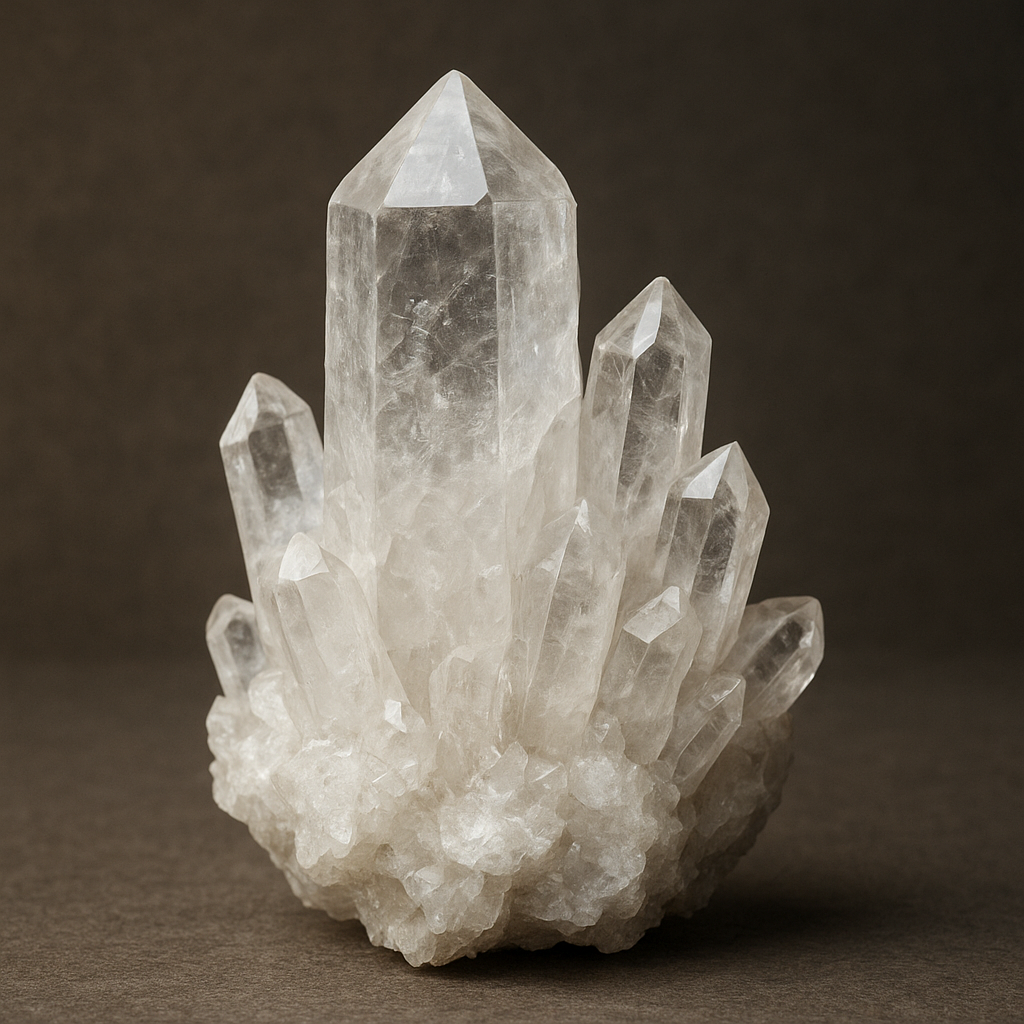

Hanksite is one of the most intriguing rare evaporite minerals known to science, admired both by collectors and by geologists who study extreme environments. With its pale colors, sharp crystals and unusual chemistry, it stands at the crossroads between mineralogy, geochemistry and the study of saline lakes and deserts. Although not widely used in industry, hanksite plays an important role as a natural laboratory for understanding how minerals form in highly concentrated brines, how salt deposits evolve over time and how life might adapt to such hostile settings on Earth and other planets.
Discovery, classification and crystal chemistry
The mineral hanksite was first described from Searles Lake in California in the late 19th century. It was named in honor of Henry G. Hanks, the first State Mineralogist of California, who contributed greatly to the early study of minerals and mining in the region. From the very beginning, hanksite attracted attention because it did not fit neatly into the familiar categories of simple chlorides, sulfates or carbonates. Instead, it combines several anions in a single crystalline structure in a way that was, at the time, quite unexpected.
Chemically, hanksite is a complex sodium-potassium sulfate carbonate chloride mineral. Its idealized formula is often written as Na22K(SO4)9(CO3)2Cl, though natural crystals can deviate slightly from this composition. The structure is dominated by sodium, which occupies a variety of positions in the crystal lattice, while potassium takes a more limited but important role. The presence of both sulfate (SO42−) and carbonate (CO32−) ions, together with chloride (Cl−), makes hanksite a textbook example of a mixed-anion mineral.
Crystallographically, hanksite belongs to the hexagonal system. It typically forms well-developed, prismatic to barrel-shaped crystals, often displaying multiple faces and distinct vertical striations. Twinning is frequent, and large crystals can look almost like stacked hexagonal barrels. Under the microscope, hanksite is uniaxial negative, with relatively low birefringence compared with some strongly anisotropic evaporite minerals. Its symmetry and habit make it an attractive subject for crystallographic studies and for optical mineralogy teaching collections.
In terms of physical properties, hanksite is usually colorless, white, pale yellow or faintly greenish. It is transparent to translucent, with a vitreous to slightly greasy luster. The Mohs hardness is low, typically around 3 to 3.5, making it relatively soft and easy to scratch with a knife. Cleavage is imperfect, and fracture is uneven to conchoidal. The mineral has a relatively low density, reflecting the dominance of light elements such as sodium and potassium in its composition. One notable property is its high solubility in water: hanksite dissolves fairly readily, especially in fresh or low-salinity water, though it is more stable in saturated brines.
From a classification perspective, hanksite is placed among the halide-related and sulfate minerals in many mineralogical systems, yet its mixed-anion character sets it apart. It is commonly grouped with other rare sodium-rich evaporite minerals that form in the advanced stages of brine evaporation, when the dissolved salt composition has become extremely complex. This late-stage origin gives hanksite scientific importance as an indicator of the final chemical evolution of saline waters.
Geological setting and global occurrences
The geological story of hanksite begins in saline lakes and playa environments, where evaporation far exceeds inflow of fresh water. Under such conditions, dissolved ions become progressively more concentrated, and different minerals crystallize from the brine as its chemical composition shifts. Common salts such as halite and gypsum usually appear early in this sequence. Hanksite, in contrast, forms late in the evaporation process, when the brine is highly enriched in sodium, sulfate, carbonate and chloride, and when the balance between these ions allows complex, mixed-anion minerals to become stable.
The classic and still most important locality for hanksite is Searles Lake in the Mojave Desert of California, USA. This dry lake bed, or playa, is the remnant of ancient lakes that once covered parts of the region during wetter climatic periods. Over time, repeated cycles of flooding, evaporation and desiccation deposited thick sequences of evaporite minerals in the subsurface. Today, Searles Lake is both a natural laboratory for evaporite geology and an important industrial source of various sodium and boron chemicals.
In Searles Lake, hanksite occurs primarily as crystals embedded in subsurface salt and clay layers, as well as in zones of brine-saturated sediments. Industrial operations drill into these deposits and pump out brine, from which commercial products such as trona, borax and other salts are recovered. Hanksite crystals are often encountered during this process and may be separated by workers or collectors. In some layers, the crystals can be remarkably large, sometimes reaching several centimeters or more in size, with well-formed faces and sharp terminations.
The formation of hanksite in Searles Lake is tied to very specific geochemical conditions. The brines are alkaline and extremely rich in sodium and sulfate, with significant carbonate and chloride contents. As the brine concentrates, more common minerals settle out first, progressively altering the remaining solution. When the ratio of sulfate to carbonate to chloride reaches a narrow window and the temperature and pH are suitable, hanksite starts to precipitate. This delicate balance explains why hanksite is so restricted in distribution compared with minerals like halite or gypsum, which form under a much broader range of conditions.
Outside Searles Lake, hanksite is known from only a handful of other locations worldwide, usually in similar closed-basin, arid environments. It has been reported from other playas and saline lakes in the western United States, as well as from a few sites in Canada and possibly in parts of Central Asia, though documented occurrences remain rare. In most of these places, the association with other evaporite minerals is similar: hanksite is found together with halite, thenardite, burkeite, trona and various sodium sulfates and carbonates.
Because it forms in modern or geologically young settings, hanksite also provides clues about past climate and hydrology. Evaporite layers rich in sodium sulfates and sodium carbonates can point to phases of intense evaporation, high alkalinity and limited inflow in ancient lake systems. If hanksite is identified in such layers, it may indicate especially advanced stages of concentration, suggesting prolonged dry periods or strong imbalances between evaporation and water supply.
Hanksite-bearing deposits are also linked to tectonic setting. Many occur in closed basins created by crustal extension or strike-slip faulting, where subsidence allows thick lake sediments to accumulate. Over tens of thousands to millions of years, these basins can trap vast quantities of dissolved materials from surrounding rocks. Hanksite and related minerals therefore record an interplay between climate, chemistry and structural geology within these evolving landscapes.
Paragenesis, associated minerals and formation processes
The mineral assemblages that accompany hanksite are essential for understanding how it forms and what it signifies. In evaporite sequences, minerals rarely occur in isolation; instead, they appear in predictable orders or paragenetic sequences as brines become more concentrated. Hanksite occupies a relatively high position in such sequences, after more abundant minerals have already crystallized from the water.
Commonly associated minerals include halite (sodium chloride), thenardite (sodium sulfate), mirabilite (hydrated sodium sulfate), burkeite (a mixed sodium sulfate-carbonate mineral), trona (a sodium carbonate-bicarbonate hydrate), borax, and a range of other rare sodium-bearing phases. In general terms, carbonates and borates can form at intermediate stages of evaporation, while sulfates and halite may crystallize early or continue to precipitate over a broad range of conditions. Hanksite, with its combined sulfate, carbonate and chloride content, tends to appear when the brine has already passed through several such stages.
The paragenetic behavior of hanksite reflects the shifting balance among different ions. Early in the life of a saline lake, inflowing waters dissolve and carry calcium, magnesium, sodium, bicarbonate, sulfate and many other species. As evaporation proceeds, calcium may be removed from solution by the formation of carbonates or gypsum, while magnesium can enter layered double hydroxides or complex salts. Over time, the residual brine becomes progressively enriched in sodium and in whatever anions have not yet been locked into earlier minerals. In many alkaline lakes, this means sulfate, carbonate and chloride remain dominant, setting the stage for mixed-anion phases like hanksite.
Temperature, pH and redox conditions also influence hanksite growth. Warmer temperatures promote more rapid evaporation and change the solubility of various salts. Highly alkaline conditions, with pH values above neutral, favor the dominance of carbonate species and can stabilize unusual complexes of sodium and sulfate. In some basins, seasonal fluctuations create layered evaporite deposits, where different minerals appear in repeated cycles. Hanksite layers, if present, can mark particularly intense evaporative episodes or specific seasonal extremes.
Texturally, hanksite crystals may grow directly from the brine or within soft, water-saturated sediments. In the former case, euhedral crystals can form freely in open cavities or in pools of concentrated brine, sometimes showing complex intergrowths or twinning. In the latter, they can enclose small particles of clay, organic matter or other minerals, producing cloudy or inclusion-rich crystals. Over time, continued crystal growth and dissolution can create distinctive textures, including corroded surfaces and partial replacement by more stable salts.
Another aspect of hanksite paragenesis involves post-depositional changes. Because hanksite is moderately soluble, especially in fresh water, it can be altered or removed if the hydrological regime changes. Episodes of dilution, such as heavy rainfall or inflows of less saline water, can partially dissolve hanksite crystals, leaving behind molds or cavities that might later be filled with other salts. Conversely, renewed evaporation can drive reprecipitation of hanksite or related minerals in slightly different forms. This cycle of solution and growth records fluctuations in the environmental conditions of the basin over time.
Modern analytical techniques, such as X-ray diffraction, electron microprobe analysis and stable isotope studies, have refined our understanding of hanksite formation. Sulfur, oxygen and carbon isotopes in hanksite and its associated minerals can reveal the sources of dissolved ions, including contributions from volcanic gases, weathering of surrounding rocks or biological processes. Such studies highlight the role of hanksite as a carrier of geochemical information about its host basin.
Uses, applications and significance in science
Hanksite has no major industrial use in the way that minerals like halite, gypsum or trona do. Its rarity and sensitivity to moisture make large-scale exploitation impractical, and other, more abundant minerals provide equivalent or better sources of sodium, sulfate or carbonate. Nonetheless, hanksite occupies a valuable niche in other domains: mineral collecting, scientific research and education.
For mineral collectors, hanksite is a sought-after species because of its unusual composition and often striking crystals. Well-formed specimens from Searles Lake, in particular, can display sharp hexagonal prisms with attractive terminations and subtle color zoning. Some crystals are associated with contrasting white halite or other salts, producing aesthetically appealing combinations. Because hanksite is sensitive to humidity and can gradually degrade if exposed to moist air, collectors must take care to store it in dry conditions or sealed containers. This fragility adds both challenge and appeal, as preserving a pristine hanksite crystal over many years requires attentive maintenance.
In scientific research, hanksite serves as a model mineral for studying late-stage evaporite processes and the behavior of complex brines. Its stability field in chemical space offers insights into how sulfate, carbonate and chloride interact in highly concentrated solutions. By recreating hanksite-forming conditions in the laboratory, geochemists can test thermodynamic models of brine evolution and refine predictions about which minerals will appear under specific conditions. These models, in turn, help interpret ancient evaporite sequences and reconstruct past environments on Earth.
Another scientific importance of hanksite lies in its connection to astrobiology and planetary geology. Evaporite minerals and saline deposits have been detected on Mars and are suspected on some icy moons, where subsurface oceans or transient lakes may have existed. Understanding minerals like hanksite, which form in hyper-saline, alkaline environments, helps researchers imagine what kinds of deposits might form on other planets with different atmospheres, temperatures and hydrological cycles. While hanksite itself has not been directly observed off Earth, its chemistry exemplifies the complex salts that can emerge from the long-term evaporation of brines in isolated basins.
Hanksite also supports microbiological and ecological studies. Extreme environments on Earth, such as the highly saline waters of Searles Lake and similar basins, host specialized microbial communities adapted to high ionic strength, strong alkalinity and scarce nutrients. These organisms may colonize the surfaces of hanksite crystals, live within tiny fluid inclusions or inhabit layers of surrounding sediments. Studying their interactions with the mineral provides clues about biomineralization, nutrient cycling and the limits of life in saline ecosystems. Such research informs our understanding of how life might cope with harsh conditions elsewhere in the solar system.
In education, hanksite functions as an excellent example for teaching advanced mineralogy. Its complex chemical formula illustrates the concept of mixed-anion minerals, its hexagonal symmetry is useful for crystallography exercises, and its environmental context demonstrates how mineral assemblages reflect geochemical conditions. Students can use hanksite to learn about phase diagrams, solubility equilibria and the thermodynamics of salts in concentrated solutions. Thin sections and polished grains enable instruction in optical mineralogy and microanalytical techniques.
Beyond laboratories and classrooms, hanksite contributes to the cultural and economic story of regions where it occurs. At Searles Lake, for instance, periodic open-house events and collecting trips have allowed the public to see and collect evaporite minerals, including hanksite, directly from the brine fields. These activities connect local industrial operations, regional geology and public interest in natural history, highlighting how even a non-commercial mineral can enrich understanding of a landscape and its resources.
Hanksite in the broader context of evaporite mineralogy
To fully appreciate hanksite, it is useful to place it within the larger family of evaporite minerals that form from the concentration of natural waters. Evaporites include familiar species such as halite, gypsum and anhydrite, as well as less common carbonates, borates and mixed-anion salts. Each of these groups occupies a different position in the chemical sequence of brine evolution. Hanksite’s mixed sulfate-carbonate-chloride composition positions it toward the complex, high-concentration end of that sequence.
In lake systems, the order of mineral precipitation is controlled by both thermodynamic stability and kinetic factors. Carbonates may form early if calcium and bicarbonate are abundant, removing much of the calcium from solution. Sulfates such as gypsum can precipitate next, especially when calcium and sulfate coexist in moderate concentrations. Halite tends to form once the brine becomes significantly enriched in sodium and chloride. Once these basic minerals have crystallized, the residual brine is enriched in whatever ions remain, including additional sodium, sulfate, carbonate, borate and potassium. Under such conditions, complex minerals like hanksite, burkeite and others can appear.
Comparisons between hanksite and closely related minerals reveal subtle differences in stability and composition. Burkeite, for example, is another sodium sulfate-carbonate mineral that lacks chloride. Its formation often precedes or accompanies that of hanksite, and the balance between the two reflects the relative availability of chloride in the brine. Similarly, minerals that incorporate additional anions or cations, such as borate or lithium-bearing phases, can form under slightly different chemical regimes. Studying these relationships helps geologists read the mineralogical record of changing water chemistry through time.
Evaporite deposits rich in hanksite and related salts also have broader implications for basin evolution. Because these deposits are relatively soluble, they can be dissolved, reprecipitated or deformed by groundwater flow and tectonic activity. In some regions, evaporite layers contribute to the development of subsurface caverns, sinkholes or low-density horizons that influence the structural behavior of overlying rocks. Although hanksite usually represents only a minor component of such sequences, its presence marks intervals when the brine chemistry was especially unusual, pointing to distinct phases in basin history.
In the context of economic geology, even non-commercial minerals like hanksite provide valuable hints. The chemical environment that favors hanksite formation can also concentrate other elements, such as boron, lithium or rare alkalis, that may have industrial importance. By mapping the mineral assemblages and geochemical gradients within evaporite basins, exploration geologists can better predict where economically significant minerals or brines may be found. Hanksite’s occurrence therefore becomes one data point in a much larger picture of resource distribution in arid regions.
Collection, conservation and ethical considerations
For those who collect minerals, hanksite poses both an opportunity and a challenge. Its distinct habit, clear to pale colors and status as a rare evaporite make it desirable for display. However, the same solubility that shapes its natural occurrence also complicates its long-term preservation once removed from its geological setting. Exposure to humid air can cause slow surface alteration, dulling of crystal faces, or the growth of secondary efflorescent salts that obscure its original luster.
Best practices for conserving hanksite specimens usually involve keeping them in sealed containers with desiccants to control humidity. Sudden changes in temperature or moisture should be avoided, as they may promote the dissolution and recrystallization of salts on crystal surfaces. Some collectors choose to store hanksite immersed in its native brine or in a carefully prepared solution of similar composition, reducing the driving force for dissolution. Each approach has advantages and drawbacks, but all aim to slow the natural tendency of the mineral to equilibrate with its new environment.
Ethically, collecting hanksite raises questions that increasingly concern the mineralogical community. Many important localities are also sites of industrial production, sensitive ecosystems or areas with cultural and historical value. Responsible collecting should respect local regulations, avoid damaging geological exposures and consider the impact on scientific research. In some cases, limiting the extraction of rare minerals like hanksite helps ensure that future scientists can study undisturbed deposits and that local communities can maintain their natural heritage.
Museums and educational institutions play a key role in balancing access and conservation. By acquiring representative specimens from authorized sources and maintaining them under controlled conditions, they create long-lasting archives of minerals such as hanksite. These collections support research, teaching and public exhibitions, allowing a broad audience to appreciate the variety and complexity of Earth’s mineral kingdom without necessarily expanding extraction from fragile environments.
Hanksite as a window into extreme environments
Ultimately, the fascination with hanksite stems from what it reveals about the extremes of natural conditions. Forming only in highly concentrated, alkaline brines, it occupies a niche at the edges of the familiar: far from the moderate temperatures, neutral pH and dilute solutions that characterize much of Earth’s surface. Its crystals crystallize where evaporation outruns supply, where water is scarce yet dissolved solids are abundant, and where only specialized minerals and organisms can survive.
By studying hanksite, scientists gain insight into how matter organizes itself under these demanding conditions. They see how ions assemble into ordered frameworks despite the complexity of their chemical surroundings, how subtle shifts in composition can trigger the transition from one mineral to another, and how geochemical systems push toward equilibrium even when external factors continually disturb them. The mineral becomes a tangible record of dynamic processes that, though invisible to the naked eye, shape vast landscapes of salt flats, playas and desert basins.
Hanksite also encourages a broader reflection on planetary diversity. If such intricate mixed-anion minerals can form in the deserts of California or other arid basins, what might exist on planets with different compositions, gravities or atmospheric histories? While direct analogues may never be found elsewhere, the principles extracted from hanksite’s formation guide the search for mineralogical signs of water, climate and habitability on worlds far beyond our own.