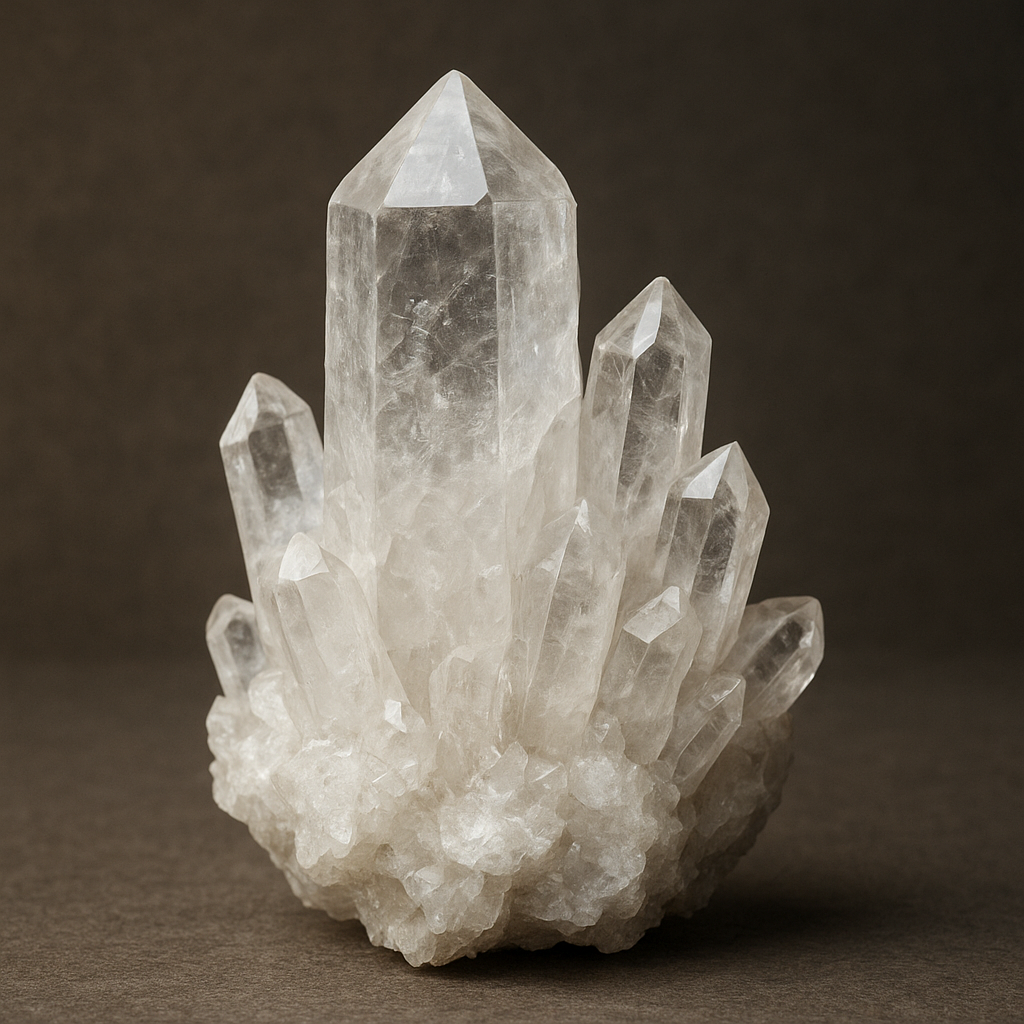

Halite Pink, commonly known as pink rock salt, is a visually striking variety of the mineral halite that owes its delicate to intense rosy color to trace elements and inclusions. While chemically it is mainly sodium chloride, the same compound as ordinary table salt, its geological story, textural diversity and cultural impact make it far more than a simple condiment. From massive salt ranges uplifted by mountain building to ancient evaporated seas hidden deep underground, pink halite records the interaction of climate, oceans and tectonics over millions of years. In recent decades it has also become a symbol of wellness, natural living and artisanal craftsmanship, fueling a global trade in everything from gourmet salts to architectural salt blocks.
Mineralogical characteristics and formation of pink halite
Halite belongs to the group of evaporite minerals, which crystallize from saline waters as they evaporate in closed or semi-closed basins. The basic crystal structure of halite is cubic, forming isometric crystals that are often transparent to translucent and display perfect cubic cleavage. Pure halite is colorless or white, but **halite** can incorporate a variety of trace components, fluid inclusions and structural defects that modify its optical properties and generate colors ranging from pale yellow through blue and even deep red. Pink halite sits within this spectrum, and its coloration can arise from several distinct mechanisms that sometimes operate together.
One common cause of pink coloration in halite is the presence of minute inclusions of iron oxide or manganese-bearing minerals distributed throughout the crystal lattice. These tiny particles scatter and selectively absorb certain wavelengths of light, imparting a warm, pinkish cast. In other cases, the pink color may result from defects in the crystal structure created by natural radiation, which alter the way electrons are arranged and how light is absorbed. Even extremely small amounts of certain elements, such as potassium or lithium in the surrounding brine, can influence color when they interact with halite growth surfaces and lattice defects.
Pink halite typically forms in arid or semi-arid climates, where intense evaporation concentrates dissolved salts in lakes, inland seas or restricted coastal lagoons. Over seasonal or longer climatic cycles, water bodies can oscillate between phases of flooding and desiccation. During dry phases, as water volume shrinks, the salinity rises until it reaches saturation with respect to sodium chloride. At this point halite begins to crystallize, settling to the basin floor as bedded layers or forming crusts and mounds along the shoreline. When these processes repeat over thousands to millions of years, thick successions of halite beds accumulate and may later be buried, compacted and deformed by tectonic forces.
Many pink halite occurrences display distinctive crystal habits associated with the physical and chemical conditions of formation. In shallow saline lakes with strong evaporation and gentle wave action, halite can grow as hopper crystals with hollow, skeletal interiors. These highly sculpted crystals, sometimes called “sculptural halite,” often develop intense surface color contrasts as thin layers of impurities and iron-rich films concentrate on edges and growth faces. In other settings, such as subsurface salt domes, halite may recrystallize into coarse, interlocking mosaics, with pink hues streaked or patchy depending on how impurities migrate during deformation and fluid flow.
Texturally, pink halite ranges from massive rock salt with a uniform pastel tone to translucent, gem-like crystals that can rival some gemstones in clarity and light play. Cleavage along cubic planes produces natural faces that act like small mirrors, reflecting ambient light and emphasizing the internal distribution of color. Because halite is relatively soft (2 to 2.5 on the Mohs scale) and easily scratched, well-preserved pink crystals found in sedimentary host rocks or modern evaporite basins can be fragile indicators of past hydrological and climatic conditions, making them useful to **geologists** reconstructing environments and **paleoclimate** histories.
An important aspect of pink halite formation is the evolution of the parent brine. Early in an evaporation sequence, less soluble minerals such as calcite and gypsum precipitate, removing calcium and sulfate from the system. As concentration increases, sodium and chloride begin to dominate, and halite becomes the primary phase. During these stages, chemical changes in the brine—including redox conditions, pH and the relative abundance of trace metals—control which impurities become incorporated into halite or remain in solution. Periodic influxes of fresh water, dust storms delivering fine iron-rich particles, or volcanic ash deposits can all modify the impurity budget and lead to layers or zones of distinct pink coloration within otherwise colorless salt formations.
Because halite is highly soluble, surface exposures are prone to dissolution and re-precipitation, processes that can both intensify and degrade color. As slightly undersaturated waters percolate through salt layers, they preferentially dissolve more soluble or more exposed grains, transporting impurities and re-depositing them along fractures, vugs and grain boundaries. This secondary mobilization may create striking bands, veinlets or clouds of pink within rejuvenated halite crystals. Over repeated cycles, banded or mottled patterns emerge, some of which are prized in decorative and architectural uses.
Major occurrences and global distribution
Although halite is widespread on Earth, forming extensive deposits on most continents and beneath many modern oceans, distinctly pink varieties require a particular interplay of climate, geochemistry and source materials. Among the most renowned localities is the Salt Range region of northern Pakistan, part of a vast evaporite system that dates back to the late Precambrian and early Paleozoic eras. Within this mountain belt, thick sequences of rock salt, gypsum and related evaporites have been uplifted and folded by collisions between the Indian and Eurasian plates. Mines such as those at Khewra, Warcha and Kalabagh exploit rock salt layers that locally exhibit vivid shades of pink and orange due to iron oxide inclusions and other minor constituents.
The rocks of the Salt Range represent the remnants of ancient inland seas that repeatedly evaporated and re-filled over immense timescales. During their deposition, fine detrital material from surrounding highlands, including iron-rich clays and silt, washed into the basins and became trapped in halite as it crystallized. As tectonic movements later compressed and uplifted these sediments, fluids migrated along fractures, redistributing iron and enhancing color in certain zones. Today blocks of this pink rock salt are quarried both by traditional drill-and-blast methods and by more mechanized techniques, then cut into slabs, tiles and smaller objects that are exported worldwide.
Beyond South Asia, notable manifestations of pink halite occur in various modern saline lakes and playas. In North America, ephemeral lakes in arid regions such as Nevada, Utah and California periodically dry out to form crusts of halite, gypsum and other salts. Some of these lakes are fed by waters enriched in dissolved iron and trace metals derived from surrounding volcanic or sedimentary rocks. When conditions are right—high evaporation rates, stable water levels and limited mixing with fresh inflows—iron-bearing particulates and microbial communities can interact to produce pinkish or reddish salt surfaces.
For example, microbial mats containing haloarchaea and certain algae flourish in hypersaline waters and can release pigments into the brine. These organic pigments may bind to halite crystals or become encapsulated within them as crystallization proceeds, generating subtle pink hues. Such biogenic contributions to color are often transient, vulnerable to oxidation and photodegradation, but under some circumstances they can be preserved long enough to give bulk salt a noticeable tint. While these deposits are usually thinner and less economically significant than large subsurface rock salt accumulations, they offer laboratories for studying ongoing geochemical and microbiological processes that may resemble those operating in ancient salt basins.
In Europe, pink-tinged halite is reported from several evaporite formations, especially where red beds and oxidized iron-rich sediments are associated with salt-bearing sequences. The great Zechstein and Messinian evaporites, though more commonly known for their thick gypsums and halites of mostly white to gray color, locally contain strata with pale rose tones reflecting minor iron oxide content. Brine wells in some of these areas produce brines that, when evaporated, can yield pinkish salts marketed as regional specialties, even if the coloration is relatively subtle compared with more famous sources.
Australia, with its numerous inland salt lakes and playas, hosts another suite of potential pink halite localities. Lake Eyre, Lake Hart and other basins in South Australia can display seasonal changes in water color and salt crust appearance as water levels fluctuate and biological populations bloom and crash. Under high salinity and alkaline conditions, microorganisms proliferate, and their pigments sometimes stain the crusts a delicate pink. Although much of the coloration is concentrated near the surface and may not produce thick pink rock salt beds, short-lived halite crusts in such environments illustrate how even modest changes in ecology and hydrology can leave mineralogical signatures visible from satellite imagery.
In addition to naturally colored pink halite, there are industrial by-products and processed salts that mimic or enhance pink hues. When halite is refined for specific purposes, impurities may be selectively retained or reintroduced to create aesthetically pleasing products. It is important to distinguish between genuinely naturally colored pink rock salt—where color is an inherent property of the original mineral deposit—and modified or blended products, which may combine halite from multiple sources or incorporate non-halitic additives. Nevertheless, all of these rely on the global distribution of sodium chloride deposits, many of which trace their origin to Paleozoic and Mesozoic seas that once covered vast tracts of the continents.
Understanding the geographic spread of pink halite also has implications for energy resources and subsurface storage. Thick halite formations provide low-permeability seals for hydrocarbons and are increasingly used to create solution-mined caverns for storing natural gas, hydrogen and strategic petroleum reserves. In regions where rock salt beds include pink layers, their physical properties remain similar to those of colorless halite, but spatial variations in impurity content and mechanical behavior must be carefully characterized. Geophysical logging, seismic imaging and detailed core analyses all contribute to mapping these heterogeneous salt bodies, shedding light on their depositional and diagenetic histories.
Uses, cultural significance and contemporary applications
From an industrial standpoint, halite is overwhelmingly utilized as a bulk **commodity** for chemical feedstock, road de-icing, water softening and general seasoning. However, pink halite occupies a distinct niche that merges functionality with aesthetics, symbolism and experiential qualities. One of the most visible uses is in the culinary world, where coarse grains of pink rock salt are marketed as a premium ingredient. Chefs and food enthusiasts value these salts not only for their mineral content but also for their color, which adds visual interest to dishes and connotes ideas of naturalness and artisanal production.
Chemically, pink halite used in the kitchen remains predominantly sodium chloride, but trace amounts of calcium, magnesium, potassium and various micronutrients may subtly influence flavor, perceived mouthfeel and dissolution behavior. Coarse crystals can be ground fresh at the table, offering a sensory experience analogous to that of grinding peppercorns. Larger slabs of pink salt are shaped into cooking blocks, which can be heated or chilled to sear, cure or present foods. When used as a cooking surface, halite slowly dissolves at the interface with moist ingredients, imparting salinity in a more gradual and controllable fashion compared to direct sprinkling.
In addition to culinary applications, pink halite has found a prominent role in wellness and interior design trends. Carved lamps, candle holders and decorative sculptures made from blocks of pink rock salt are sold with claims that they release negative ions, purify air or provide subtle health benefits. While the scientific support for some of these assertions is limited or contested, the warm, diffuse light emitted through translucent salt creates a distinctive ambiance that many people find calming. In spas and so-called salt caves, walls lined with pink halite bricks and loose salt on the floor are used to create immersive environments for relaxation and meditative practices.
These salt-based spaces tap into older traditions of speleotherapy, where patients would spend time in natural salt mines or caves under the belief that the microclimate could alleviate respiratory ailments and improve overall well-being. Modern salt rooms often use crushed pink halite to recreate aspects of mine atmospheres, sometimes combining this with aerosolized salt particles delivered through specialized equipment. Regardless of the physiological effects, such practices underscore the enduring cultural association between salt, purity and health—a relationship that emerges repeatedly across civilizations and historical periods.
Another significant use of pink halite lies in decorative arts and architecture. Polished tiles and bricks fashioned from dense rock salt are installed in accent walls, backlit panels and small architectural elements. Their semi-translucent character allows light to permeate, highlighting internal banding and inclusions that create complex visual textures. In some high-end interiors, designers juxtapose pink halite with wood, metal or glass to produce contrasts between organic softness and structural strength. Because halite is water soluble and sensitive to humidity, such installations require careful engineering, including protective coatings, controlled indoor environments and specialized mounting systems to prevent deterioration.
Beyond its obvious aesthetic appeal, pink halite serves as a teaching tool in earth science education. Samples illustrating pink color variations, crystal habits and sedimentary layering are used in classrooms and museums to explore principles of mineralogy, sedimentology and geochemical cycles. Hands-on interaction with halite specimens can help students grasp concepts such as crystal symmetry, cleavage, solubility and the progression of evaporite sequences. In research contexts, pink layers within halite cores extracted from salt lakes and subsurface deposits can be correlated with specific climatic episodes, such as aridification events or periods of increased dust flux associated with changing wind regimes.
The isotopic composition of fluid inclusions trapped in halite, including those in pink varieties, provides valuable information about the temperature and composition of ancient waters. By analyzing oxygen, hydrogen and strontium isotopes, scientists can reconstruct seasonal cycles, regional hydrology and even links between continental interior climates and global ocean circulation. In certain basins, alternating bands of pink and white halite reflect oscillations in redox conditions, biological productivity or sediment input that may be tied to orbital forcing or broader climatic transitions. Thus, the aesthetic qualities of pink halite often mirror processes of profound interest to climate scientists and stratigraphers.
Economic geology also intersects with pink halite, particularly where distinctive coloration helps to distinguish different stratigraphic units or structural domains within large salt bodies. In salt tectonics, halite flows ductilely over geological timescales, forming domes, pillows and complex diapiric structures that can influence hydrocarbon trapping. Color banding, including pink strata, provides visual markers for understanding deformation patterns and for correlating between outcrops, cores and seismic reflection profiles. Mining engineers and resource managers rely on such information to plan extraction methods, assess stability and mitigate environmental impacts in regions where salt mining is economically important.
On a more symbolic level, pink halite occupies a unique position at the intersection of geology, aesthetics and consumer culture. Its gentle color palette aligns with broader design trends favoring soft earth tones and materials perceived as authentic or minimally processed. Marketing narratives often emphasize the antiquity of the deposits, their origin in primordial seas and the supposed purity conferred by deep burial and isolation from modern pollution. These stories blend scientific facts—such as the age of evaporite sequences and the basic chemistry of sodium chloride—with elements of romanticism and branding that speak to contemporary desires for connection to nature.
At the same time, the global trade in pink rock salt raises questions about sustainability, labor practices and regional economic dynamics. In areas where salt mining has long been a local livelihood, growing international demand for decorative and gourmet products can bring both opportunities and pressures. Balancing economic development with environmental stewardship, heritage conservation and workers’ rights requires careful governance and transparent supply chains. For consumers, understanding that each piece of pink halite embodies not only geological time but also social and environmental contexts can foster more informed and responsible engagement with this visually captivating mineral.
In scientific, cultural and practical terms, pink halite serves as a reminder that even a seemingly ordinary substance like salt can manifest extraordinary complexity when examined through multiple lenses. Its formation pathways encode information about vanished oceans, shifting climates and microscopic life. Its uses span basic nutrition, architectural experimentation and experiential wellness practices. And its soft, luminous hues continue to inspire curiosity, making pink halite a compelling subject for ongoing exploration in both the earth sciences and the humanities.