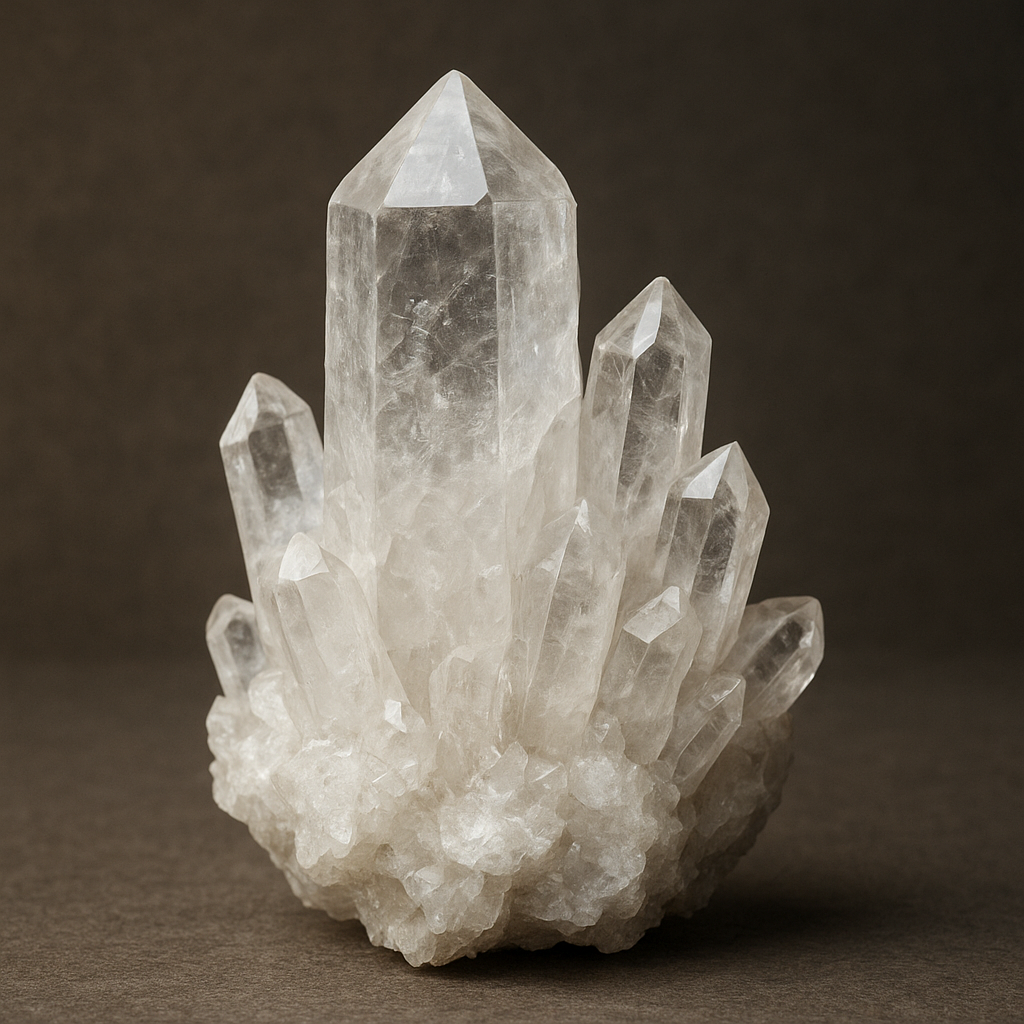

Hackmanite is a fascinating and somewhat enigmatic mineral that has captured the attention of geologists, gemologists, collectors and technology developers alike. Best known for its remarkable ability to change color under different types of light, it bridges the worlds of natural beauty and advanced material science. Its unusual optical effects make it both a collectible gemstone and a subject of serious research, especially in the fields of photophysics, dosimetry and sensor technology. By understanding where hackmanite forms, how its structure produces such unusual effects and how these properties can be used in practice, one gains insight not only into this single mineral, but also into broader processes linking geology and modern technology.
Mineralogical characteristics and unique optical behavior
Hackmanite is a sulfur-rich variety of the mineral sodalite, belonging to the larger feldspathoid group. Chemically, it can be described as a complex sodium aluminum silicate chloride-sulfide, with a general formula close to Na8Al6Si6O24Cl2, but with sulfur-related defects and trace elements that are crucial for its behavior. It crystallizes in the isometric system and typically forms massive, granular or blocky aggregates rather than well-developed crystals. Its Mohs hardness is usually around 5.5 to 6, which makes it moderately hard but more prone to scratches than classic jewelry stones like sapphire or quartz.
In hand specimen, hackmanite commonly appears as pinkish, lilac, pale violet or grayish material. However, its most spectacular feature is its **tenebrescent** property, sometimes also called reversible photochromism. Tenebrescence is the ability of a mineral to change color when exposed to ultraviolet (UV) or high-energy light and then slowly revert to its original shade in ordinary daylight or darkness. In hackmanite, this can mean, for example, a pale, almost colorless stone becoming a deep violet or intense magenta after exposure to shortwave UV, then gradually fading back over minutes, hours or even days.
On top of tenebrescence, hackmanite often displays **fluorescence**, meaning it glows under UV radiation, and sometimes **phosphorescence**, where the glow continues briefly after the UV source is removed. Under UV lamps commonly used by mineral collectors, hackmanite can show brilliant orange, pink, or purple hues that contrast strongly with its appearance in normal indoor light. This combination of tenebrescence, fluorescence and phosphorescence makes the mineral one of the most visually dynamic substances in nature and a key example in the study of luminescent materials.
From a structural standpoint, the sodalite framework is composed of interconnected AlO4 and SiO4 tetrahedra forming cages. In ideal sodalite, these cages host chloride ions, but in hackmanite, small amounts of sulfur ions and other defects disrupt the ideal occupancy. These defects are critical for the creation of **electron** and **color** centers that respond to radiation. The mineral’s color and its reaction to light depend sensitively on these substitutions, trace impurities such as titanium or iron, and subtle structural distortions. This is why hackmanite from different localities can show dramatically different degrees of tenebrescence and fluorescence, even though the base composition is similar.
Tenebrescence in hackmanite is closely related to the formation and annihilation of F-centers: defects in the crystal lattice where electrons become trapped at anion vacancies. Under UV radiation or X-rays, electrons are excited and can migrate to those vacancies, forming absorptive centers that deepen the color. When the mineral is returned to visible light or heated gently, these electrons are released and return to their original positions, causing the enhanced color to fade. This cycle can often be repeated many times without destroying the material, though extremely intense radiation, strong heating or long-term exposure can permanently damage some defect centers.
Optically, hackmanite usually has a vitreous to greasy luster and a refractive index similar to other feldspathoids, typically around 1.48. It is usually translucent, occasionally nearly opaque when heavily included. Strong tenebrescent specimens can be tested in a simple way: by exposing them briefly to a UV lamp and observing the color change over time under indoor lighting. This behavior is so distinctive that hackmanite has become the reference mineral when introducing students to tenebrescence and advanced optical mineralogy.
The mineral’s sensitivity to radiation also means that its environment during formation is crucial. High-pressure or high-temperature conditions that destroy sulfur-related defects will prevent tenebrescence from emerging. Thus, hackmanite not only reveals fascinating photophysical properties but also serves as a subtle record of the pressure–temperature–composition path experienced by the host rock during geological history.
Geological occurrence and notable localities
Hackmanite forms primarily in **alkaline** igneous environments, where silica is relatively deficient and sodium- and potassium-rich melts crystallize unusual mineral associations. It commonly occurs in nepheline syenites, related pegmatites and contact metamorphic zones where late-stage fluids interact with pre-existing rocks. These settings promote the formation of sodalite-group minerals and create opportunities for the introduction of halogens and sulfur, which are essential for hackmanite’s unique behavior.
One of the best-known classic localities for hackmanite is the Låven Island (also called Lævøya) region of Norway, where sodalite-rich dikes and veins cutting through syenitic rocks host tenebrescent material. It was in Scandinavia that the mineral became known to science, and its name honors the Finnish geologist Victor Axel Hackman, who contributed to the study of these alkaline complexes. Norwegian occurrences often present hackmanite in association with nepheline, feldspar, eudialyte and other rare silicates formed in undersaturated magmas.
Canada is another major source, especially in the **Mont Saint-Hilaire** area in Quebec and several alkaline intrusions in Labrador. These sites are world-famous among mineral collectors for their extraordinary mineral diversity, and hackmanite ranks among the most sought-after species there thanks to its strong tenebrescence. Canadian hackmanite may show particularly intense color changes, flipping from pale hues to dark violet or purplish-blue with relatively short UV exposure. Collectors often test pieces immediately in the field at night with handheld UV lamps.
In Greenland, hackmanite is found in association with other rare minerals in the Ilímaussaq alkaline complex, one of the most chemically unusual igneous intrusions in the world. The extreme enrichment in alkalis and volatiles in this region promotes the formation of a suite of exotic sodium-rich minerals, including sodalite-group phases that can develop tenebrescent behavior. Greenlandic hackmanite specimens sometimes show strong fluorescence coupled with relatively slow fading, making them particularly dramatic display pieces under alternating lighting conditions.
Afghanistan and Pakistan have emerged as important sources of gem-quality hackmanite in the international gemstone trade. In these regions, hackmanite occurs in metamorphosed and metasomatized rocks associated with marble, lazurite and various aluminum silicates. The stones can be cut into cabochons or faceted gems, sometimes marketed as color-change sodalite or tenebrescent sodalite. Dealers and gem laboratories place emphasis on correct identification, since hackmanite’s value is strongly connected to the strength and repeatability of its color-change effect.
Russia, particularly the Kola Peninsula, also hosts hackmanite in its large nepheline syenite and related complexes. The Khibiny and Lovozero massifs are treasure troves for rare minerals, and hackmanite there is often associated with eudialyte, cancrinite, aegirine and other unusual silicates and oxides. As in other localities, the mineral occurs in late-stage veins, cavities and pegmatitic pockets, where fluids concentrated halogens and sulfur at relatively low temperatures.
Smaller occurrences have been documented in Myanmar, Tanzania, the United States, and various other alkaline complexes worldwide. However, not every sodalite-bearing rock will contain hackmanite with strong tenebrescence. The necessary combination of trace elements, sulfur concentration and structural defects is quite specific, so even within a single intrusion, some zones may yield highly tenebrescent hackmanite while others produce only weakly reactive or non-tenebrescent sodalite.
Geologically, the presence of hackmanite often signals unusual fluid compositions in the late stages of magmatic crystallization. Halogen-rich and sulfide-bearing fluids circulating through a relatively open crystal framework can introduce the ions and defects needed to create color centers. Studying hackmanite-bearing rocks therefore offers insight into volatile behavior in alkaline magmas, an important but challenging aspect of igneous petrology. These rocks record a story of differentiation, degassing and fluid–rock interaction that continues to be refined by modern analytical techniques such as electron microprobe analysis, Raman spectroscopy and synchrotron-based X-ray methods.
Applications, technological relevance and cultural aspects
Hackmanite’s most obvious application is as a collectible mineral and **gemstone**. Its distinct optical effects make it a favorite among collectors of fluorescent and tenebrescent minerals. Specimens are commonly displayed with alternating normal and UV lighting to showcase the shift in color and the temporary afterglow. In the gem trade, cut hackmanite is still relatively niche compared with mainstream stones, partly because its hardness is moderate and some stones can be somewhat fragile. Nevertheless, high-quality, strongly tenebrescent pieces from Afghanistan, Canada or Greenland can be quite valuable, and jewelry designers occasionally use them for rings, pendants or earrings that deliberately highlight the color-change behavior.
When hackmanite is set into jewelry, care must be taken to protect it from extreme heat, harsh chemicals and prolonged intense sunlight, which may gradually weaken its tenebrescent response or cause uneven fading. Jewelers sometimes use closed settings or designs that allow the wearer to periodically “charge” the stone under UV light and then observe the color in ordinary conditions. Because hackmanite is relatively light in color before activation, it can pair well with metals like silver, white gold or platinum, which do not overpower its subtle hues.
Beyond aesthetics, hackmanite has attracted attention in materials science and radiation physics as a naturally occurring **dosimeter**. Its sensitivity to UV and other high-energy radiation means that the mineral can record exposure in the form of stable or semi-stable color centers. In controlled conditions, the intensity of the color change can be correlated with the dose of radiation, making it a potential low-cost dosimetric material. While synthetic materials designed specifically for dosimetry often outperform natural hackmanite in consistency, research on hackmanite has contributed to understanding how to engineer artificial tenebrescent compounds with tailored responses.
Laboratory studies have shown that both natural hackmanite and synthetic sodalite-type materials can respond to X-rays, gamma rays and different wavelengths of UV. This opens the door to applications such as reusable radiation indicators that can be reset by heating or by exposure to specific light sources. For example, a badge incorporating hackmanite-like material could darken in proportion to radiation received, then be read visually or with a spectrophotometer. After reading, the badge could be reset for further use. Although such systems must contend with factors like thermal fading and sensitivity variations, the principle has proved valuable as a research tool.
The reversible color-change behavior also suggests potential in **sensor** and smart material applications. A hackmanite-based coating or film might serve as a passive indicator of UV exposure, becoming visibly colored after accumulating a certain dose. This could be used for simple sun-exposure indicators for skin protection awareness or for monitoring UV-sensitive products. Because the effect is intrinsic to the crystal lattice and does not rely solely on organic dyes, materials inspired by hackmanite can sometimes be more resistant to chemical degradation than conventional photochromic inks.
In education, hackmanite serves as a captivating demonstration tool. University courses in mineralogy, solid-state physics and photochemistry often use hackmanite samples to explain the concepts of defect centers, band gaps and electron transitions. Instead of dealing only with abstract energy diagrams, students can hold a piece of rock that physically darkens when exposed to UV and then watch as it slowly returns to its original shade. This tangible, repeatable experiment makes otherwise theoretical ideas about electrons in crystals far more accessible.
Culturally, hackmanite has begun to appear in metaphysical and crystal-healing circles, where its color-change properties are interpreted in symbolic ways. Enthusiasts sometimes associate hackmanite with transformation, flexibility and the processing of intense experiences, drawing analogies between the mineral’s reaction to strong radiation and the human response to emotional or spiritual events. While such interpretations are not grounded in scientific evidence, they illustrate how unusual physical properties can capture human imagination and give rise to new narratives around a material.
Collectors of fluorescent minerals often organize displays and exhibitions where hackmanite takes center stage. In such collections, it is commonly placed alongside minerals like scheelite, willemite, calcite and fluorite under multi-wavelength UV systems. Hackmanite’s combination of fluorescence, tenebrescence and occasional phosphorescence makes it a highlight during light shows in museums and private exhibitions. Some museums even maintain dedicated “dark rooms” where visitors can watch the immediate and time-dependent color changes of hackmanite as UV lights are switched on and off.
Modern research on hackmanite also intersects with **spectroscopy** and computational modeling. By probing hackmanite samples with tools such as electron paramagnetic resonance (EPR), scientists can track the behavior of unpaired electrons associated with defect centers. Infrared and Raman spectroscopy allow them to examine how sulfur species and the lattice framework cooperate to create stable sites for electron trapping. With density functional theory (DFT) and related computational approaches, researchers can simulate the mineral’s electronic structure, aiming to predict how specific impurities or structural changes will influence tenebrescence. This work contributes to a broader understanding of photochromic and luminescent materials, informing the design of new synthetic compounds for optics and electronics.
In parallel, modified or partially synthetic hackmanite-like materials are being developed for specialized uses. By adjusting the sulfur content, halogen occupancy and types of dopant ions, researchers can tune the wavelength sensitivity, fading rate and intensity of color change. This tuning is essential for potential device integration, where a material may need to respond rapidly or slowly, or within a specific spectral window. Though full-scale commercial deployment remains limited, the conceptual path from a natural mineral found in remote alkaline intrusions to engineered, application-specific materials illustrates the powerful interplay between **geology** and advanced technology.
As hackmanite continues to be studied and appreciated, it stands at the crossroads of natural wonder and practical innovation. Its story begins deep within silica-poor magmas enriched in sodium and volatiles, emerges in crystals that bear the signature of exotic geochemical environments, and extends into laboratories and workshops where those crystals are cut, analyzed, worn and refined into functional materials. Few minerals embody so clearly the dual nature of being both a beautiful curiosity and a scientifically significant model system for understanding how light and matter interact at the atomic scale.