
Although gyrolite is not among the best‑known silicate minerals, it occupies a surprisingly important place at the intersection of natural geology, industrial mineralogy and emerging materials science. This delicate, often radial mineral occurs in cavities of basaltic rocks and in technologically created environments such as hardened cement paste. Its unusual crystal chemistry, low density and remarkable stability in highly alkaline conditions make gyrolite a fascinating subject for both field geologists and researchers working on advanced cementitious systems, waste immobilization and eco‑friendly construction materials.
Crystal structure, composition and physical properties
Gyrolite belongs to the family of calcium silicate hydrate minerals, commonly abbreviated as C–S–H in cement chemistry. Its idealized chemical formula is usually written as Ca16Si24O60(OH)8·14H2O, although natural specimens often depart from the ideal stoichiometry. The structure is layered, built from silicate tetrahedra linked into sheets that are separated by layers of calcium cations and interlayer water molecules. This layered architecture gives the mineral a very low bulk density and a large internal surface area, features that become highly relevant for industrial and environmental applications.
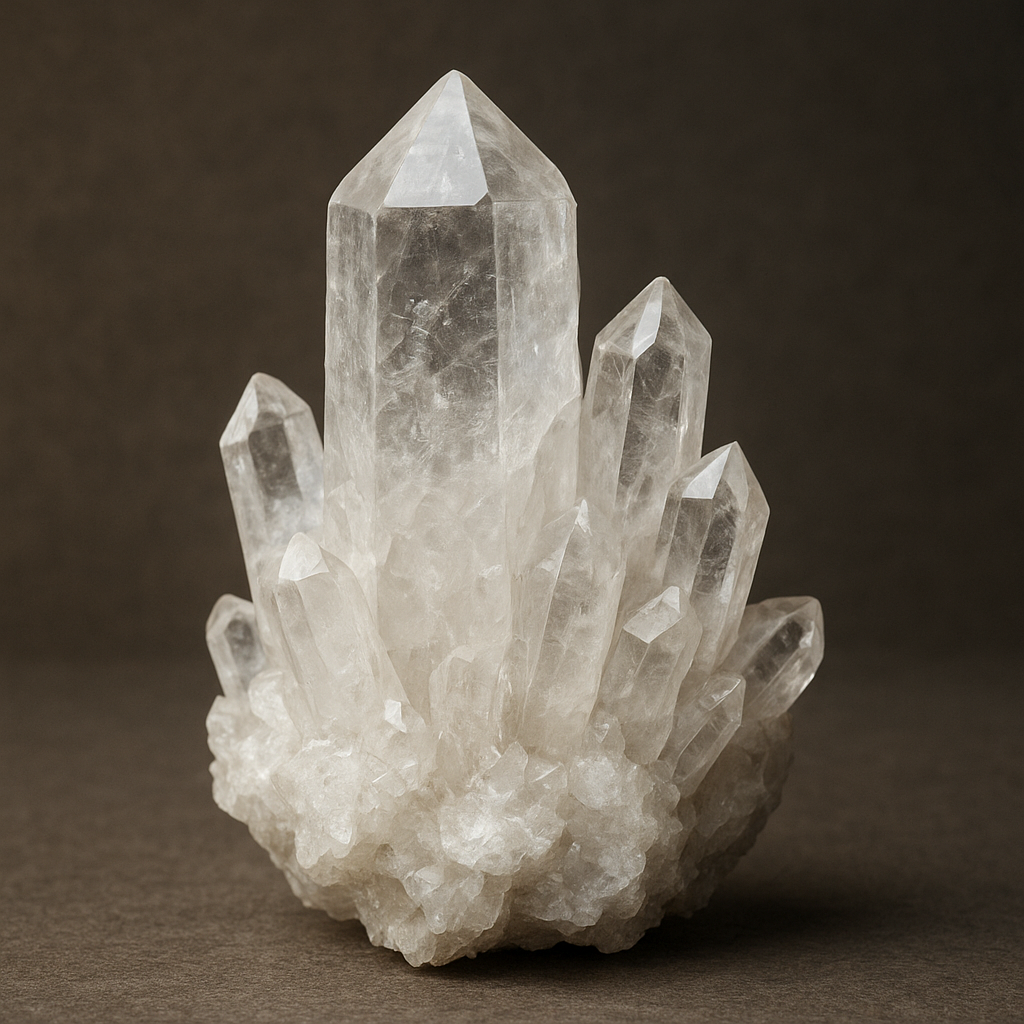
In hand specimen, gyrolite typically forms spherical or reniform aggregates composed of extremely thin, radiating plates. These aggregates can resemble snowballs, rosettes or delicate tufts. The color is usually white, pale gray or colorless, occasionally with subtle greenish or yellowish hues depending on minor impurities. Individual plates are transparent to translucent, while the aggregates often appear silky or pearly due to the reflection of light from countless micro‑crystalline surfaces.
The Mohs hardness of gyrolite is low, ranging from about 2 to 3, which reflects its layered structure and abundant interlayer water. The specific gravity is correspondingly low, around 2.2–2.3, placing it among relatively light silicate minerals. Cleavage is generally not prominent at the scale of hand specimens, but under the microscope the mineral often shows a flaky habit and easily breaks along planes parallel to the silicate sheets. Under transmitted light, the mineral tends to be colorless with low birefringence, though the radial aggregates may show striking optical textures when examined in thin section.
Chemically, the silicate part of gyrolite consists largely of Q2 tetrahedra (in cement chemistry notation), meaning that each SiO4 tetrahedron is linked to two neighbors, forming chains or ribbons within layers. This intermediate polymerization degree, between monomeric and fully three‑dimensionally polymerized silica, is one reason why the mineral displays a combination of relative stability and reactivity. The balance between structurally bound hydroxyl groups, interlayer water and framework oxygen atoms also influences gyrolite’s dehydration and thermal behavior, topics of interest in both geology and materials science.
From a crystallographic point of view, gyrolite is trigonal or pseudo‑hexagonal, although the exact symmetry can be complex due to stacking variations and structural disorder. X‑ray diffraction patterns of natural and synthetic gyrolite often show broad peaks, reflecting the small domain size of ordered layers and the presence of turbostratic stacking faults. This structural complexity makes accurate crystallographic refinement challenging but also gives the mineral a rich and nuanced microstructure that engineers seek to understand for performance optimization in binders and composites.
Natural occurrences and geological context
Gyrolite was first described from volcanic regions where basaltic lavas contain abundant vesicles and fractures. These open spaces, once occupied by gases during lava solidification, later become hosts for secondary minerals created by hydrothermal alteration and low‑temperature fluid circulation. In this environment, gyrolite often forms alongside other hydrous calcium silicates such as okenite, apophyllite, tobermorite and various zeolites, creating spectacular mineral assemblages prized by collectors.
One of the classical environments for gyrolite formation is low‑temperature hydrothermal alteration of basalt in submarine or subaerial settings. Circulating alkaline fluids, often sea water modified by interaction with basaltic glass, dissolve components from the host rock and reprecipitate new minerals in cavities and fractures. The combination of high pH, availability of calcium and silica, and moderate temperatures (commonly below 200 °C) is particularly favorable for the crystallization of gyrolite. Over time, these processes can produce thick linings of radial plates coating vesicle walls, sometimes nearly filling the cavities.
Notable localities include the Deccan Traps of India, Icelandic basalt fields, and various basaltic provinces where zeolite facies metamorphism has occurred. In many of these areas, gyrolite is associated with heulandite, stilbite, laumontite and other zeolites, reflecting similar geochemical conditions of formation. The presence of gyrolite can thus serve as an indicator of specific ranges in temperature, fluid composition and alteration grade within the broader context of low‑grade metamorphism.
Beyond volcanic terrains, gyrolite has been reported in skarn deposits and in some metamorphosed limestone or dolostone units where silica‑rich fluids interact with carbonate rocks. In such settings, gyrolite may occur with grossular, wollastonite, prehnite and other calcium‑rich silicates. These occurrences underscore that gyrolite is fundamentally a product of calcium–silica–water systems under specific pH and temperature regimes, rather than being tied exclusively to a particular rock type.
From a petrological standpoint, gyrolite helps record the history of fluid–rock interaction. Its stability range partially overlaps that of other calcium silicate hydrates, and transitions between different phases (such as gyrolite to tobermorite or xonotlite) can provide clues about evolving temperature and pressure conditions. Detailed microstructural studies of gyrolite‑bearing veins and cavities can reveal multiple generations of growth, dissolution and recrystallization, allowing geologists to reconstruct complex episodes of hydrothermal circulation, uplift and fracturing.
Because of its softness and vulnerability to dehydration, gyrolite is not always preserved through later metamorphic overprints. At higher temperatures or in the presence of aggressive fluids, it may transform into denser, anhydrous or less hydrated phases. Working out these alteration pathways contributes not only to metamorphic petrology but also to understanding how related synthetic phases will behave in industrial or environmental settings over long timescales.
Gyrolite in cement chemistry and construction materials
While natural specimens of gyrolite are primarily the domain of collectors and mineralogists, synthetic gyrolite has gained substantial importance in the study of cementitious materials. Ordinary Portland cement and blended cements hydrate to form a range of calcium silicate hydrates, the main strength‑giving components of concrete. Among these hydration products, phases structurally related to gyrolite occupy a significant position, especially under conditions of high temperature, high pH and specific Ca/Si ratios.
In laboratory systems designed to simulate or accelerate cement hydration, researchers often observe the formation of plate‑like or rosette‑like calcium silicate hydrates that can be identified as gyrolite or gyrolite‑like phases by X‑ray diffraction and electron microscopy. These products may appear in autoclaved materials, high‑alumina cement systems, or blended mixtures containing supplementary cementitious materials such as fly ash, slag or silica fume. Because gyrolite forms under relatively narrow chemical conditions, its presence can serve as a diagnostic marker for particular hydration paths and reaction extents.
The influence of synthetic gyrolite on mechanical properties is a subject of continuing investigation. Its layered, plate‑like morphology can contribute to toughness and crack deflection mechanisms in cement matrices. At the same time, the relatively low density and high water content of gyrolite mean that its abundance and distribution must be carefully controlled to avoid excessive porosity or shrinkage upon drying. Engineers are exploring how controlled nucleation and growth of gyrolite may enhance the microstructural refinement of high‑performance concrete and specialized fiber‑reinforced composites.
Another field of interest is autoclaved building products such as aerated concrete, calcium silicate bricks and fiber‑cement boards. In these materials, controlled hydrothermal curing at elevated temperature and pressure promotes the formation of crystalline calcium silicate hydrates, including gyrolite, tobermorite and xonotlite. These phases contribute to dimensional stability, fire resistance and durability. Understanding when and how gyrolite appears during autoclaving helps manufacturers optimize recipes, curing cycles and raw material blends to achieve desired performance while minimizing energy use and CO2 emissions.
On the chemical level, the formation of gyrolite in cement systems involves dissolution of reactive silica and lime followed by precipitation of layered calcium silicate hydrates from the pore solution. The precise morphology depends on supersaturation, impurities and nucleation sites, including admixtures added for plasticizing, air entrainment or shrinkage control. Organic and inorganic additives can either promote or inhibit gyrolite crystallization, so studying these interactions contributes directly to the design of tailored admixture packages for specialized concretes such as oil‑well cements, self‑leveling screeds or radiation shielding concretes.
Durability engineers also monitor gyrolite as part of long‑term performance assessments. Under some circumstances, alteration of less stable hydration products can lead to secondary gyrolite, affecting pore structure and transport properties. For example, in environments where silica‑rich solutions percolate through a hardened matrix at moderately elevated temperatures, gyrolite may grow in cracks or voids, partially sealing pathways but also altering stress distributions. Recognizing these processes is essential in infrastructure exposed to geothermal fluids, hot industrial effluents or deep subsurface conditions.
Environmental and waste‑management applications
The combination of high internal surface area, layered structure and chemical stability in strongly alkaline environments has led researchers to consider gyrolite as a potential host phase for immobilizing hazardous species. Many industrial by‑products and nuclear wastes are stored in or interact with highly alkaline solutions containing dissolved metals, radionuclides and organic complexing agents. Ensuring that these substances remain immobilized over decades or centuries requires robust host phases that resist dissolution and structural breakdown.
Calcium silicate hydrates like gyrolite are natural candidates because they already function successfully as binding phases in concrete exposed to aggressive conditions. Laboratory experiments indicate that certain cations, including heavy metals, can be incorporated into the gyrolite structure or adsorbed on its surfaces. Incorporation may occur through substitution for calcium or, in some cases, through interlayer incorporation accompanied by charge‑balancing mechanisms. The large amount of structurally bound and interlayer water can also play a role in diffusion and retention at the nano‑scale, making the mineral a potential nanostructured sorbent.
In treatment strategies for industrial residues such as steel‑slag, fly ash or phosphogypsum, engineered systems may intentionally create alkaline conditions in which calcium silicate hydrate phases, including gyrolite, precipitate and encapsulate contaminants. The resulting solidified materials can be used as construction aggregates, backfill or low‑grade building blocks, simultaneously achieving waste stabilization and resource recovery. Researchers are working to determine how stable the encapsulated contaminants remain when the surrounding material weathers, carbonates or undergoes partial dissolution, and gyrolite’s resilience is a central factor in these assessments.
Gyrolite also appears in studies of geological disposal of nuclear waste. In many disposal concepts, cement‑based barriers surround waste canisters, creating a high‑pH environment that interacts with host rock groundwater. Over long time scales, calcium silicate hydrate phases may evolve through dissolution–reprecipitation cycles, potentially generating gyrolite or converting it into other phases. Predicting these transformations and their consequences for permeability, porosity and radionuclide mobility is a key element in performance assessment models. The thermodynamic and kinetic data generated from gyrolite research feed directly into numerical simulations of barrier evolution.
Beyond immobilization, gyrolite’s structure suggests opportunities for pollutant sorption and catalysis. Its layered arrangement and high surface area may enable the adsorption of organic molecules or anions such as chromate and phosphate from contaminated waters. While zeolites and layered double hydroxides currently dominate in such applications, exploratory work on calcium silicate hydrates continues to uncover niche roles where gyrolite or related phases might offer advantages, particularly in highly alkaline waste streams where other sorbents dissolve or lose efficiency.
Materials science, nanostructures and advanced composites
The development of advanced composites and functional materials increasingly relies on controlling structure at the nano‑ and micro‑scale. Gyrolite, with its intrinsically layered and porous architecture, provides a natural template for such control. When synthesized under carefully chosen hydrothermal conditions, gyrolite can form thin, well‑ordered plates or hollow spheres with diameters in the micrometer range. These structures exhibit low density, high specific surface area and interesting mechanical and thermal properties.
One line of research explores the use of gyrolite‑type calcium silicate hydrates as fillers or reinforcing phases in polymer matrices. The plate‑like morphology can help enhance stiffness and dimensional stability while keeping the composite relatively light. Because gyrolite is chemically similar to the mineral constituents of bone and tooth enamel in its calcium–silicate–water basis (although structurally different), it offers good biocompatibility potential. Researchers are therefore investigating gyrolite‑based composites for biomedical applications such as bone scaffolds, dental fillers or bioactive coatings, where controlled dissolution can release calcium and silica ions that stimulate tissue regeneration.
Another area of interest is low‑density insulating materials. The porous aggregates of gyrolite, if stabilized against collapse and dehydration, could serve as lightweight, fire‑resistant insulation for buildings or industrial equipment. The natural resistance of calcium silicate hydrates to high temperatures and flames is attractive when compared with organic foams or polymers. By tuning synthesis to generate open‑cell structures or interconnected plate networks, it may be possible to create aerogel‑like materials with useful combinations of mechanical robustness and low thermal conductivity.
At smaller scales, gyrolite’s layered structure invites surface modification and intercalation chemistry. Organic molecules, dyes or catalysts can be introduced between the silicate sheets or attached to the plate surfaces, potentially creating hybrid materials with tailored optical, electronic or catalytic behavior. Although gyrolite is less flexible in this respect than classic clays or layered double hydroxides, its stability at very high pH and its compatibility with cementitious systems make it promising for niche applications where those conditions are unavoidable, such as photocatalytic self‑cleaning concrete or functional coatings in corrosive industrial settings.
Furthermore, computational materials science increasingly focuses on modeling the atomistic structure and mechanical response of calcium silicate hydrates. Gyrolite serves as a structurally well‑defined reference phase for calibrating molecular dynamics and density functional theory models. By comparing simulated elastic moduli, fracture behavior or diffusion coefficients with experimental data on synthetic gyrolite, researchers refine their understanding of how composition, water content and structural disorder influence macroscopic properties. This knowledge, in turn, informs the design of new binders, geopolymers and hybrid cements aimed at reducing CO2 emissions while maintaining or improving performance.
Analytical techniques and current research directions
Studying gyrolite in both natural and synthetic contexts requires a suite of complementary analytical techniques. X‑ray diffraction remains essential for identifying the characteristic basal reflections associated with its layered structure, even when the peaks are broadened by disorder. Electron microscopy, including scanning and transmission modes, reveals the radial plate morphology, layer stacking defects and interfaces with other minerals or matrix phases. These images are often crucial for linking synthesis conditions or geological histories with observed microstructures.
Infrared and Raman spectroscopy provide insights into the vibration modes of silicate tetrahedra, hydroxyl groups and water molecules, helping to distinguish gyrolite from structurally related calcium silicate hydrates. Thermogravimetric analysis and differential scanning calorimetry track dehydration steps and structural transformations upon heating, delineating stability fields and potential phase transitions. Solid‑state nuclear magnetic resonance spectroscopy supplies detailed information about silicon and calcium coordination environments, directly probing how the silicate network polymerization evolves with composition and temperature.
Contemporary research directions emphasize the role of gyrolite in sustainable construction and low‑carbon technologies. As regulations push the cement and concrete industry to cut greenhouse gas emissions, there is intense interest in alternative binders and supplementary materials that rely more heavily on industrial by‑products and less on clinker. Gyrolite appears in many of these systems as a product of pozzolanic reactions between lime and amorphous silica, or as a component in calcium‑rich alkali‑activated materials. Understanding its formation, stability and impact on mechanical and durability properties is therefore central to evaluating these greener binders.
Another active theme involves coupling experimental work with multiscale modeling. Atomistic simulations help clarify how water molecules move through gyrolite’s interlayers, how defects influence diffusion and how substitution by foreign cations alters stability. Mesoscale models bridge these insights to the level of cement paste microstructure, predicting creep, shrinkage and cracking behavior. At the structural scale, finite element models incorporate gyrolite’s elastic and transport properties to assess the longevity of concrete structures under thermal, mechanical and chemical loads. This integrated approach allows gyrolite, once considered a mere curiosity of basalt cavities, to influence national codes and international guidelines for infrastructure design.
In mineralogical research, gyrolite continues to inform debates about the alteration of oceanic crust, the origin of certain low‑grade metamorphic facies and the long‑term fate of calcium silicates in the Earth’s upper crust. The study of gyrolite in submarine basalts contributes to understanding global geochemical cycles, including the uptake and release of carbon, silicon and water between the lithosphere and hydrosphere. These processes are fundamental to Earth’s climate evolution on geological timescales, linking a seemingly obscure mineral to questions of planetary habitability and environmental change.
Across all these areas, a recurring theme is gyrolite’s role as a bridge between natural and engineered materials. Its occurrence in basalt vesicles echoes at micro‑scale the processes that unfold in a curing concrete slab or a hydrothermal reactor. By examining this mineral in detail—from its layered structure and delicate radial aggregates to its participation in complex chemical and mechanical systems—scientists and engineers gain insights that extend well beyond a single species, illuminating the broader family of calcium silicate hydrates and their multiple functions in both the geosphere and the built environment.