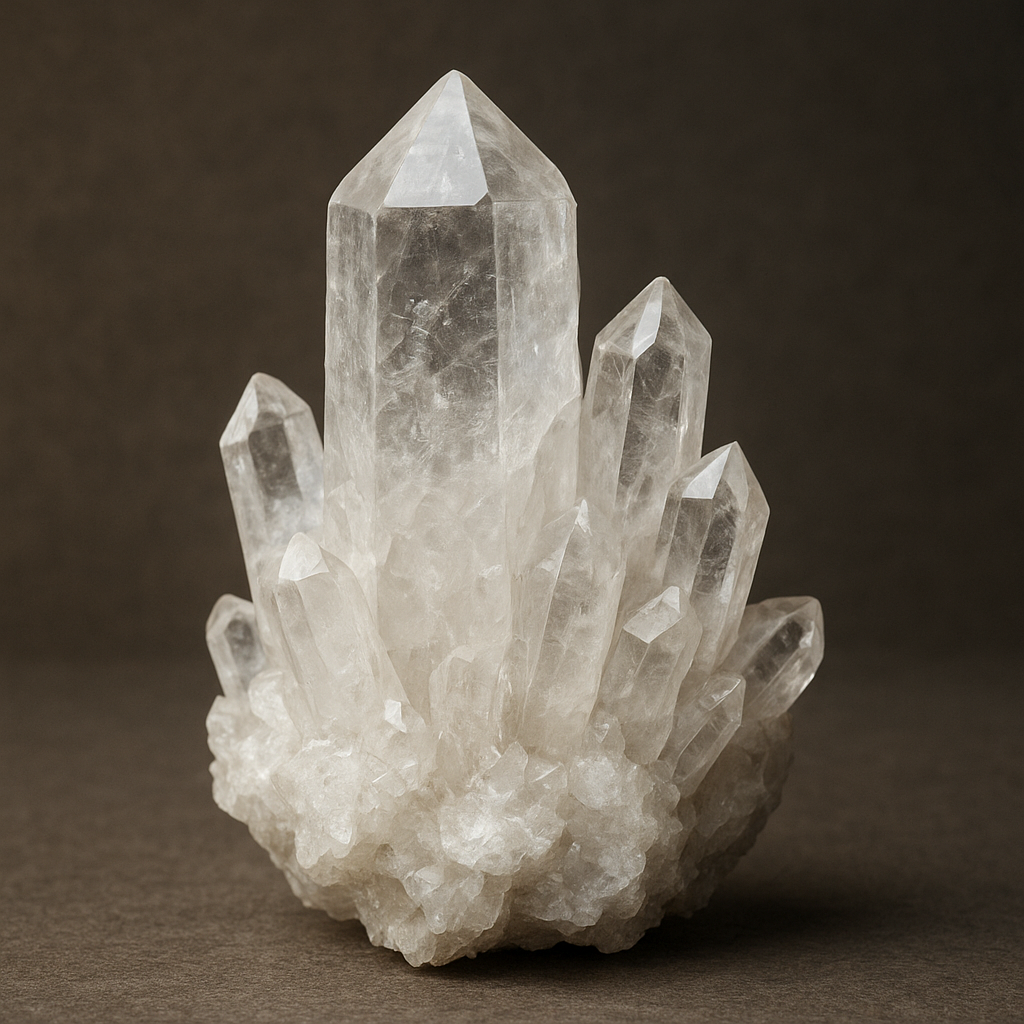

Goldstone glass, often called goldstone or aventurine glass, is a man-made material that has fascinated artisans, scientists and collectors for centuries. Its shimmering, starry appearance evokes the night sky captured inside a transparent or translucent block of glass, yet its origins are grounded in careful control of chemistry, temperature and time. Between legend and laboratory, goldstone stands at the crossroads of craft and science, uniting the history of Venetian glassmaking with modern jewelry design, spiritual symbolism and industrial experimentation. Understanding how this sparkling glass is produced, where it is used, and why it captivates so many different communities reveals an intricate story about innovation, imitation and the human desire to create controlled beauty from chaos.
Origins, Chemistry and Manufacturing of Goldstone Glass
Early references to goldstone are wrapped in mystery, with stories that attribute its discovery to Venetian monks experimenting with alchemy, or to an accidental spill of molten copper into a crucible of glass. Although such tales are romantic, historical evidence points more concretely to the Murano glassmaking tradition near Venice, where specialized furnaces, secret family formulas and guild protections created the ideal environment for this innovation. Goldstone emerged as one of the many specialty glasses developed in the region, prized for its controlled flashes of metallic light suspended within a homogeneous matrix.
The key to goldstone’s distinctive appearance lies in its internal structure. At its core, goldstone is a type of copper-bearing glass that has undergone a process known as controlled crystallization. During production, a silica-based glass melt is combined with copper oxides and various fluxes and stabilizers. Under particular thermal conditions, tiny metallic copper crystals precipitate out of the melt. These microscopic crystals are dispersed throughout the cooled glass, creating the characteristic glittering effect when light is reflected from their surfaces. The visual intensity of the shimmer depends on the size, concentration and orientation of these crystals, as well as the transparency and color of the surrounding glass.
Producing goldstone requires a delicate balance of chemistry and furnace management. If the melt is cooled too quickly, the copper may remain dissolved in the glass and no crystals will form, leaving a dull, unremarkable block. If cooled too slowly, the copper crystals can overgrow, clump together, or even float to the surface, causing uneven patches rather than a uniform sparkle. Skilled glassmakers manipulate parameters such as furnace temperature, the rate of cooling, the composition of the glass batch and the presence of reducing agents in the atmosphere to encourage the right kind of crystal growth. This sensitivity to process is one reason that goldstone recipes remained closely guarded trade secrets among glassmaking families.
Traditional goldstone is based on a warm brown or reddish glass matrix, tinted by the presence of copper and iron compounds. The metallic crystals themselves are usually tiny plate-like or dendritic forms of elemental copper. Their high reflectivity and sharp boundaries with the surrounding glass generate bright points of light that resemble metallic flakes. Because copper is both heavy and reactive, the furnace atmosphere must be carefully controlled to maintain a reducing environment, allowing copper ions to gain electrons and precipitate as metal. Without this reduction step, the glass might merely become a uniform transparent or translucent colored material, lacking the hallmark sparkle.
Over time, glassmakers extended the basic principle behind goldstone to create additional colors. By substituting or supplementing copper with other metal ions and compounds, they generated a range of sparkling glasses. Blue goldstone, for example, is produced using cobalt or manganese compounds in a dark cobalt-blue glass matrix, with reflective inclusions that can contain metallic or crystalline phases different from pure copper. Green variations may involve chromium or other transition metals, while purple or plum tones can be engineered by adjusting both the base-glass composition and the metallic additives. Each variation requires its own careful recalibration of furnace atmosphere, temperature cycles and cooling rates, but all share the same underlying strategy: embed **reflective** crystals in a stable glass host.
From a materials science perspective, goldstone offers a valuable case study in nucleation and growth. The glass matrix acts as a supercooled liquid during part of the cooling process, meaning that it is below its normal crystallization temperature yet remains amorphous. Under such conditions, small clusters of atoms can organize themselves into tiny crystalline nuclei, which may then grow into larger particles if sufficient time and mobility are available. By controlling when and where these nuclei form, glassmakers effectively write a pattern of metallic inclusions into an otherwise disordered solid. This interplay between disorder and order reveals why goldstone is more than a mere decorative curiosity; it is a practical example of how microstructure governs macroscopic optical properties.
Despite its ancient roots, goldstone production is now also approached with modern analytical tools. Techniques such as scanning electron microscopy and X-ray diffraction allow researchers to examine the shape and composition of the internal crystals, confirming that many varieties rely on copper metal, cuprous oxide or related phases. Spectroscopy reveals how light interacts with these inclusions, highlighting the role of surface plasmon resonances and multiple scattering in producing the intense glitter. Such studies not only refine the understanding of goldstone itself but also inform the broader field of functional glass-ceramics, where controlled crystallization is used to tune strength, translucency, thermal expansion and optical behavior.
Goldstone in Jewelry, Ornament and Cultural Symbolism
Although it originates from the realm of specialized glass technology, goldstone is most commonly encountered by the public as a decorative gemstone. Its rich color and lively sparkle make it a popular choice for beads, cabochons, pendants and inlay work. Because it can be cut, drilled and polished like many natural stones, goldstone readily integrates into traditional jewelry-making techniques. Artisans appreciate its uniformity and predictable behavior: unlike some natural gems, it lacks internal fractures, cleavage planes or zones of weakness that might cause breakage during cutting or wear.
In jewelry design, goldstone frequently serves as an affordable alternative to more expensive or rare stones that exhibit similar optical effects. The deep red-brown variety recalls some aspects of sunstone or aventurine feldspar, both of which display glittering reflections from tiny plate-like inclusions. Blue goldstone, with its dark midnight hue and dense sparkling field, often evokes the appearance of the night sky and can be used in designs that reference astronomy, mysticism or the idea of infinity. Its consistent color and grain make it especially suitable for matched sets, uniform strands of beads and geometric inlays that would be challenging to assemble from variable natural stones.
Beyond individual pieces of jewelry, goldstone is employed in larger decorative objects. Artisans carve it into figurines, small sculptures, handles, seals and ornamental tiles. Because the glass can be cast into relatively large blocks or rods, it lends itself to turned objects such as pen barrels, knife handles and small vases. These items benefit from the material’s structural homogeneity and resistance to many forms of chemical corrosion. When polished to a high gloss, the surface reveals layers of sparkling inclusions that change appearance as the viewing angle or lighting shifts, creating a dynamic, almost animated visual effect.
Despite its artificial origin, goldstone has developed a rich layer of symbolic and metaphysical associations in various spiritual and esoteric traditions. Many people who work with crystals and healing stones classify goldstone alongside natural minerals, attributing to it qualities such as vitality, ambition, protection or grounding. The warm coppery sparkle of the classic variety is sometimes linked to the element of fire, to solar energy or to the concept of manifesting desires into reality. Blue goldstone, by contrast, is often associated with intuition, communication and connection to cosmic or celestial realms, due to its resemblance to a star-filled sky.
From a critical standpoint, the metaphysical status of goldstone is intriguing because it blurs the boundary between natural and synthetic materials in spiritual practice. Some practitioners argue that intention and human creativity imbue the glass with energetic properties, highlighting the role of craftsmanship and focus as sources of symbolic power. Others emphasize its copper content, since copper has a long history of symbolic meaning connected to conductivity, circulation and the planet Venus. Even skeptics may find cultural value in the way goldstone serves as a case study in how meaning can be assigned to a material more for its appearance and narrative than for its geological origins.
Goldstone’s ambiguous identity also appears in the language used to market it. Trade names such as “aventurine glass” or “goldstone gem” can imply a closer kinship with natural minerals than strictly exists. This has led to discussions in gemology and jewelry ethics about proper disclosure and labeling. Professional gem dealers and appraisers typically clarify that goldstone is a type of glass, not a mined gemstone, even though it may be cut and set in comparable ways. Educational materials from gemological institutions frequently use goldstone as an example when teaching about imitation stones, composite materials and the importance of knowing a gem’s origin.
Historically, the prestige of Venetian glass and the secrecy surrounding goldstone’s production also helped shape its cultural status. Items made from this material were once considered luxurious, partly because only a small number of workshops could reliably produce high-quality pieces. As industrial-scale glass production expanded and the basic principles behind controlled crystallization became more widely known, goldstone moved from a rare curiosity to a mainstream decorative staple. Nonetheless, vintage or antique goldstone objects, especially those with documented Murano provenance, remain collectible and can command significant interest among historians, collectors and museums focusing on the decorative arts.
In many contemporary designs, goldstone is used in combination with both natural and synthetic materials, creating visual juxtapositions that comment on authenticity and value. Jewelers might pair goldstone with natural quartz, lab-grown gemstones or metals such as silver and brass. These contrasts between organic inclusions, perfectly cut facets and glassy surfaces invite viewers to reflect on what they perceive as “real” or “artificial” beauty. Some artists intentionally highlight the man-made nature of goldstone, using it in pieces that explore industrial aesthetics, alchemy themes or the transformation of base materials into something visually striking.
Modern Applications, Research and Related Glass Technologies
While goldstone is best known as a decorative material, the principles behind its creation connect directly to a broad spectrum of modern glass-ceramic technologies. In industrial materials science, glass-ceramics are engineered composites that start as homogeneous glass and then undergo controlled crystallization to form dispersed crystalline phases. These materials are tailored for properties such as high strength, low thermal expansion, chemical durability or specific optical behavior. Goldstone, with its embedded copper crystals responsible for sparkling reflections, can be seen as an early and aesthetically motivated ancestor to these more utilitarian products.
One important area of research inspired by goldstone-like structures involves tailoring the scattering and absorption of light in functional materials. By adjusting the size, shape and concentration of metallic or oxide crystals within a glassy matrix, scientists can design materials with customized optical responses. This includes developing glasses that efficiently reflect infrared radiation for energy-saving architectural windows, materials for laser-host applications, and components for photonic devices. Although these modern glasses rarely resemble goldstone visually, they rely on precisely the same concepts of nucleation, growth and phase separation that allow copper crystals to form in decorative goldstone blocks.
In the realm of art glass and studio glass movements, contemporary glassmakers often experiment with goldstone rods or chips as ingredients in complex designs. Lampworkers may encase strips of goldstone within clear or colored borosilicate glass, stretching and twisting them into intricate patterns. When the piece is later polished or flame-worked, the internal streaks of sparkle create visual depth and motion. Fused-glass artists sometimes incorporate thin slices of goldstone into larger panels, using them as accents that catch the viewer’s eye among more diffuse colors and textures. These practices blur the line between industrially produced specialty glass and individually crafted artwork.
Another interesting offshoot of goldstone technology is the production of imitation aventurine and similar glittering glass formulations. Different factories and glasshouses around the world have developed their own recipes that imitate the aesthetic of classic Murano goldstone, sometimes with alternative metallic systems or mixed compositions. Iron, manganese, chromium and even silver compounds can be introduced under carefully controlled conditions to create varied sparkling effects. Each composition presents its own technical challenges, such as preventing unwanted oxidation, avoiding devitrification or controlling the viscosity of the melt during the crucial crystallization phase.
At the intersection of art, science and education, goldstone has become a useful teaching material. In university courses on materials science or solid-state chemistry, samples of goldstone can illustrate the concept of phase separation in glasses and the relationship between microstructure and optical phenomena. Students may examine polished cross-sections under optical microscopes to observe how the metallic crystals are distributed, or use basic spectroscopy to compare the reflectance of goldstone against that of homogeneous colored glass. These hands-on activities link abstract thermodynamic ideas to an immediately observable and aesthetically engaging example.
The popularity of goldstone among amateur jewelers and craft enthusiasts also reflects broader trends in the democratization of materials once reserved for specialists. Hobbyists can now purchase goldstone rough, beads and pre-shaped components through global online markets, along with access to tutorials, historical commentary and technical notes. This widespread availability allows creative experimentation beyond traditional uses: goldstone appears in resin composites, mixed-media artwork, miniature dioramas, costume design and even as decorative inlay in custom-made furniture or musical instruments. Digital communities share photos and process descriptions, gradually building a collective knowledge base that supplements older, more guarded workshop traditions.
From an environmental perspective, goldstone raises questions common to many glass and ceramic materials. The production of glass requires substantial energy input to reach melting temperatures, and the use of metallic additives implies careful management of emissions and waste. Modern facilities that produce goldstone-like glasses typically operate under regulatory frameworks designed to limit airborne particulates and heavy-metal release. At the same time, goldstone’s durability and inertness mean that once produced, it is relatively stable and non-reactive in normal environments. Compared to some synthetic materials, it poses minimal direct hazards in its finished form, although responsible disposal and recycling policies remain important.
In the context of geological imitation, goldstone occupies a curious niche. It does not naturally occur in the Earth’s crust, yet its visual appeal often leads people to mistake it for a naturally formed stone. Educational outreach by museums and science centers sometimes uses goldstone exhibits to highlight the distinction between naturally occurring minerals and engineered materials. By explaining how human-controlled processes can produce structures that mimic or even surpass the complexity of geological specimens, such exhibits encourage visitors to think critically about the origins and classification of the objects they see in galleries, shops and personal collections.
Looking toward future developments, the design principles behind goldstone may find renewed expression in advanced optical and electronic materials. As researchers investigate nanoscale metal-glass composites for applications such as plasmonic sensors, improved display technologies and specialized coatings, the fundamental task remains the same: embedding and controlling dispersed crystalline or metallic domains inside a glassy host. While these cutting-edge materials may never be marketed as jewelry or spiritual tools, they share a conceptual lineage with the shimmering glass blocks once crafted in secret Venetian furnaces. Goldstone, therefore, stands as both a historical artifact and a living reminder that aesthetic innovation frequently anticipates scientific discovery.