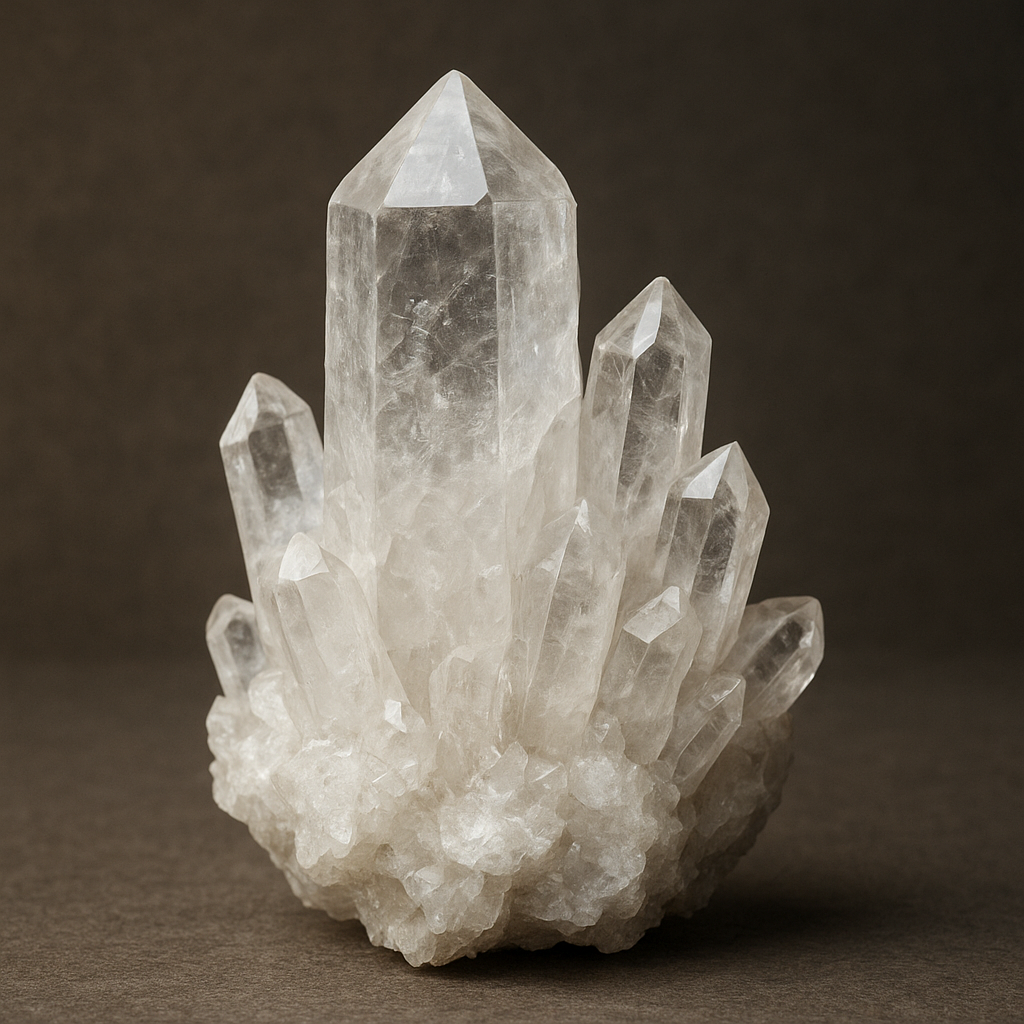

Goethite is one of the most widespread iron hydroxide minerals on Earth and a key component of soils, rocks, and iron ore deposits. Despite its relatively simple chemical formula, this mineral plays a central role in the global **iron** cycle, soil formation, pigmentation in art and industry, and even in our understanding of past climates on both Earth and Mars. Its characteristic brownish to yellowish colors, its capacity to bind metals and nutrients, and its importance as an iron ore make goethite a subject of interest for geology, environmental science, archaeology, and materials science alike. In many landscapes, from tropical lateritic terrains to temperate soils, goethite quietly shapes the color, chemistry, and fertility of the ground beneath our feet.
Mineralogical characteristics and formation processes
Goethite is an iron oxyhydroxide with the idealized chemical formula FeO(OH). In mineralogical classification it belongs to the group of simple hydroxides, but structurally it is more complex than its formula suggests. Its crystal structure is based on chains of edge-sharing FeO3(OH)3 octahedra that create a framework capable of hosting various impurities and defects. This structure strongly influences properties such as color, hardness, and surface reactivity.
The mineral typically forms acicular (needle-like) or prismatic crystals, though well-developed crystals are relatively rare in nature. More commonly, goethite occurs as fine-grained, earthy, or botryoidal masses, sometimes resembling grape-like aggregates. In powder or finely crystalline form it shows characteristic yellowish-brown to reddish-brown hues that have been used as **pigment** sources for thousands of years. Its hardness, around 5 to 5.5 on the Mohs scale, makes it moderately resistant to abrasion, yet it readily weathers and transforms in the presence of changing redox conditions.
Goethite is generally opaque, with an earthy to submetallic luster, especially when present in compact, dense aggregates. The streak—one of the defining features in mineral identification—is typically yellowish brown, a useful diagnostic feature that distinguishes it from some darker iron oxides. The specific gravity usually lies between 3.3 and 4.3, reflecting its relatively high iron content. Under microscopic observation in reflected light, goethite can show a range of internal textures and intergrowths with other iron minerals, particularly **hematite** and limonite-like mixtures.
From a stability perspective, goethite is one of the most thermodynamically stable iron oxyhydroxides in many near-surface environments. It commonly forms through the weathering and oxidation of primary iron-bearing minerals such as pyrite, magnetite, and siderite. When these minerals are exposed to oxygenated water, ferrous iron (Fe2+) is oxidized to ferric iron (Fe3+), which hydrolyzes and precipitates as goethite under a wide range of pH conditions. This process is central to the geochemical cycling of iron and controls the fate of many trace metals in soils and sediments.
The formation of goethite is highly sensitive to environmental parameters such as pH, redox potential, temperature, and the presence of organic matter or competing ions. In slightly acidic to neutral conditions, with sufficient oxygen, goethite tends to be favored over other iron phases like ferrihydrite or lepidocrocite, although these phases may appear first as metastable intermediates. Over time, poorly crystalline iron hydroxides commonly transform into more stable goethite or hematite through processes of dissolution–reprecipitation or solid-state rearrangements.
Crystallinity and particle size are important variables governing goethite’s behavior. Fine-grained, poorly crystalline goethite has a higher surface area and thus a greater capacity to sorb contaminants and nutrients than coarse, well-ordered crystals. In natural settings, many so-called “limonites” are actually complex mixtures dominated by goethite with variable crystallinity, intermixed with clays, organic matter, and other oxides. This variability explains why goethite-rich materials can exhibit a broad spectrum of colors and reactivities, even when their bulk composition appears similar.
On a microscopic scale, goethite often shows substitution of Fe by other cations such as Al, Mn, or even small amounts of Si and P. Aluminum substitution is particularly common in highly weathered tropical soils, where extensive leaching removes many base cations and leaves behind residual iron and aluminum oxyhydroxides. Such substitutions can influence color, stability, and solubility, providing environmental scientists with subtle indicators of the degree of weathering and the geochemical history of a particular soil or lateritic profile.
Occurrence in nature and geological environments
Goethite is exceptionally widespread in Earth’s crust, especially in the uppermost weathered zone where rocks interact with the atmosphere and hydrosphere. It is an essential component of many soils, sediments, and iron ore deposits, and often appears in environments ranging from humid tropical forests to arid desert terrains. Its broad stability field under oxidizing conditions explains why it is one of the dominant iron-bearing phases in the near-surface environment.
In soils, goethite is commonly associated with brownish and yellowish color tones. Pedologists and soil scientists use these colors, together with spectroscopic or diffraction techniques, as indicators of the mineralogical composition and drainage conditions. Well-drained soils in temperate regions often contain abundant goethite, which forms as ferrous iron leached from primary minerals oxidizes during percolation of water and is immobilized in the soil matrix. These goethite-rich horizons can act as important sinks for **phosphorus**, arsenic, and various trace metals due to strong adsorption onto iron oxyhydroxide surfaces.
In tropical and subtropical climates, intense chemical weathering can produce thick lateritic profiles enriched in goethite and other iron oxides. Over geological timescales, these laterites may be further modified and upgraded into economically significant iron ore deposits. Many of the world’s major iron ore provinces, such as those in Brazil, West Africa, and parts of Australia, contain substantial amounts of goethite, either as the primary ore mineral or intermixed with hematite. These so-called “goethitic ores” can form through supergene enrichment processes, where iron is concentrated near the surface as more soluble components are leached away.
Beyond soils and laterites, goethite also occurs in sedimentary iron formations, bog iron deposits, and as an alteration product in hydrothermal systems. Bog iron, historically used as a local source of iron in many parts of northern Europe and North America, typically consists of goethite precipitated from iron-rich groundwater in wetlands. In these low-temperature aqueous settings, microbial activity often plays a significant role. Iron-oxidizing bacteria can catalyze the transformation of dissolved Fe2+ into solid Fe3+ oxyhydroxides, including goethite, thereby linking mineral formation to microbial ecology.
Hydrothermal and supergene alteration zones around sulfide ore deposits commonly show abundant goethite as a weathering product of pyrite, chalcopyrite, and other sulfides. When sulfide minerals oxidize at or near the surface, they generate acidic conditions and release Fe2+, which later oxidizes and precipitates as goethite or similar phases. The presence of goethite, sometimes forming vividly colored gossans, serves as an exploration guide for underlying polymetallic ore bodies. Geologists mapping these iron-rich caps can infer the distribution and type of deeper mineralization.
In cave environments and other subsurface settings, goethite can form speleothems and coatings, often in association with manganese oxides and other secondary minerals. Here again, microbial mediation is frequently implicated. Iron-oxidizing communities colonize rock surfaces or water films, inducing the precipitation of thin goethite layers. These deposits may preserve biologically derived structures, providing a valuable record of subsurface microbial activity and redox dynamics.
Beyond Earth, goethite has been inferred or tentatively identified on the surface of Mars through spectroscopic data from orbiters and rovers. The detection of iron oxyhydroxides, including phases compatible with goethite, is of considerable interest because such minerals typically require liquid water to form. They can therefore act as mineralogical tracers of past aqueous environments. When planetary scientists interpret infrared and Mössbauer spectra indicating the presence of goethite-like phases, they gain clues about ancient hydrothermal systems, groundwater percolation, or lake environments that may once have existed on Mars.
On a more localized scale, goethite appears in concretions, nodules, and replacement textures in various sedimentary rocks. In some sandstones and shales, early diagenetic goethite can cement grains, affecting porosity and permeability. These properties are important for hydrogeologists and petroleum geologists, who must understand how iron oxides modify fluid flow in reservoirs and aquifers. In marine sediments, fine goethite particles may form through slow oxidation of iron released from pore waters, accumulating in red or brown clay layers that archive oceanographic and climatic changes over millions of years.
Industrial uses, pigments, and technological relevance
Because of its abundance and high iron content, goethite has long been exploited as an iron ore. Although hematite-rich ores are often preferred in modern high-efficiency steelmaking, goethitic ores remain highly significant in many mining districts. They frequently occur near surface, in weathered zones, and are therefore easier to access via open-pit mining. During beneficiation, goethitic ores may be blended with hematite or magnetite ores to obtain suitable feed quality for blast furnaces or direct reduction plants.
One challenge associated with goethitic iron ore is the higher combined water and hydroxyl content compared to pure oxides like hematite. During processing, this water must be driven off, consuming energy and altering the texture of the ore. Nonetheless, modern metallurgical technologies have been adapted to handle such feedstocks, and in some cases goethitic ores provide advantages, such as lower impurities in specific deposits. The persistence of goethite in commercial iron ore products underscores its continued relevance to the global **steel** industry.
Perhaps one of the most culturally significant uses of goethite is as a source of ochre pigments. Finely ground goethite produces yellow to brown tones that have been employed since prehistoric times in cave paintings, body decoration, ceramic slips, and later, in traditional painting and architectural finishes. Archaeological discoveries from sites in Africa, Europe, and Australia document the use of iron oxide and hydroxide pigments by early Homo sapiens and even earlier hominins, suggesting that the manipulation of goethite-rich materials was an important part of symbolic behavior and artistic expression.
The color of goethite-based ochres depends on grain size, crystallinity, and admixture with other iron phases such as **magnetite** and hematite. Heating goethite-containing ochre can induce dehydroxylation and partial conversion to hematite, shifting the pigment from yellowish tones to deeper reds. Prehistoric artisans appear to have exploited this property intentionally, using controlled heating to obtain a broader palette. Modern analytical techniques such as X-ray diffraction and Mössbauer spectroscopy have confirmed that many ancient red ochres show structural signatures consistent with thermally transformed goethite.
In contemporary industries, synthetic goethite is produced for use in pigments, corrosion inhibitors, and as a precursor for other iron oxides. Controlled precipitation methods allow manufacturers to tailor particle size, shape, and surface properties, thereby tuning color intensity and opacity. Goethite-based pigments may be used in coatings, plastics, and building materials where stable, non-toxic, and lightfast earthy tones are desired. Compared to some organic dyes, iron oxyhydroxide pigments offer excellent durability under sunlight and in harsh environments.
Goethite’s surface reactivity and sorption capacity also underpin its use in environmental remediation technologies. Fine-grained goethite can bind arsenic, lead, chromium, and various organic contaminants through adsorption and co-precipitation mechanisms. This property has inspired the development of iron-based filters and reactive barriers, where goethite or related phases immobilize pollutants in groundwater or industrial effluents. In situ remediation strategies sometimes rely on stimulating iron cycling in aquifers to promote the formation of goethite and other reactive iron phases that trap dissolved contaminants.
From a technological perspective, goethite serves as a useful precursor in nanomaterials research. By controlling synthesis conditions such as pH, temperature, and organic additives, researchers can obtain goethite nanorods or nanoparticles with specific aspect ratios and surface chemistries. These materials can then be transformed into hematite or magnetite through thermal or chemical treatments, yielding iron oxide nanostructures for applications in catalysis, magnetic storage, sensors, water splitting, and photoelectrochemical cells. The relatively low-cost and environmentally benign nature of iron compounds make them attractive alternatives to more expensive or toxic metal-based nanomaterials.
Corrosion science offers another context in which goethite is technologically important. Rust, the familiar corrosion product of iron and steel, is a complex mixture of iron oxyhydroxides and oxides, including goethite. Understanding how goethite forms, transforms, and interacts with protective coatings is crucial for designing **corrosion**-resistant alloys and paints. In some controlled conditions, compact goethite layers can act as semi-protective barriers between the metal substrate and the corrosive environment. By contrast, porous or poorly adherent rust layers may accelerate corrosion by trapping moisture and salts. Thus, the morphology and crystallinity of goethite within rust strongly influence the longevity of infrastructures such as bridges, pipelines, and ships.
In catalysis and environmental chemistry, goethite participates as both a catalyst and a reactant in redox processes. It can facilitate the degradation of organic contaminants via Fenton-like reactions when combined with hydrogen peroxide or other oxidants, generating reactive radicals that break down pollutants. It also plays a role in abiotic reduction–oxidation exchanges involving sulfur and nitrogen species, contributing to the natural attenuation of contaminants in soils and sediments. These coupled reactions between goethite and various electron donors or acceptors help regulate the chemistry of subsurface environments and guide engineered treatment systems.
Beyond numerous practical uses, goethite is central to a variety of scientific investigations. In paleoclimatology, the composition and isotopic signatures of goethite extracted from soils, sediments, and iron formations can record past environmental conditions. Oxygen and hydrogen isotopes incorporated into its structure, for example, provide clues about the temperature and composition of the fluids from which it precipitated. In some banded iron formations and lateritic profiles, detailed analyses of goethite have been used to infer ancient rainfall patterns, atmospheric oxygen levels, and the timing of weathering episodes.
The role of goethite in nutrient cycling is also a topic of active research. Its ability to adsorb phosphate, for instance, has important implications for both agriculture and water quality. In fertilized soils, phosphate can become strongly bound to goethite surfaces, reducing its immediate bioavailability to plants but also preventing rapid leaching into waterways. This dynamic binding and release influences fertilizer efficiency, crop yields, and the risk of eutrophication in downstream aquatic systems. As a result, agronomists and environmental managers pay close attention to the quantity and characteristics of iron oxyhydroxides like goethite in cultivated fields.
Finally, the interdisciplinary nature of goethite research—spanning mineralogy, geochemistry, archaeology, **soil** science, planetary exploration, and materials engineering—highlights how a single, seemingly modest mineral can connect diverse fields of inquiry. From prehistoric pigment quarries and rusting bridges to Martian regolith and nanostructured catalysts, goethite occupies a subtle but pervasive place in both natural systems and human technologies. Its study continues to yield insights into processes as varied as landscape evolution, climate change, pollutant fate, and the design of new functional materials.