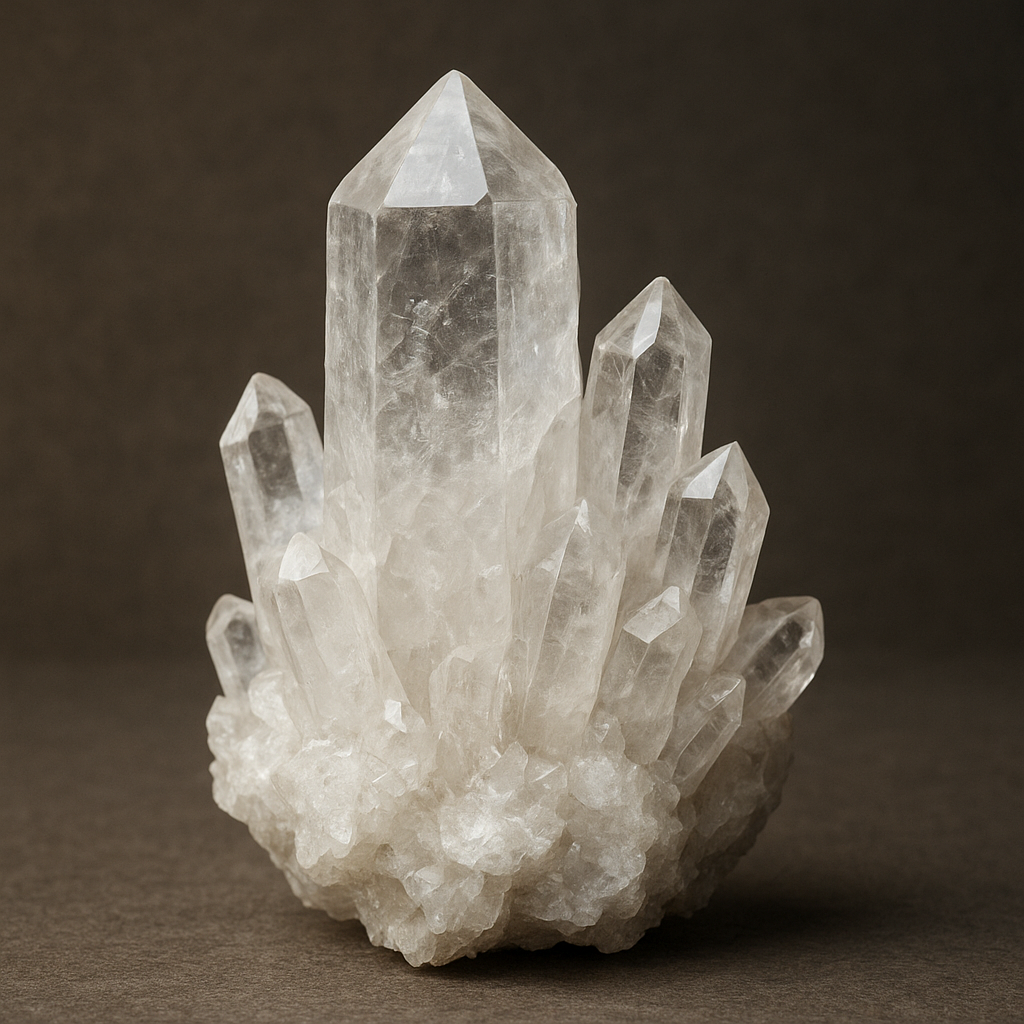

Glaucophane is a striking blue to blue-violet mineral that belongs to the amphibole group and plays a key role in understanding high-pressure, low-temperature processes within subduction zones. Its intense coloration and distinctive geological context make it an important indicator of specific metamorphic conditions, especially within blueschist facies rocks. Although not widely known outside geology, glaucophane provides valuable clues about how oceanic crust is recycled into the mantle, how mountain belts evolve, and how fluids move in the deep Earth. Because it forms only in a narrow range of pressure and temperature, the presence of glaucophane in a rock is almost like a geological passport stamp, documenting that the rock has traveled through the cold, deep environments typical of convergent plate boundaries.
Chemical composition, structure and physical properties
Glaucophane is a **sodium-rich** amphibole with an idealized chemical formula often written as Na2Mg3Al2Si8O22(OH)2, though in natural samples this composition is usually more complex, with variable contents of iron, magnesium, manganese and other elements. It belongs to the sodic amphibole subgroup, together with minerals such as riebeckite and arfvedsonite. The structure of glaucophane, like that of other amphiboles, is based on double chains of SiO4 tetrahedra linked together, forming elongated channels that can host large cations such as sodium and calcium. This chain structure controls many of the mineral’s physical properties, including its cleavage, habit and optical behavior.
Crystals of glaucophane are usually prismatic and elongated, commonly forming slender needles or fibrous aggregates. They often display a splintery or fibrous fracture. The mineral has two prominent directions of cleavage intersecting at approximately 56° and 124°, a diagnostic characteristic of amphiboles that distinguishes them from pyroxenes, which show cleavage angles closer to 90°. On the Mohs scale of hardness, glaucophane typically falls between 5 and 6, making it neither particularly soft nor extremely hard. Its specific gravity usually ranges from about 3.0 to 3.3, reflecting the presence of relatively light elements such as sodium and aluminum together with magnesium and iron.
One of the most visually striking features of glaucophane is its color. It is most commonly deep blue, blue-violet or grayish blue, though it can also appear greenish or brownish in some compositions or under certain weathering conditions. The name glaucophane is derived from Greek roots meaning bluish or sea-green appearance. In thin section under a polarizing microscope, glaucophane shows strong pleochroism, changing color from blue to violet or greenish as the stage is rotated. This pleochroism, combined with its high relief and distinctive interference colors, allows petrologists to identify it easily in metamorphic rocks.
Optically, glaucophane is biaxial and often shows moderate to high birefringence. It tends to have relatively high refractive indices compared with many common rock-forming silicates. In many cases, the mineral occurs as part of a solid solution series with ferroglaucophane, where iron substitutes for magnesium, resulting in subtle changes in color and density. The more iron-rich members are generally darker, sometimes nearly black in hand sample. Because of this chemical flexibility, glaucophane compositions can be used to infer conditions of formation and fluid activities in metamorphic environments.
Another important aspect is the mineral’s stability field. Glaucophane is stable under **high-pressure** but relatively low-temperature conditions, usually within the blueschist facies. These conditions are characteristic of subduction zones, where cold oceanic lithosphere is thrust downward into the mantle faster than it can heat up. The fact that glaucophane becomes unstable at higher temperatures and converts into other amphiboles or pyroxenes when heated allows geologists to use its presence or absence to interpret the pressure–temperature history of a rock.
Geological occurrence and metamorphic significance
The most typical geological setting for glaucophane is in **blueschist** facies metamorphic rocks, a suite of rocks that owe their name to the presence of blue amphibole and, in some cases, blue sodic pyroxene such as omphacite. These rocks are associated with convergent plate margins, particularly along subduction zones where oceanic crust and associated sediments are carried downwards beneath either continental or oceanic lithosphere. As basaltic oceanic crust is subducted, it undergoes metamorphism at pressures of roughly 0.6 to more than 1.5 GPa and temperatures ranging from about 200 to 500 °C. Under these conditions, original minerals such as plagioclase and pyroxene break down and new mineral assemblages containing glaucophane, lawsonite, epidote, jadeite and others crystallize.
Glaucophane-bearing rocks are particularly well developed in regions where subduction has been both long-lived and relatively cold, allowing water-rich, low-temperature conditions to persist at significant depths. Classic localities include the Franciscan Complex of California, blueschists in the Western Alps, the Cyclades and other parts of Greece, as well as regions of Japan, New Caledonia and Kamchatka. In many of these places, ancient oceanic crust that was once deeply buried has been exhumed along major shear zones or thrust faults, bringing high-pressure rocks back to the surface. The presence of glaucophane within these exhumed units testifies to their deep burial and subsequent return.
Within blueschist terrains, glaucophane commonly occurs together with minerals like lawsonite, aragonite, pumpellyite, chlorite, epidote and phengite. Specific combinations of these minerals define particular pressure–temperature fields within the blueschist facies. For example, the coexistence of glaucophane and lawsonite often indicates comparatively low temperatures and high water activities, while assemblages containing glaucophane and epidote may reflect slightly higher temperatures or different bulk compositions. By mapping glaucophane-bearing assemblages across a metamorphic complex, geologists can reconstruct gradients in pressure and temperature and infer the geometry of fossil subduction zones.
Glaucophane can also appear in transitional facies such as eclogite–blueschist mixtures or in retrograde assemblages where eclogites partially re-equilibrated under slightly lower pressures. In these cases, glaucophane may overprint earlier minerals such as omphacite or garnet, recording complex metamorphic histories that involve both burial and exhumation. Detailed petrographic analysis, including microstructures and mineral zoning, allows scientists to unravel such histories and estimate the rates at which rocks traveled through the subduction channel.
In addition to oceanic crust, glaucophane may form in high-pressure metamorphosed pelitic sediments, greywackes and even in carbonate-bearing sequences where the appropriate bulk chemistry and fluid conditions are met. For instance, glaucophane-bearing metapelites may contain combinations of phengite, paragonite, garnet and chloritoid, reflecting the adaptation of sodic amphibole to aluminum-rich parent rocks. These occurrences extend the significance of glaucophane beyond simple basaltic protoliths and show that a broad spectrum of crustal materials can pass through the blueschist facies during subduction.
The mineral also plays an important role in discussions about the thermal structure of ancient Earth. Blueschists are much less common in very old Precambrian terrains than in younger Phanerozoic belts, leading to debates about whether cold subduction was rare or absent earlier in Earth’s history. Because glaucophane is such a clear indicator of cold high-pressure conditions, its scarcity in Archean and early Proterozoic rocks is used as an argument that early subduction may have been hotter and more buoyant, or that the style of plate tectonics was fundamentally different. Thus, every occurrence of glaucophane in older terrains is carefully examined and often reinterpreted as new analytical techniques and pressure–temperature models become available.
Beyond static geological reconstructions, glaucophane-bearing rocks interact dynamically with fluids circulating in subduction zones. Amphiboles, including glaucophane, incorporate hydroxyl groups into their crystal structure, making them important reservoirs and carriers of water at depth. As glaucophane breaks down during prograde or retrograde metamorphism, it can release water and other volatiles, contributing to the metasomatism of the overriding mantle wedge and potentially triggering partial melting that feeds volcanic arcs. Consequently, the distribution and stability of glaucophane are essential components of models of arc magmatism and the deep Earth water cycle.
Uses, research applications and related topics
Although glaucophane is not an important commercial ore mineral and is rarely used as a gemstone, it has significant value in **petrology**, structural geology and tectonic research. Because its stability field is narrow and well constrained in pressure–temperature space, glaucophane serves as a reliable indicator mineral for reconstructing the metamorphic evolution of subduction complexes. Petrologists exploit phase equilibria, mineral chemistry and textural relationships involving glaucophane to estimate the thermal gradients in subduction zones and to test numerical models of plate convergence.
One active area of research involves detailed chemical analysis of glaucophane through methods such as electron microprobe analysis, laser ablation ICP–MS and secondary ion mass spectrometry. These techniques allow scientists to determine the distribution of major and trace elements within individual grains, including zoning patterns that preserve a record of changing conditions during crystal growth. For example, a core of relatively magnesium-rich glaucophane surrounded by more iron-rich rims may reflect progressive changes in the rock’s bulk composition or fluid regime as metamorphism evolved. Trace elements like lithium, boron or rare earth elements, though present only in small quantities, can reveal information about the sources and movements of fluids during metamorphism.
Glaucophane also figures prominently in experimental petrology. High-pressure, high-temperature experiments using synthetic or natural compositions seek to replicate the conditions under which glaucophane forms and breaks down. Such experiments calibrate geothermometers and geobarometers based on sodic amphiboles and test the effect of variables such as fluid composition, oxygen fugacity and coexisting mineral phases. For instance, experiments help determine when glaucophane will be replaced by minerals such as hornblende, jadeite or omphacite as temperature rises or as the availability of water decreases. These experimental constraints feed into thermodynamic databases, which in turn underpin software used to model metamorphic processes quantitatively.
In structural geology, the orientation and fabric of glaucophane crystals are used to infer deformation patterns within subduction complexes. Because glaucophane frequently grows during or after deformation, its preferred orientation, alignment in shear zones and association with foliation or lineation provide evidence of the kinematics of deep-seated tectonic flow. In some blueschist belts, elongated glaucophane crystals define stretching lineations that point in the direction of tectonic transport, helping geologists reconstruct large-scale shear senses and nappe geometries.
Another interesting aspect is the relationship between glaucophane and seismic properties of subducted slabs. Rocks rich in glaucophane and other hydrous minerals exhibit distinct physical characteristics such as lower seismic velocities and higher attenuation compared with dry peridotite. Laboratory measurements on glaucophane-bearing rocks, combined with seismic observations, allow geophysicists to infer the mineralogical composition and hydration state of slabs at various depths. This contributes to a better understanding of slab buoyancy, slab geometry and the potential causes of intermediate-depth earthquakes, some of which may be linked to dehydration reactions involving amphiboles.
Though glaucophane is not exploited as a major industrial mineral, it occasionally appears in specialized collections and educational settings. Mineral collectors value well-formed, intensely colored crystals from classic blueschist localities, particularly those with transparent to translucent grains suitable for micro-mounts or polished sections. In teaching laboratories, glaucophane-bearing thin sections are standard tools for introducing students to high-pressure metamorphism, blueschist facies assemblages and the basics of amphibole optics.
Glaucophane also intersects with discussions about **subduction** style and geodynamic evolution. Numerical models that simulate the mechanical behavior of subducting plates often incorporate variable rheologies that depend on mineralogy. Because glaucophane-bearing rocks may be weaker than dry mafic or ultramafic rocks, their presence in the subduction channel could influence the localization of shear zones, the development of megathrust faults and the potential for large earthquakes. The presence of glaucophane can also indicate that parts of the slab are hydrated, which further weakens rocks and modifies their density and buoyancy. Integrating petrological data from glaucophane with geophysical observations thus remains a frontier area of interdisciplinary Earth science.
From a broader perspective, glaucophane is one element of the global **subduction-zone** water budget and volatile cycle. As subducting crust journeys deeper, water locked within glaucophane and related hydrous minerals is gradually released or transported to great depths, possibly as far as the lower mantle if stable phases persist. This cycling of water affects mantle melting, the oxidation state of magmas, the formation of ore deposits and even long-term climate via degassing at volcanic arcs and back-arc basins. By quantifying how much water glaucophane can store and under what conditions it dehydrates, researchers aim to refine models of Earth’s deep volatile reservoirs.
There is continuing interest in possible analogues to glaucophane-bearing assemblages on other planetary bodies. While direct evidence is lacking, some planetary scientists study terrestrial blueschists and related metamorphic rocks as comparative materials for interpreting remote sensing data from subduction-like features on planets or moons, or for understanding the range of water–rock interactions possible under different gravity and thermal regimes. Even if glaucophane itself does not exist elsewhere in the Solar System, the conditions needed for its formation help frame hypotheses about the tectonic and hydrological evolution of terrestrial planets.
In mineralogical classification systems, glaucophane sits within the amphibole supergroup, part of the broader family of inosilicates. Its presence in a rock signals both a specific compositional environment—typically sodium-rich, water-bearing mafic to intermediate compositions—and a particular pressure–temperature path characteristic of convergent margin processes. For this reason, glaucophane is often highlighted in discussions of index minerals, which are minerals that reliably indicate certain metamorphic conditions. Together with minerals such as kyanite, staurolite and garnet, glaucophane helps geologists assign rocks to specific metamorphic facies and reconstruct tectonometamorphic events on regional and global scales.
Ultimately, the significance of glaucophane extends far beyond its appealing blue color. As a marker of cold, high-pressure environments, a carrier of structurally bound water, and a participant in complex deformation and metamorphic reactions, glaucophane offers a window into the hidden realm of subduction zones. Whether examined under the microscope, synthesized in high-pressure laboratories or incorporated into models of plate tectonics, this mineral continues to inform our understanding of how Earth recycles its oceanic crust and redistributes material and volatiles between the surface and the deep interior.