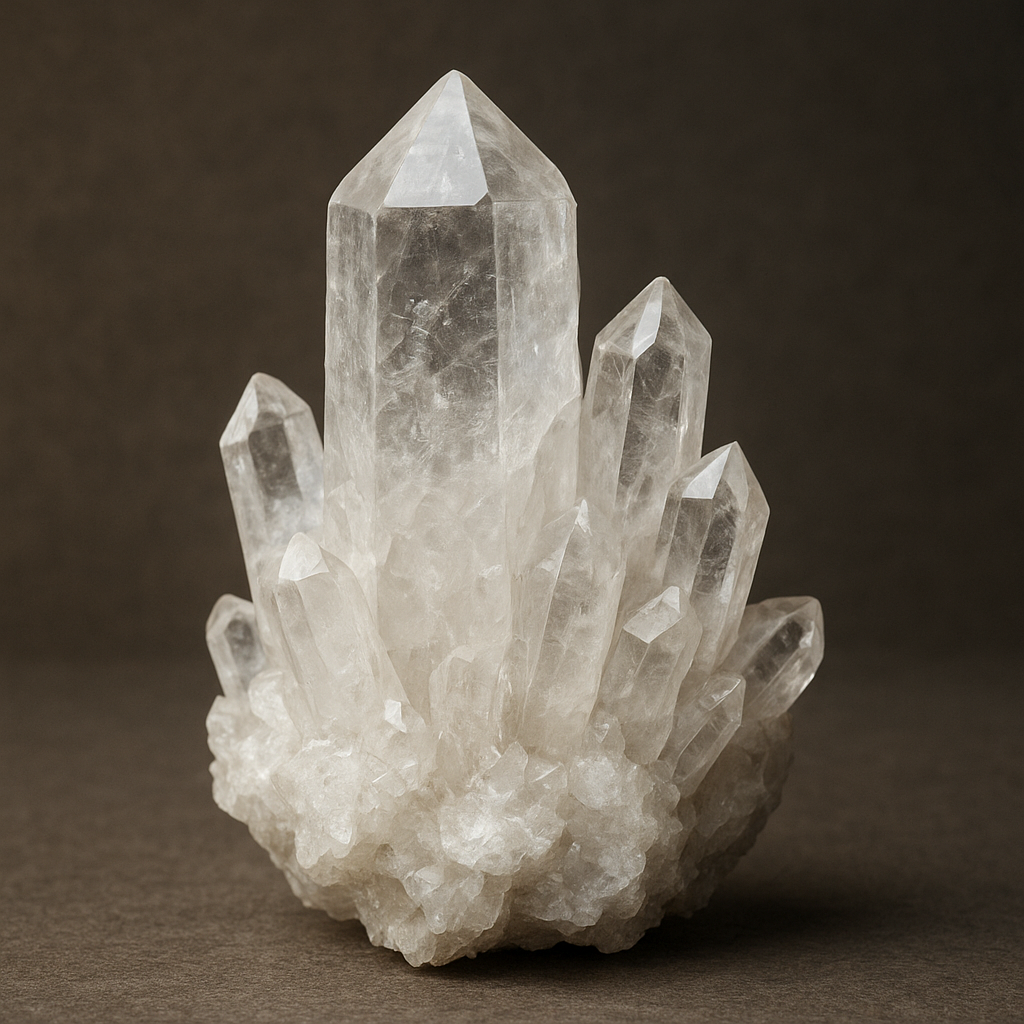

Genthelvite is a relatively rare silicate mineral best known from complex, silica-undersaturated granitic and alkaline environments. Although it does not belong to the group of industrially important ores, it fascinates mineralogists and collectors because of its subtle aesthetics, unusual chemistry and key role in understanding late-stage processes in evolved magmatic systems. Its occurrence alongside minerals such as danalite, helvite and hübnerite sheds light on how elements like zinc, beryllium, manganese and iron behave in highly differentiated rocks and hydrothermal veins. By examining genthelvite, geologists gain insight into the evolution of **pegmatites**, skarn deposits and specialized rare-metal systems, while collectors value its attractive crystals and associations with other unusual species.
Crystal chemistry and structure of genthelvite
Genthelvite is a member of the helvite group of beryllium silicates, which share a common structural framework and differ mainly in the dominant divalent cation occupying specific lattice sites. The generalized chemical formula for the helvite group is (M)₈Be₆Si₆O₂₄S₂, where M represents Fe, Mn, or Zn. In genthelvite, zinc is the dominant cation, giving it the typical idealized composition Zn₈Be₆Si₆O₂₄S₂. In natural samples, this ideal formula is rarely achieved; instead, there is often solid solution with the iron- and manganese-rich analogues danalite and helvite, leading to compositional variability that must be documented using detailed microprobe analyses.
The crystal structure belongs to the cubic system, space group P4̅3n, which is typical of the helvite-group minerals. This framework structure consists of corner-sharing BeO₄ and SiO₄ tetrahedra arranged into a rigid three-dimensional network. Within this open framework, larger cations such as Zn²⁺ occupy special positions, often described as distorted tetrahedral or polyhedral sites, while sulfur is incorporated in isolated S²⁻ anions. The resulting lattice resembles that of other framework silicates, yet its combination of Be, Zn and S makes it chemically and structurally distinctive. The rigid arrangement of tetrahedra explains both the relatively high hardness of genthelvite and its good resistance to chemical alteration under many geological conditions.
One of the more intriguing aspects of genthelvite’s crystal chemistry is the flexibility of the cation positions. Zinc can be partially replaced by iron and manganese, and in some occurrences even by minor amounts of other divalent metals such as magnesium or cadmium. This leads to a continuous or near-continuous solid solution between helvite (Mn-dominant), danalite (Fe-dominant) and genthelvite (Zn-dominant). The exact boundary between these minerals is defined by the prevailing cation at the M site, following modern nomenclature rules in mineralogy. Compositional zoning in single crystals can record changing fluid composition or temperature during crystal growth, providing a micro-scale history of the geological environment.
Physically, genthelvite forms mostly euhedral to subhedral crystals, commonly with dodecahedral, tetrahedral or slightly modified isometric habits. Well-formed crystals may show sharp faces and high luster, making them desirable for collectors, especially when they are transparent to translucent. Typical colors range from greenish to yellowish, sometimes with pale brown or nearly colorless varieties depending on the exact cation composition and trace-element content. The luster is usually vitreous, though resinous reflections may occur on some faces, particularly where internal micro-inclusions or alteration products scatter light. Cleavage is generally poor or indistinct, with fracture tending to be conchoidal or uneven, reflecting the strong bonding in the tetrahedral framework.
In terms of physical constants, genthelvite has a Mohs hardness of approximately 5.5–6, similar to many other silicates, and a density typically between 3.2 and 3.4 g/cm³, somewhat higher than quartz but lower than metallic ore minerals. The refractive index is relatively high for a silicate, yet due to its isotropic optical character in the cubic system, it shows no birefringence under crossed polars in thin section. This optical isotropy, combined with its high relief relative to common rock-forming minerals, makes genthelvite fairly easy to identify under the petrographic microscope when associated minerals and context are known. Nevertheless, distinction from closely related helvite-group members often requires analytical confirmation, as visual and optical properties can be very similar.
From a thermodynamic perspective, genthelvite’s stability field sheds light on the geochemical conditions of its formation. Experimental and natural data suggest that it forms under conditions of relatively low oxygen fugacity, where reduced sulfur exists as sulfide rather than sulfate. The presence of beryllium and zinc at appreciable levels also implies highly fractionated magmas or fluids that have concentrated these normally incompatible elements. Such conditions are typical of late-stage granite-related systems, evolved pegmatites and some alkaline complexes, where repeated crystallization and fluid exsolution separate trace components from the bulk magma. As a result, genthelvite is often associated with geochemically specialized environments rather than with typical crustal rocks.
Geological occurrence and global distribution
The geological environments in which genthelvite occurs are remarkably diverse for a relatively rare mineral, yet they share a common theme: strong chemical specialization and the presence of beryllium, zinc and sulfur in environments dominated by silica and various fluxing components such as fluorine and boron. Understanding these occurrences is crucial not only for predicting where genthelvite itself might be found, but also for interpreting the geochemical evolution of rare-element systems and for prospecting for associated critical metals like tungsten, molybdenum and lithium.
One of the classical geological settings for genthelvite is in complex skarn systems related to granitic intrusions. In such settings, intrusive magmas rich in volatiles such as fluorine and chlorine encounter carbonate-rich country rocks, leading to intense metasomatic alteration and the development of calc-silicate assemblages. Where beryllium and zinc are available, helvite-group minerals can form along with garnet, pyroxene, vesuvianite, scheelite and sulfide minerals. Genthelvite, specifically, tends to develop in Zn-enriched portions of these skarns or in late-stage veins that cut them. The sulfur required for its structure is typically supplied from magmatic fluids or from the breakdown of pre-existing sulfides. The presence of genthelvite in skarns can therefore signal a late influx of Be- and Zn-bearing fluids during the waning stages of skarn evolution.
A second major environment is that of granitic pegmatites, which are among the most chemically evolved products of granite magmatism. Pegmatites are characterized by coarse crystal size, high volatile content and extreme elemental fractionation, enabling unusual minerals to crystallize. In certain beryllium-rich pegmatites, genthelvite may occur in cavities and pockets, often associated with beryl, phenakite, fluorite, quartz and topaz, and sometimes with tourmaline or rare phosphates. Its formation in these contexts indicates that zinc and sulfur have become sufficiently concentrated in the late-stage pegmatitic melt or in exsolved fluids to stabilize a sulfide-bearing beryllium silicate. Because pegmatites can represent economically important sources of lithium, cesium, tantalum and beryllium, the presence of genthelvite also draws attention to the broader rare-element potential of the host system.
Alkaline igneous systems and related hydrothermal environments represent yet another setting for genthelvite. Peralkaline and peraluminous granite complexes, as well as nepheline syenites and related rocks, often host unusual combinations of rare elements, including zirconium, niobium, rare earth elements and beryllium. In these complexes, genthelvite can appear in greisenized zones, quartz veins, miarolitic cavities and replacement bodies. It may be associated with fluorite, cassiterite, wolframite, molybdenite and a wide variety of exotic silicates. The association with fluorine-rich minerals is particularly important, since fluorine-bearing fluids are highly effective in transporting both beryllium and zinc, which then precipitate as helvite-group minerals upon changes in temperature, pressure or fluid composition.
Hydrothermal veins cutting through various types of host rock also provide favorable environments for genthelvite formation, especially in the vicinity of granitic intrusions. In such veins, genthelvite precipitates from Zn- and Be-bearing fluids under moderately high temperatures and relatively reduced conditions, sometimes together with quartz, galena, sphalerite, chalcopyrite and arsenopyrite. The mineral may line cavity walls or form massive aggregates, and its development can be closely related to the evolution of ore-forming fluids in polymetallic vein systems. While genthelvite itself is not a major ore mineral, its occurrence can signal unusual fluid compositions that may also carry critical metals or gemstones in nearby zones.
On a global scale, genthelvite has been documented from various localities in Europe, Asia, North America and other continents, although only a handful of sites have produced specimens of high quality or scientific prominence. Classic occurrences include highly evolved granite systems and skarns in regions known for complex mineralization, such as some districts in Scandinavia, parts of central Europe, and selected localities in Russia and Kazakhstan. In North America, genthelvite has been reported from specialized pegmatites and skarn deposits in regions with active granitic magmatism and metamorphism. Each of these occurrences contributes to the overall understanding of how genthelvite forms and what it reveals about the geological history of its host rocks.
In many of these localities, genthelvite is found in close association with its helvite-group relatives. Zoning patterns may show helivite or danalite cores with genthelvite-rich rims, or the opposite, indicating evolving fluid composition and metal availability over time. Such patterns can be used to reconstruct the sequence of geological events and the interplay between magmatic and hydrothermal stages. For example, an increase in zinc content toward crystal rims might indicate late-stage influx of Zn-rich fluids, whereas increasing iron or manganese might reflect evolving redox conditions or changes in fluid-rock interaction. Micro-analytical methods such as electron microprobe, LA-ICP-MS and Raman spectroscopy are commonly employed to tease out these fine-scale variations.
The paragenesis of genthelvite—its association with other minerals and textures—offers further clues to the conditions of formation. In some skarns, genthelvite may appear as a replacement of earlier beryl or phenakite, suggesting evolving sulfur activity and zinc enrichment in the fluid. In pegmatites, it may grow on late-stage quartz crystals or form delicate aggregates with fluorite and sulfides in open cavities. In greisen and vein environments, it can coexist with sulfide minerals and oxides, reflecting a transitional regime between oxide-dominated and sulfide-dominated mineralization. These relationships help geologists map out the chemical pathways by which elements migrate and concentrate in the Earth’s crust.
Uses, research significance and related topics
Genthelvite does not currently play a direct role as an industrial ore or a bulk commodity, largely because it is relatively rare and typically occurs in small quantities. Nevertheless, it has niche significance in several domains, ranging from academic research to mineral collecting and the broader understanding of critical metal resources. Its importance emerges less from its economic value and more from its role as a geochemical indicator, as a window into unusual magmatic-hydrothermal processes and as a component of specialized mineralogical assemblages.
In economic geology, genthelvite can serve as a subtle guide to the presence of beryllium- and zinc-enriched systems associated with granitic intrusions. While beryl remains the dominant beryllium ore worldwide, the occurrence of helvite-group minerals, including genthelvite, points to environments where Be has been mobilized and concentrated. Because many such environments also host other rare metals—such as tungsten, tin, niobium or lithium—the detection of genthelvite in exploration samples can help geologists prioritize targets for more detailed investigation. Thin-section examination of skarn or greisen samples, followed by microprobe analysis, can reveal the presence of genthelvite even when macroscopic crystals are not visible, offering early clues to the character of the system.
From the viewpoint of mineralogy and crystallography, genthelvite is of interest because it belongs to a structurally well-defined but chemically flexible group of minerals. The helvite-group framework provides an excellent natural laboratory for studying solid-solution behavior, cation ordering, and the interplay between structure and composition in complex silicates. Detailed crystallographic studies—often performed using single-crystal X-ray diffraction—have investigated how substitution of Zn, Fe and Mn affects lattice parameters, symmetry and stability. These data contribute to a broader understanding of how **transition metals** influence mineral properties, which has implications that extend beyond geoscience to materials science and solid-state chemistry.
In environmental geochemistry, genthelvite is less prominent than more common sulfides or oxides, yet it offers an example of how toxic or strategic elements like beryllium can be bound in stable mineral phases. Beryllium is a highly toxic element in dust form, raising concerns in mining, manufacturing and environmental remediation. Minerals such as genthelvite immobilize Be within a robust silicate lattice, effectively limiting its mobility under most natural conditions. Studying the stability of genthelvite and its alteration products under weathering, low-temperature hydrothermal and metamorphic conditions can therefore inform models of Be cycling in the upper crust and guide environmental risk assessments near rare-metal deposits.
Another area where genthelvite plays a role is in reconstructing the thermal and chemical history of magmatic-hydrothermal systems. Because its composition responds sensitively to changes in fluid chemistry, especially the availability of Zn, Fe, Mn and S, zoning patterns in genthelvite crystals can encode detailed records of evolving conditions. Geochemists analyze these patterns alongside fluid inclusions trapped within neighboring minerals to derive temperature, pressure and fluid composition histories. Such multi-proxy reconstructions contribute to conceptual models of how ore-forming systems evolve over time, including the timing of metal deposition, the role of magmatic versus meteoric fluids and the sequence of alteration events.
In the realm of mineral collecting and museum curation, genthelvite is valued as a relatively uncommon yet aesthetically appealing species. Well-formed crystals with sharp dodecahedral or tetrahedral habits, particularly those that are transparent or display attractive yellow-green hues, are sought after by advanced collectors specializing in beryllium minerals or helvite-group species. Specimens from classic localities—especially where genthelvite is associated with brightly colored fluorite, quartz, or rare sulfides—can achieve notable prices on the collector market. Curators and private collectors often highlight such specimens in thematic displays focusing on pegmatites, skarns or the chemistry of zirconium, beryllium and other rare elements.
Genthelvite is also connected to broader educational themes in Earth science. It provides a concrete example when teaching about mineral classification, as it sits at the intersection of silicate and sulfide chemistry while clearly belonging to the silicate class based on its structural framework. In mineralogy courses, helvite-group minerals illustrate the concept of isostructural series and the importance of cation dominance in defining mineral species. In petrology and economic geology courses, case studies involving genthelvite-bearing skarns or pegmatites reveal how minor and trace elements track the evolution of magmatic fluids and can lead to the formation of economically important deposits, even if genthelvite itself is not the commodity of interest.
Beyond traditional geology, genthelvite raises interesting parallels with synthetic materials. The Be–Zn–Si–S framework has conceptual similarities to some engineered materials with open-framework structures, such as zeolites and other porous silicates, although genthelvite itself is not porous in the same way. Materials scientists interested in tailoring properties by substituting different cations into predetermined structural frameworks can look to natural helvite-group minerals for inspiration. While synthesizing exact genthelvite analogues is complicated by the toxicity of beryllium, experimental work on safer analogues can draw on the same structural principles, using other light elements and transition metals to produce materials with targeted optical or mechanical properties.
On the analytical and methodological side, the study of genthelvite has benefited from advances in spectroscopic and imaging techniques. Raman and infrared spectroscopy can characterize the vibrational modes of BeO₄ and SiO₄ tetrahedra and detect subtle changes associated with cation substitution or disorder. Electron backscatter diffraction (EBSD) and high-resolution transmission electron microscopy (HRTEM) reveal fine-scale structural features, defects and exsolution textures, if present. These techniques, combined with microprobe and LA-ICP-MS analyses, allow researchers to dissect genthelvite crystals at microscale resolution, linking textures to the history of fluid flow, deformation and recrystallization in the host rock.
Finally, genthelvite plays an indirect yet meaningful role in discussions about critical raw materials and resource security. Beryllium, zinc and associated metals such as tungsten, molybdenum and niobium are considered strategic for many high-tech applications, from aerospace components to renewable energy technologies. Although genthelvite itself is not mined as an ore, its occurrence points to systems where these metals concentrate together in geologically coherent ways. By mapping and studying genthelvite-bearing rocks, geoscientists refine their understanding of where critical metal deposits may form, how they evolve and what geological signatures can guide exploration. The mineral thus becomes part of a larger narrative linking deep Earth processes to technological and economic developments at the surface.
Seen from multiple angles—structural, geochemical, environmental and economic—genthelvite exemplifies how a seemingly obscure mineral can offer valuable insight into the Earth’s complexity. Its intricate crystal chemistry, specialized geological settings and subtle yet informative associations with other minerals make it a rewarding subject of study for anyone interested in the hidden architecture of mineral systems and the forces that shape them.