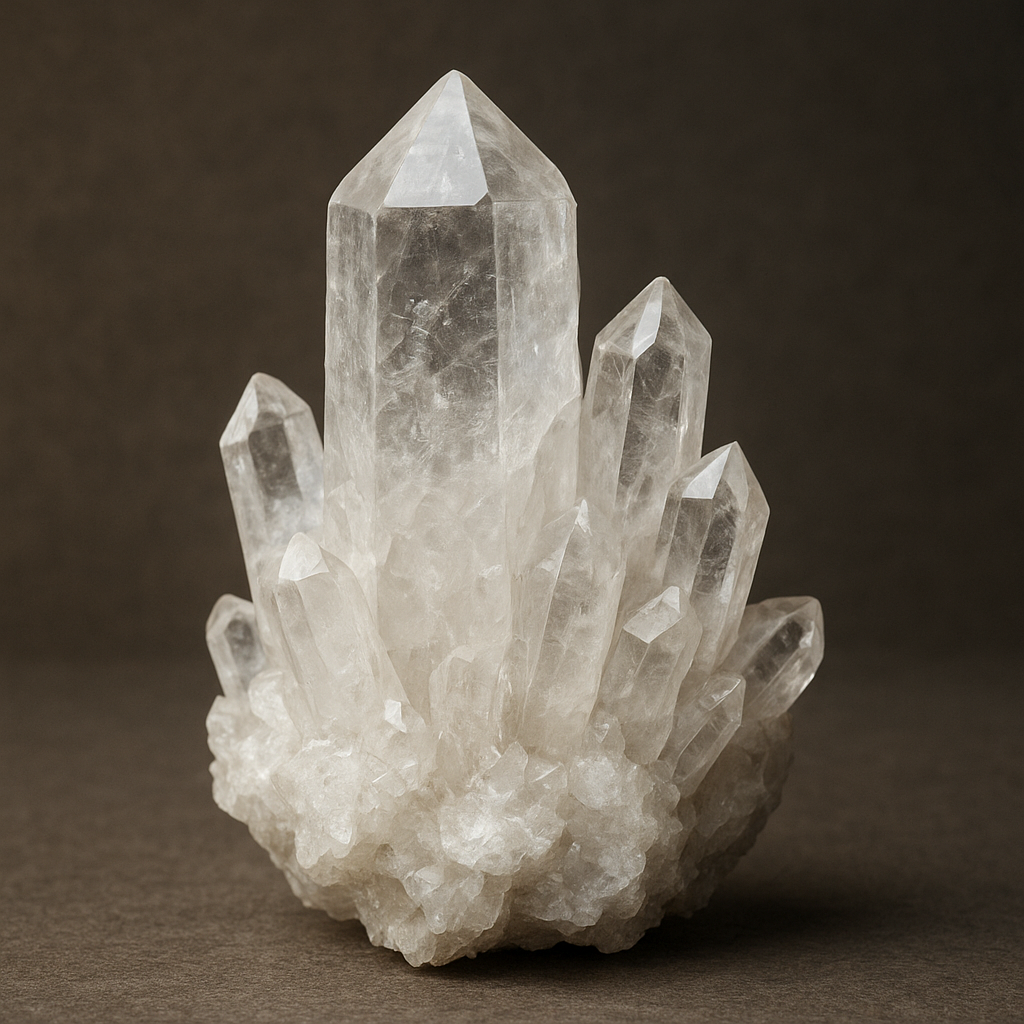

Chromite is one of the most strategically important minerals on Earth, linking the deep geological processes of the mantle with modern metallurgy, chemical industry and advanced technologies. As the principal ore of chromium, it underpins the production of stainless steels, specialized alloys, refractories and a variety of industrial chemicals. At the same time, chromite has a distinctive mineralogical character that makes it a key tool for geologists tracing the evolution of magmatic systems, mantle rocks and even the early history of planetary bodies.
Chemical composition, structure and physical properties
Chromite belongs to the spinel group of minerals and has the general chemical formula FeCr2O4. In ideal form it is an iron chromium oxide, but in nature it forms extensive solid solutions with other spinel minerals such as magnetite (Fe3O4) and hercynite (FeAl2O4). Magnesium can substitute for iron, and aluminum can substitute for chromium, producing compositions that range between chromite, magnesiochromite and various aluminum-bearing spinels. This chemical flexibility is one of the reasons why **chromite** is so valuable as an indicator of magmatic and metamorphic conditions.
The crystal structure of chromite is isometric, adopting the typical spinel structure where oxygen anions form a cubic close-packed lattice and metal cations occupy interstitial sites. Chromium and iron reside within octahedral and tetrahedral sites in proportions controlled by temperature, pressure and the bulk chemistry of the rock. Small variations in this cation distribution can encode information about the cooling history of the host magma and any subsequent metamorphic overprint.
Chromite usually appears as opaque, dark brown to black grains with a metallic to submetallic luster. It has a Mohs hardness of about 5.5 and a specific gravity around 4.5–4.8, reflecting its relatively high content of heavy metal cations. In polished section under reflected light microscopy, chromite displays distinctive internal textures: zoning, exsolution lamellae and alteration rims of ferritchromite or magnetite. These microstructures are widely used in ore petrology to reconstruct crystallization sequences in mafic and ultramafic **magmas**.
Another notable feature is chromite’s resistance to chemical weathering, which allows it to survive erosion and transport. As a result, chromite is commonly found not only in primary igneous and metamorphic rocks but also in secondary placer deposits, where its high density favors concentration by running water or coastal processes. This dual occurrence in both primary and secondary settings has strong economic implications.
Geological occurrence and ore-forming environments
Most of the world’s chromite resources occur in mafic and ultramafic rocks formed from mantle-derived magmas. These magmas are rich in iron and magnesium and poor in silica, providing the right chemical environment for the crystallization of chromium-bearing spinels. Several geotectonic settings are particularly important for chromite formation: layered mafic intrusions, ophiolitic complexes and komatiitic sequences. Each of these settings produces characteristic chromite ore types and associated mineral assemblages.
Layered mafic intrusions
Layered mafic intrusions are large, sheet-like bodies of igneous rock that formed when huge volumes of basaltic to ultramafic magma accumulated and slowly crystallized within the crust. As the magma cooled, crystals of olivine, pyroxene, plagioclase and chromite separated from the melt and settled by gravity, forming rhythmic layers of different mineral compositions. This process, known as magmatic differentiation and crystal settling, is critical for the formation of stratiform chromite deposits.
In these intrusions, chromite typically occurs as laterally extensive layers or lenses, sometimes only a few centimeters thick but stretching for many kilometers. The Bushveld Complex in South Africa, one of the largest layered intrusions on Earth, hosts some of the richest known chromite seams. Similar giant layered complexes in Russia, India and Finland also contain large chromite resources. Because of their regular geometry and predictable stratigraphy, such stratiform ore bodies are easier to explore and mine than many other types of mineral deposits.
Geochemically, chromite layers in layered intrusions tend to be relatively homogeneous, with a fairly consistent Cr/Fe ratio and low aluminum content. They often occur in association with layers enriched in platinum-group elements, linking chromite formation with broader processes of metal concentration in large magmatic systems. This association has stimulated intensive research on how immiscible sulfide liquids and chromite crystals interact during cooling and solidification of the magma.
Ophiolites and podiform chromite deposits
Another major setting for chromite formation is found in ophiolites, which are slices of oceanic lithosphere tectonically emplaced onto continental margins. Ophiolite sequences typically include mantle peridotites, layered gabbros, sheeted dike complexes and pillow basalts. Within the mantle peridotites—often harzburgites and dunites—chromite concentrates to form irregular, lens-shaped ore bodies known as podiform chromite deposits.
Podiform chromite bodies are generally smaller and more structurally complex than stratiform layers. They may be folded, faulted and dismembered due to intense deformation in the upper mantle and during obduction onto continents. Despite their irregular geometry, they have historically been vital sources of chromite, especially in countries lacking giant layered intrusions. The most significant podiform chromite deposits are found in Turkey, Oman, Albania, the Philippines and various parts of the Tethyan and Pacific orogenic belts.
These deposits are tightly linked to processes of partial melting and melt-rock interaction in the upper mantle. Chromium is a compatible element during mantle melting and preferentially enters early-formed spinel. As ascending melts percolate through peridotite, they may react with the rock, altering its mineralogy and concentrating chromite in specific zones. The chemistry of podiform chromite—particularly its aluminum and titanium content—provides insights into the degree of partial melting and the tectonic environment of the mantle source region, whether mid-ocean ridge, supra-subduction zone or plume-related.
Komatiites and other magmatic environments
Komatiites, which are ultramafic volcanic rocks with very high magnesium contents, represent yet another setting in which chromite can be concentrated. These rocks were especially abundant in the Archean Eon, when the Earth’s mantle was hotter and capable of producing extremely hot, low-viscosity lavas. In such magmas, chromite may crystallize early and accumulate in flow bases or lava channels, forming localized layers or pods. Although less important globally than layered intrusions and ophiolites, komatiite-related chromite occurrences are significant for understanding early Earth magmatism.
Chromite is also found in various other mafic and ultramafic settings, including small intrusive bodies such as dunite pipes and peridotite lenses, as well as contact zones between ultramafic and more felsic rocks. In many of these contexts, chromite does not form economic ore bodies but still provides a useful geochemical tracer. Its composition can be used to classify magmas, infer oxygen fugacity conditions and assess the fertility of mantle regions for hosting potential **platinum** or nickel-copper sulfide deposits.
Placer deposits and secondary concentrations
Because chromite is dense and resistant to weathering, it can be concentrated by physical processes after the erosion of primary ore bodies. Rivers, streams and coastal waves can transport and sort sediment, segregating heavy minerals such as chromite, ilmenite, rutile and zircon from lighter quartz and feldspar grains. The resulting placer deposits are typically found in river bars, beach sands and ancient alluvial terraces.
Economic placer chromite deposits are relatively rare compared to those for titanium or gold, but they exist in some regions where primary chromite sources have been extensively weathered and eroded. In these settings, chromite grains may be rounded and mixed with other heavy minerals, requiring specialized separation techniques such as gravity concentration and magnetic separation. While placers usually play a subsidiary role in global chromite supply, they can be important local resources, especially for small-scale mining operations.
Global distribution and major producing regions
Chromite resources are unevenly distributed across the globe, mirroring the patchy occurrence of large mafic and ultramafic complexes and ophiolitic belts. A small number of countries dominate production, and many of them consider chromite a strategic commodity because of its central role in stainless steel and specialty alloy manufacturing.
South Africa hosts the largest known reserves of chromite, mainly within the Bushveld Complex. The extensive and relatively continuous chromitite seams in this layered intrusion allow for large-scale, mechanized mining. South African ore generally has high chromium content and favorable chromium-to-iron ratios, making it highly attractive for ferrochrome production. Because of this resource base, South Africa is a leading exporter of both chromite ore and ferrochrome alloys.
Kazakhstan and India also hold substantial stratiform chromite resources, associated with large mafic-ultramafic complexes. Kazakhstan’s chromite deposits in the Kempirsai massif are among the world’s largest podiform-style accumulations linked to mantle peridotites, while India hosts extensive chromite-bearing intrusions in the Sukinda Valley and other regions of the eastern Indian shield. These deposits underpin domestic stainless steel industries and contribute to international trade flows.
Turkey, Oman, Albania, the Philippines and several other countries with well-developed ophiolite belts are important sources of podiform chromite. These deposits are often exploited by smaller underground mines using selective stoping methods because of their irregular geometry. The ore grades may be variable, but some podiform bodies contain very high chromium concentrations with low silica and iron impurities, making them valuable for specialized metallurgical applications.
Outside these main producers, smaller but still significant chromite deposits occur in Finland, Zimbabwe, Brazil, Madagascar, Russia and several other regions. In some cases, chromite is mined in conjunction with other minerals, such as nickel or platinum-group elements, in integrated operations. This spatial concentration of chromite resources raises geopolitical questions about supply security, especially for countries without domestic deposits but with large stainless steel industries.
Industrial uses and technological importance
The most important application of chromite is as the primary raw material for **chromium** extraction. Chromium is a transition metal that imparts corrosion resistance, hardness and a bright finish to alloys and coatings. Modern infrastructure, transportation systems and many everyday products rely heavily on chromium-containing materials, making chromite an underpinning resource for contemporary industry.
Ferrochrome and stainless steel production
By far the largest share of mined chromite is used to produce ferrochrome, an iron-chromium alloy that serves as the main feedstock for stainless steel manufacturing. In the ferrochrome process, chromite ore is smelted in submerged-arc furnaces with carbonaceous reductants such as coke or coal. The carbon reduces FeCr2O4 to a molten alloy containing 50–70% chromium, along with iron and minor impurities like silicon and carbon.
This **ferrochrome** alloy is then added to molten steel to achieve the desired chromium content. Stainless steels typically contain at least 10.5% chromium, which allows the formation of a thin, adherent oxide film on the surface that protects the underlying metal from further corrosion. Higher chromium levels, often combined with elements like nickel and molybdenum, produce specialized grades with enhanced resistance to heat, acids and mechanical wear.
Because stainless steel is used in everything from kitchenware and construction materials to chemical processing equipment and medical instruments, the demand for ferrochrome—and thus chromite—is closely tied to industrialization and infrastructure development. Economic cycles, environmental regulations and shifts in steel-making technologies all influence chromite markets.
Refractories and high-temperature applications
Chromite’s high melting point, chemical stability and resistance to slag erosion make it an important component of refractories, materials designed to withstand high temperatures in furnaces, kilns and reactors. Chromite-rich bricks, castables and ramming mixes have been widely used to line steelmaking converters, nonferrous metal smelters, glass furnaces and cement rotary kilns.
In refractory applications, chromite is often combined with magnesia or other basic oxides to tailor thermal expansion, corrosion resistance and mechanical strength. The chromite component provides resistance to basic slags and certain aggressive melts, while the overall composition can be adjusted to minimize harmful reactions and structural degradation. Although environmental concerns over hexavalent chromium have led to a gradual reduction of some chromite-based refractories, they remain indispensable in specific high-demand environments.
Chemical industry and pigments
Beyond metallurgy and refractories, chromite is the starting point for a wide range of chromium chemicals. Sodium dichromate, produced from roasted chromite and sodium carbonate or sodium hydroxide, is a key intermediate. From sodium dichromate, a host of chromium compounds can be generated, including chromic oxide, chromic acid and various chromates and dichromates.
One major use of these chemicals has historically been in pigments. Bright green and yellow chromium-containing pigments have been used in paints, inks and plastics because of their intense color and good lightfastness. For example, chromic oxide yields a stable, opaque green, while lead chromate provides vibrant yellow tones. Environmental and health regulations have curtailed some uses of chromium(VI)-based pigments, but certain chromium(III) pigments remain in use, particularly in ceramic glazes and specialty coatings.
Chromite-derived chemicals also play roles in tanning of leather, metal surface treatment and corrosion inhibition. Chromium(III) salts have long been used in leather tanning to improve durability and water resistance, though alternatives are being explored. In metal finishing, chromate conversion coatings and passivation treatments form protective films that enhance corrosion resistance and paint adhesion on steel, aluminum and zinc-coated surfaces.
Emerging technologies and niche applications
As materials science advances, chromium and chromite-related products find new roles in specialized technologies. Certain high-performance **superalloys**, used in aerospace and energy applications, rely on chromium to maintain strength and oxidation resistance at elevated temperatures. Although these alloys typically use refined chromium metal or ferroalloys rather than chromite directly, the underlying supply chain starts with chromite mining.
Chromium-bearing oxides have also attracted interest in catalysis, magnetics and electronic applications. For instance, chromium-doped spinels and perovskites can act as catalysts for oxidation reactions or as functional materials in solid oxide fuel cells. Research into spinel-structured oxides has revealed complex magnetic and electronic behaviors, making them candidates for spintronic devices and other advanced technologies, although most current applications remain experimental.
In addition, finely ground chromite and chromite sands are used as foundry sands for casting metals. Their high thermal conductivity and stability help produce accurate, defect-free castings, particularly for steel and high-alloy components. Foundries can reclaim and reuse a significant portion of chromite sand, but some losses occur, contributing to overall consumption.
Mining, processing and beneficiation
Transforming chromite-bearing rocks into commercially usable products involves several stages: exploration, extraction, beneficiation, smelting and refining. Each step must balance technical efficiency, economic viability and environmental responsibility. Chromite’s dense, physically tough nature can both aid and complicate these processes.
Exploration and ore characterization
Exploration for chromite begins with geological mapping and structural analysis to identify suitable host rocks, such as layered intrusions or ophiolitic peridotites. Geologists examine ultramafic outcrops for evidence of chromitite layers, disseminated chromite or alteration halos. Geophysical methods, including magnetic and gravity surveys, can help delineate dense, magnetite-bearing ultramafic bodies and structural features that control ore emplacement.
Sampling and core drilling are essential for defining ore thickness, continuity and grade. Laboratory analyses measure chromium, iron, aluminum and magnesium contents, as well as trace elements like titanium and vanadium. These geochemical parameters not only determine economic potential but also clarify the genesis of the deposit. Textural studies of chromite, using optical and electron microscopy, reveal whether grains are fresh, altered, zoned or intergrown with silicates, information that guides processing strategies.
Mining methods and challenges
Mining operations vary with deposit type. In large, gently dipping stratiform deposits, open-pit mining is commonly used, allowing for high production rates. Benches are cut into the orebody, and drilling, blasting and mechanical excavation break and move the rock. Overburden removal and waste-rock management present major operational and environmental tasks, especially as pits deepen and expand.
In podiform deposits within steeply dipping, structurally complex peridotites, underground mining often becomes necessary. Techniques such as room-and-pillar, cut-and-fill or shrinkage stoping may be used, tailored to orebody geometry and rock stability. Underground mining reduces surface disturbance but introduces safety challenges and higher operating costs. Ventilation, ground support and water control are crucial in these settings.
Regardless of the method, chromite mining must manage potential geotechnical issues related to the competence and alteration state of ultramafic rocks. Serpentinization, a common alteration process in peridotites, can weaken rock mass and influence slope stability. Careful engineering and monitoring are therefore essential to maintain operational safety.
Beneficiation and concentration processes
After extraction, run-of-mine ore typically undergoes crushing and grinding to liberate chromite grains from the surrounding silicate minerals. Because chromite is both dense and often weakly magnetic, processing flowsheets usually combine gravity separation and magnetic separation steps.
Gravity methods, such as spirals, shaking tables and dense media separation, exploit the higher density of chromite relative to gangue minerals like olivine, pyroxene and serpentine. These techniques can produce a concentrated chromite product with elevated chromium content and reduced silica and iron. Magnetic separation, using low- or high-intensity magnetic fields, further refines the concentrate by removing magnetic impurities or by separating magnetite-rich fractions.
In some operations, flotation may be employed to remove residual silicate minerals or to cope with fine-grained ores where gravity methods alone are insufficient. Tailings management becomes an important environmental consideration, as large volumes of finely ground rock must be stored safely to prevent dust generation, erosional losses and water contamination.
Ultimately, the goal of beneficiation is to produce marketable concentrates with appropriate Cr2O3 content and low levels of deleterious elements. High-grade concentrates are favored for ferrochrome production, while lower grades may find use in chemical or refractory sectors after additional processing. Efficient beneficiation reduces energy consumption and waste generation in subsequent smelting steps.
Environmental, health and sustainability aspects
While chromite itself is relatively inert, the mining and processing chain can generate environmental and health challenges, particularly when chromium is transformed into its hexavalent oxidation state, Cr(VI). Managing these risks responsibly is increasingly central to the long-term viability of chromite supply and related industries.
Chromium oxidation states and toxicity
Chromium occurs in several oxidation states, of which trivalent chromium, Cr(III), and hexavalent chromium, Cr(VI), are the most environmentally significant. Cr(III) is an essential trace element for some biological functions and is comparatively low in toxicity. In contrast, Cr(VI) is highly soluble, mobile and toxic, with well-documented carcinogenic and mutagenic effects. Many of the environmental concerns around chromite exploitation are therefore tied to processes that can convert Cr(III) to Cr(VI).
Oxidation of chromium can occur during ore roasting, chromate production, refractory use and improper disposal of waste materials. In soils and tailings, certain geochemical conditions, such as high pH and the presence of strong oxidants like manganese oxides, can also favor the formation of Cr(VI). Once mobilized, Cr(VI) can contaminate groundwater and surface waters, posing risks to ecosystems and human communities.
Mining impacts and waste management
Chromite mining, like all large-scale extractive activities, disturbs land, generates large volumes of waste rock and tailings, and consumes energy and water. Open pits can alter drainage patterns and local microclimates, while underground workings may influence groundwater flow. Dust generation, noise and habitat fragmentation are additional concerns, especially in ecologically sensitive or densely populated regions.
Effective waste management strategies are crucial. Tailings impoundments must be designed to withstand extreme weather events and seismic activity, while minimizing the potential for seepage and acid or alkaline drainage. Because ultramafic rocks are often rich in magnesium and have low sulfide contents, acid mine drainage is generally less severe than in sulfide ore mines, but alkaline drainage and metal leaching can still occur. In chromite operations, particular attention is paid to preventing conditions that might oxidize chromium to its hexavalent form.
Progressive rehabilitation, where disturbed areas are reclaimed as mining advances, can reduce long-term impacts. Revegetation with suitable species, replacement of topsoil and careful contouring of slopes help stabilize landscapes. In some regions, rehabilitated ultramafic mine sites host unique serpentine-adapted flora, offering opportunities for biodiversity conservation and ecological research.
Occupational health and regulatory frameworks
Workers involved in chromite mining and processing may be exposed to dust, noise, high temperatures and, in some segments of the value chain, chromium compounds. Occupational health standards require controlling dust levels through water spraying, ventilation, enclosure of equipment and the use of personal protective equipment. In smelting and chemical plants, strict controls on chromium emissions, fume collection and waste handling are vital to protect both workers and surrounding communities.
Regulatory frameworks in many countries set limits for chromium concentrations in air, water, soil and industrial effluents. International conventions and guidelines encourage best practices in waste management, emission control and monitoring. Companies operating chromite-related facilities increasingly adopt environmental management systems, life-cycle assessment tools and corporate responsibility reporting to demonstrate compliance and continual improvement.
Chromite in scientific research and planetary geology
Beyond its industrial significance, chromite is a mineral of considerable scientific interest. Its composition, textures and inclusions act as archives of geological processes ranging from mantle melting to planetary differentiation. By studying chromite and related spinels, researchers gain insights into the evolution of the Earth and other planetary bodies.
Indicator mineral and petrogenetic tracer
Because chromite crystallizes early from mafic and ultramafic magmas and retains its composition over a wide range of conditions, it is a powerful petrogenetic indicator. The ratios of chromium, aluminum, titanium and iron in chromite can be used to classify magmas, estimate degrees of partial melting and infer the tectonic setting of mantle sources. For example, low-titanium, high-chromium spinels are often associated with forearc or supra-subduction zone environments, whereas higher titanium levels may point to mid-ocean ridge or intraplate magmatism.
In exploration geology, chromite and related spinels serve as indicator minerals for platinum-group element deposits, diamond-bearing kimberlites and other valuable resources. Their resistance to weathering allows them to travel significant distances from the original source, so heavy mineral surveys in stream sediments can use chromite chemistry to pinpoint prospective ultramafic bodies hidden beneath soil or sedimentary cover.
Chromite in meteorites and planetary interiors
Chromite is also found in many meteorites, including ordinary chondrites, achondrites and some iron meteorites. In this extraterrestrial context, chromite and other spinels help reconstruct the thermal and chemical evolution of parent bodies. Variations in chromium, aluminum and titanium, as well as trace elements like vanadium and manganese, can record redox conditions, cooling rates and impact histories.
Studies of chromite-bearing rocks on Earth, such as mantle peridotites and high-pressure metamorphic assemblages, inform models of planetary interiors. Because chromium partitions strongly into certain minerals at high pressures and temperatures, its distribution among phases like garnet, spinel and clinopyroxene constrains mantle composition and melting behavior. Insights gained from terrestrial chromite thus contribute to broader theories about how rocky planets differentiate and evolve.
Experimental petrology and thermodynamic modeling
Laboratory experiments often use chromite and synthetic spinels to test thermodynamic models of mineral stability and element partitioning. By subjecting chromite-bearing systems to controlled temperatures, pressures and oxygen fugacities, researchers measure how compositions shift and how cations redistribute among crystal lattice sites. These data underpin geothermometers and oxybarometers—tools that estimate the temperature and redox state of magmas and metamorphic rocks.
Advances in analytical techniques, such as electron microprobe analysis, laser ablation mass spectrometry and synchrotron-based spectroscopy, allow increasingly precise characterization of chromite chemistry and structure. This precision has revealed subtle zoning patterns, nano-scale exsolution features and trace-element anomalies previously unrecognized, deepening our understanding of magmatic differentiation and mantle heterogeneity.
Economic perspectives and future outlook
The role of chromite in the global economy is closely linked to that of stainless steel and other chromium-bearing materials. Urbanization, infrastructure renewal and technological innovation continue to drive demand for corrosion-resistant alloys, suggesting that chromite will remain a critical mineral for the foreseeable future. At the same time, environmental regulations, resource nationalism and supply chain disruptions create uncertainties that shape investment and trade patterns.
Efforts to improve energy efficiency and reduce emissions in ferrochrome and stainless steel production may gradually alter ore quality requirements and process technologies. Recycling of stainless steel already supplies a significant fraction of chromium demand, lessening dependence on primary chromite in mature markets. However, in rapidly growing economies, new steel capacity continues to stimulate interest in developing domestic chromite resources where geological conditions permit.
Exploration in underexplored terrains, including deeply weathered cratons and remote orogenic belts, is ongoing, aided by improved geophysical tools and geochemical modeling. At the same time, researchers are examining alternative materials that could partially substitute for chromium in certain applications, particularly where corrosion resistance requirements are moderate or where environmental regulations restrict the use of certain chromium compounds.
From the perspectives of both geology and industry, chromite stands at the intersection of deep Earth processes and surface-level technologies. Its story encompasses mantle melting, tectonic collisions, magmatic layering, mining engineering, materials science and environmental stewardship. As societies seek to balance industrial development with sustainability, understanding chromite’s properties, formation and impacts remains essential for informed decision-making and responsible resource management.